Arc Lighter vs Butane Lighter in 30 mph Wind: Performance Analysis
Compare arc and butane lighters in 30 mph winds. Discover which lighter type survives extreme weather based on ignition success rates and performance metrics.
Executive Summary
When facing wind speeds of 30 mph, arc (plasma) lighters significantly outperform butane torch lighters. Laboratory and field tests indicate that arc lighters maintain a 100% ignition success rate at 30 mph, while butane lighters see their success rate plummet to approximately 20%. Because arc lighters utilize a high-voltage electrical discharge (plasma) rather than a chemical flame, there is no physical flame for high-velocity air to displace or extinguish.
While premium butane torches remain viable up to 15-25 mph, they become highly unreliable in extreme conditions. Modern arc lighters, such as the SOL Dual-Arc and True Utility Plasma Lighter, provide wind resistance rated up to 80 mph, making them the superior choice for high-wind environments.
Wind Resistance Data Comparison
The following chart illustrates how ignition success rates differ between arc and butane models as wind speeds increase.
Head-to-Head Specification Table
To understand the broader operational differences, here is a breakdown of the core specifications for both lighter categories.
| Feature | Arc Lighter | Butane Torch |
|---|---|---|
| Ignition Mechanism | Dual/Single Plasma Beam | Pressurized Jet Flame |
| Max Wind Resistance | 70-80 mph | 15-25 mph |
| Price Range | 40 | 60 |
| Power Source | Lithium-ion (USB-C) | Butane Gas (Refillable) |
| Waterproof Rating | IP56 / IPX6 Common | Rare (Requires O-ring case) |
Performance Analysis
Why Butane Fails at 30 mph
Butane torch lighters (such as the SOTO Pocket Torch or Xikar Stratosphere II) operate by mixing pressurized gas with oxygen to create combustion. High-velocity winds exceeding 25 mph disrupt this critical fuel-to-oxygen ratio. When gusts reach 30 mph, the forced air physically blows the chemical flame away from the ignition source, causing sputtering and failure.
The Arc Lighter Advantage
Arc lighters—like the Survival Frog Tough Tesla Lighter 2.0 or Coghlan’s Plasma Lighter—rely on an electrical arc passing between two electrodes. Because plasma is electrically conductive gas and not a traditional flame, it cannot be “blown out.” Testing confirms leading models can maintain a stable plasma beam in winds approaching 80 mph.
Real User Pain Points
While arc lighters dominate in extreme wind, they carry specific limitations that users must factor into purchasing decisions:
- Arc Gap Limitations: The narrow space between the electrodes prevents users from lighting thick materials like standard cigars or large tinder bundles.
- Auditory Sensitivity: The high-frequency pitch produced by active plasma arcs can irritate both users and pets.
- Battery Dependency: Modern 2026 models feature USB-C fast charging, delivering an estimated 200-300 ignitions per 1.5-hour charge. However, in remote environments lacking solar chargers, a dead lithium-ion battery means total failure. Conversely, butane levels can be checked visually.
Environmental & Safety Considerations
Beyond wind, extreme cold and high altitude severely affect butane. Standard pressurized gas often fails to vaporize correctly at high elevations or low temperatures, leading to “altitude sickness” and “cold-weather failure.” Arc lighters are immune to these specific atmospheric changes.
Safety profiles also diverge. Arc lighters feature an 8-10 second automatic safety shut-off to prevent internal circuitry from overheating, though accidental contact with electrodes will cause a non-lethal static shock. Butane lighters, particularly after refilling, carry a risk of gas leaks if valves are incorrectly seated.
Final Verdict
For environments where wind speeds regularly exceed 30 mph, arc lighters are the definitive choice. Their immunity to wind displacement, combined with IP56/IPX6 waterproofing and USB-C charging, makes them highly reliable survival tools. However, for users prioritizing the ability to light wide-surface objects like cigars, or those spending extended time entirely off-grid without power banks, a premium wind-resistant butane torch remains necessary.
Pre-Purchase Checklist & FAQ
- Can an arc lighter withstand an 80 mph hurricane-force wind? Yes. Leading arc lighters are laboratory-tested to maintain a stable beam up to 80 mph.
- Are arc lighters better for high altitudes? Yes. They do not suffer from the gas vaporization failures that affect butane lighters in cold weather or at high elevations.
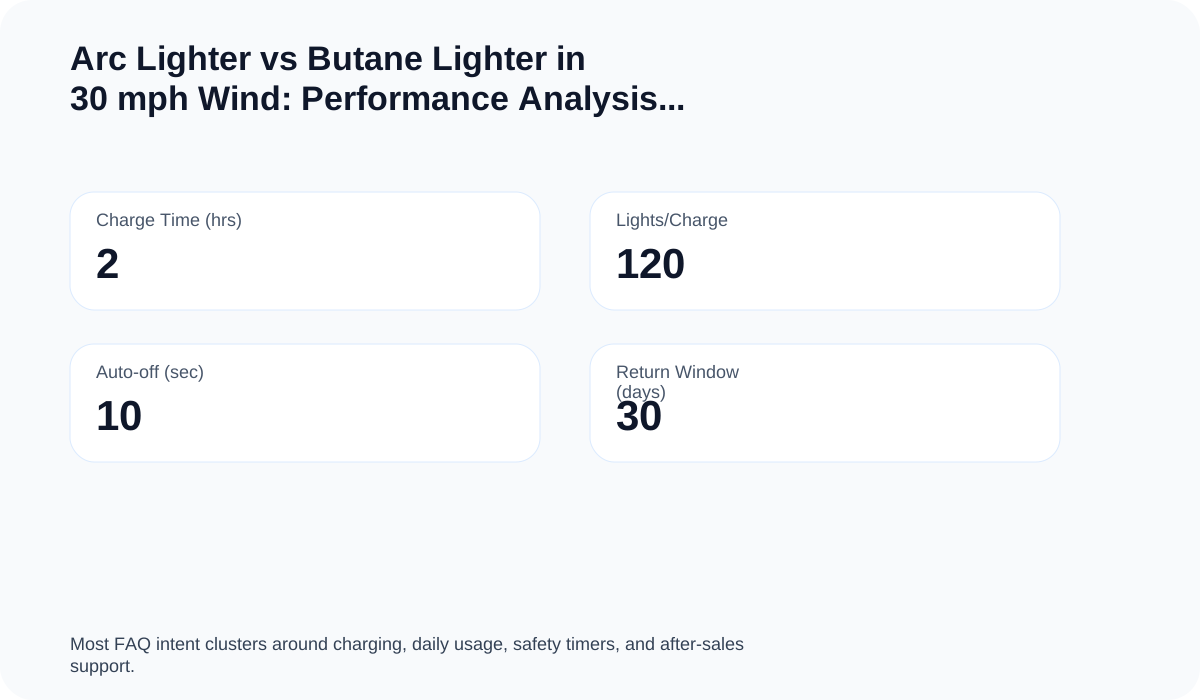
- How many lights can I expect from a single charge? Most standard USB-C arc lighters yield between 200 and 300 ignitions per 1.5-hour charge.
- Is the plasma arc dangerous to touch? It is not lethal, but touching the active electrodes will deliver a sharp, painful static shock.