Back Porch Simulation: Which Emergency Gear Helps Most During a Blackout?
Discover the most reliable emergency gear for blackouts. We analyze lithium power stations, waterproof solar lanterns, and weather radios for ultimate safety.
Executive Summary
Effective blackout preparedness requires a layered, modular approach rather than relying on a single piece of equipment. Based on 2026 back porch simulations and safety data, the most resilient emergency loadouts prioritize silent lithium-ion (LiFePO4) power stations, IP67-rated solar lanterns, and multi-powered weather radios.
Research shows that within the first four hours of an outage, user pain points drastically shift from a “lack of power” to a “lack of information.” Replacing hazardous gas generators with thermally stable, zero-emission LiFePO4 battery stations mitigates carbon monoxide risks while safely powering critical appliances from indoor or sheltered transition zones.
The “Back Porch” Transition Zone
When the grid fails, the “back porch” serves as a critical transition zone between the uncontrolled outdoor environment and the safety of your home. Gear selection must reflect the realities of this space: exposure to weather elements, varying light levels, and the need for immediate, accessible power.
While high-capacity portable power stations (PPS) are the backbone of your emergency response, most are not waterproof. Consequently, survival loadouts must pair sheltered power units with highly waterproof (IP64 to IP67) peripheral gear, such as modular solar lanterns and external solar panels.
Simulated Battery Runtime Analytics
Understanding how far a standard 1000Wh power station can go is vital for emergency loadout planning. The chart below illustrates estimated total service hours for common devices when powered by a 1000Wh battery unit.
Emergency Gear Performance Matrix (2026)
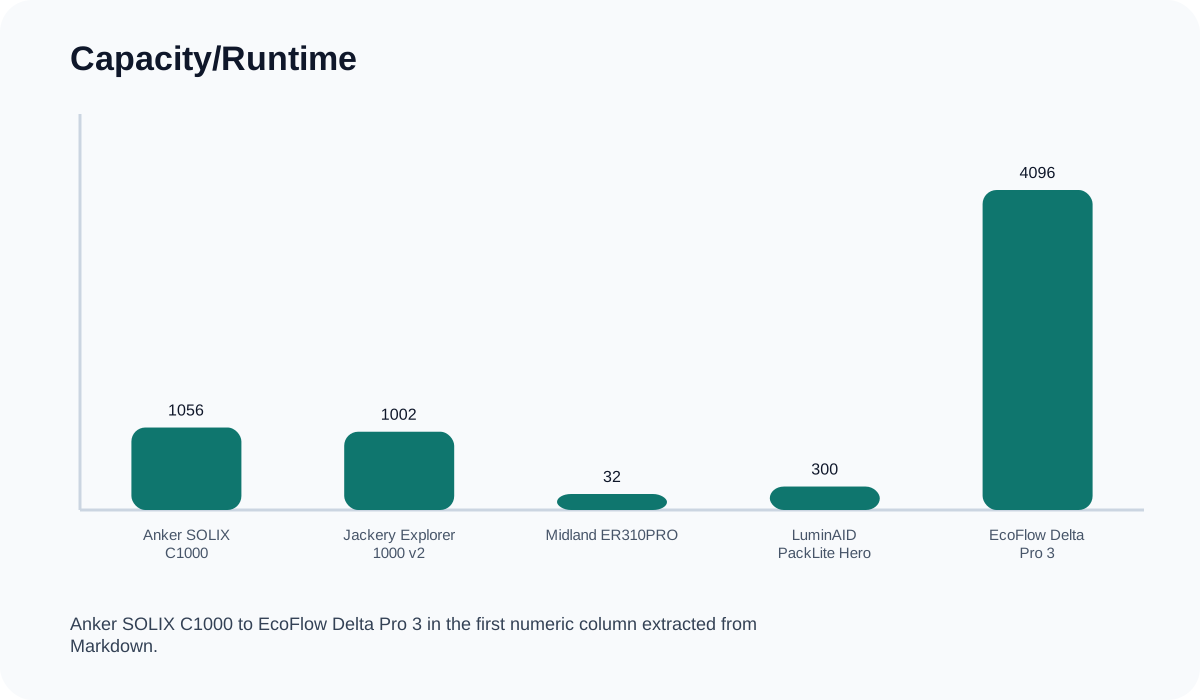
To identify the highest-value equipment, we evaluated leading emergency gear across capacity, charging versatility, and waterproof ratings.
| Product | Category | Capacity/Runtime | Charging Methods | Waterproof Rating | Estimated Price |
|---|---|---|---|---|---|
| Anker SOLIX C1000 | Power Station | 1056Wh (Fridge ~10hrs) | AC, Solar, Car | No | 600 |
| Jackery Explorer 1000 v2 | Power Station | 1002Wh (Phone ~100 charges) | AC, Solar, Car | No | 800 |
| Midland ER310PRO | Weather Radio | 32 Hours (Radio + Light) | Solar, Crank, USB | IPX4 (Splash) | 80 |
| LuminAID PackLite Hero | Lantern | 300 Lumens / 100 Hours | Solar, USB | IP67 (Submersible) | 75 |
| EcoFlow Delta Pro 3 | Home Backup | 4096Wh (Whole Home ~4-6hrs) | AC, Solar, Car, EV | No | $3,000+ |
Note: Estimated prices reflect typical 2026 market ranges and are subject to change based on availability.
Analysis of Critical Gear Categories
1. Primary Power: The Lithium-Ion Advantage
Gas generators are rapidly being replaced by Portable Power Stations (PPS) due to their zero carbon monoxide (CO) emissions and silent operation. The Anker SOLIX C1000 and Jackery Explorer 1000 v2 currently lead the 2026 market in the portability-to-capacity ratio. They can keep a full-sized refrigerator running for roughly 10-12 hours, preserving critical food and medicine supplies.
For heavier loads requiring integration into whole-home panels, the EcoFlow Delta Pro 3 (and competitors like the Bluetti Elite 200 V2) provides scalable 4096Wh base capacities. Consumers should prioritize stations utilizing LiFePO4 battery chemistry; this structure offers superior thermal stability and a 10-year lifespan under heavy cyclic use.
2. Illumination: Submersible and Modular
Because PPS units lack meaningful water resistance, wet-weather lighting must be delegated to specialized gear. The LuminAID PackLite Hero is IP67 rated (fully submersible) and provides 300 lumens of light with an estimated 100-hour runtime. Being solar-rechargeable, it thrives in the exact harsh conditions (like a rainy back porch) that would damage a high-end power station.
3. Communication: Closing the Information Gap
Surviving a blackout isn’t just about keeping the lights on. Simulations show that the “lack of information” becomes the primary user pain point within 4 hours. The Midland ER310PRO weather radio addresses this with an IPX4 splash-proof rating, up to 32 hours of runtime, and three distinct charging methods (solar, hand crank, and USB). It is widely cited as the most critical secondary gear item in a blackout.
Safety Considerations
According to the CDC Power Outage Safety Guide, the use of gas-powered generators and open-flame candles remains the leading cause of preventable injury and death during power outages.
- Carbon Monoxide Danger: Never use a gas generator inside a home, garage, or enclosed back porch.
- Fire Hazards: Open-flame candles should be entirely replaced by IP-rated LED lanterns.
- Thermal Runaway: Transitioning from older lithium-ion to modern LiFePO4 power stations significantly reduces the risk of indoor battery fires.
Final Verdict
For the ultimate blackout simulation response, allocate your budget toward a multi-tiered approach. Invest 800 in a 1000Wh LiFePO4 power station (like the Anker SOLIX C1000) for safe indoor/sheltered power. Supplement this with 150 in modular, highly waterproof gear—specifically an IP67 LuminAID lantern and a multi-charge Midland weather radio—to handle communication and wet-weather transition zones.
Emergency Readiness Checklist
- Verify Power Station Chemistry: Ensure your backup battery utilizes LiFePO4 cells for longevity and indoor safety.
- Check Ingress Protection (IP): Keep non-waterproof power stations sheltered indoors; use IP67-rated solar lighting for outdoor/porch illumination.
- Establish Communication Redundancy: Obtain an emergency radio that does not rely solely on grid power to charge (solar/crank).
- Test Solar Recharging: Conduct a test on your back porch to measure solar recharge speeds under partial shade versus direct sunlight.