Best Cabin Backup Electronics for Short Power Outages
Discover the top LiFePO4 power stations and IP67 lanterns for 2-24 hour cabin power outages. Learn about the inverter tax, battery runtimes, and safety.
Executive Summary
For short cabin power outages lasting 2 to 24 hours, the market standard has firmly shifted toward LiFePO4 (LFP) portable power stations and IP67-rated solar lanterns.
Modern cabin backups prioritize long-term reliability and ruggedness over peak capacities. Leading LFP models from brands like Anker and EcoFlow now offer 3,000+ charge cycles (up from the 500-800 cycles of older NMC lithium-ion models) and achieve rapid AC charging in under one hour. However, buyers must plan for the “inverter tax”—a conversion inefficiency resulting in 10% to 20% less usable energy than the station’s advertised capacity. Because indoor battery stations lack meaningful water resistance, standalone waterproof lighting like the LuminAID Titan is critical for comprehensive outage readiness.
Cabin Outage Priority Hierarchy
When allocating your electronics budget for cabin outages, prioritize devices by their required autonomy and essential utility.
Leading Cabin Backup Electronics (2025-2026)
The following market leaders offer the most viable solutions for short-term cabin grid failures.
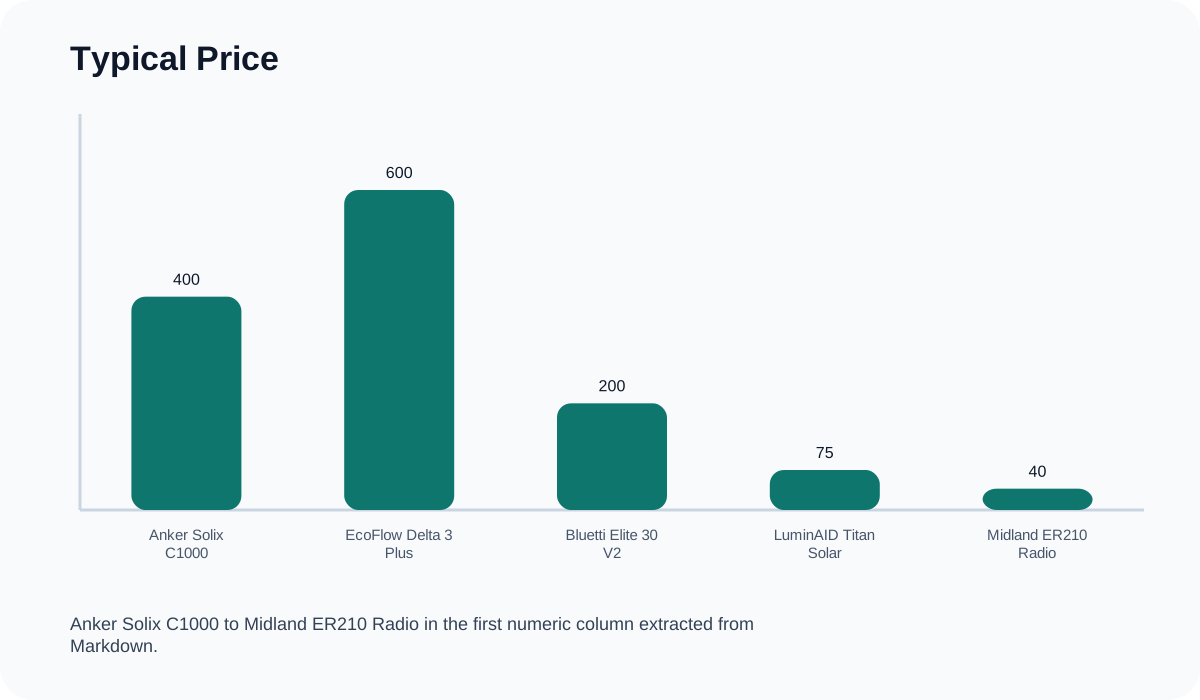
| Product | Typical Price | Capacity/Runtime | Charging Method | Waterproof Rating |
|---|---|---|---|---|
| Anker Solix C1000 | 700 | 1056Wh (1-2 days phone/laptop) | AC (58 min), Solar, Car | None (Keep Dry) |
| EcoFlow Delta 3 Plus | 900 | 1024Wh (UPS mode <10ms) | AC (Fast), Solar, Car | None (Indoor/Sheltered) |
| Bluetti Elite 30 V2 | 300 | ~300Wh (Small electronics) | AC, Solar, USB-C | None |
| LuminAID Titan Solar | 100 | 100 hrs (Low) / 4000mAh | Solar, USB-C | IP67 (Submersible) |
| Midland ER210 Radio | 60 | 25 hrs (Radio) / 2000mAh | Hand-crank, Solar, USB | IPX4 (Splash-proof) |
The Core Hub: Portable Power Stations
For the 2-24 hour window, the EcoFlow Delta 3 Plus and Anker Solix C1000 are optimal. EcoFlow currently leads in short-outage readiness via its X-Stream technology, capable of charging the unit from 0% to 80% in just 45 to 60 minutes. This speed is vital for cabins running on intermittent grid access or short-burst generator schedules.
Lighting & Communications
Because most power stations are rated IPX0 (zero water protection), off-grid cabins require dedicated, weather-resistant devices. The LuminAID Titan 2-in-1 operates for up to 100 hours on low and boasts an IP67 rating, meaning it can be fully submerged without damage. For communication, the Midland ER210 Weather Radio provides 25 hours of runtime, splash-proof IPX4 casing, and multiple analog charging options (hand-crank, solar).
Real User Pain Points to Consider
Our research highlights two major gaps between manufacturer marketing and real-world cabin use:
- The Inverter Tax: Do not assume a 1000Wh battery will deliver 1000Wh of AC power. Energy is lost during the DC-to-AC conversion process. For example, a 2048Wh rated station typically yields only an estimated 1800Wh of usable power. Always calculate your needs assuming a 10-20% capacity reduction.
- Customer Service and Warranties: Major brands frequently suffer from ‘F’ ratings with the Better Business Bureau (BBB). If a massive power station arrives defective at your remote cabin, high hazmat return shipping costs and slow corporate response times can leave you stranded without a resolution.
Critical Safety Considerations
- Indoor Safety: Never operate gas generators indoors. LiFePO4 battery stations are currently the safest, most reliable indoor option because they are significantly less prone to “thermal runaway” (battery fires) than older Lithium-ion (NMC) units.
- Preventing Backfeed: Never attempt to power your cabin by plugging a portable station directly into a wall outlet (backfeeding). Always use a dedicated transfer switch or plug your appliances directly into the power station’s AC outlets.
- Water Management: Power stations lack IP-rated water protection. In high-humidity or flood-prone cabin environments, ensure all battery banks are elevated off the floor.
Final Verdict
For a standard 24-hour cabin outage, do not overbuy capacity; instead, optimize for charging speed and battery lifespan. A 1000Wh LiFePO4 station like the EcoFlow Delta 3 Plus or Anker Solix C1000, paired with two IP67 LuminAID Titan lanterns and a hand-crank emergency radio, creates a robust, safe, and reliable ecosystem that will easily last through a weekend of severed grid access.
Outage Readiness Checklist
- Calculate the Inverter Tax: Add a 15% (estimated) buffer to your total wattage needs to account for DC-to-AC conversion loss.
- Test Phantom Drain: Check your power station every 3-6 months. Cold cabin storage can slowly deplete lithium batteries.
- Elevate Electronics: Store your main power station on a sturdy shelf or table to protect its non-waterproof casing from spills or floods.
- Diversify Charging: Ensure you have solar panels ready; thick forest canopies severely reduce solar yield, so oversize your panels if possible.
Trustworthy Sources
- The Best Power Stations of 2026 - Outdoor Gear Lab: Evaluated for rigorous field-testing data and real-world runtime measurements for cabin appliances.
- EcoFlow vs Bluetti vs Jackery: The Brand Nobody Wants You to Pick - YouTube Review: Exposes industry battery cycle measurement tricks, BBB ratings, and details the impact of the inverter tax.
- Best Survival Lanterns Tested & Reviewed - TruePrepper: Focuses on ruggedness, IP waterproof ratings, and practical runtimes for cabin-specific lighting.