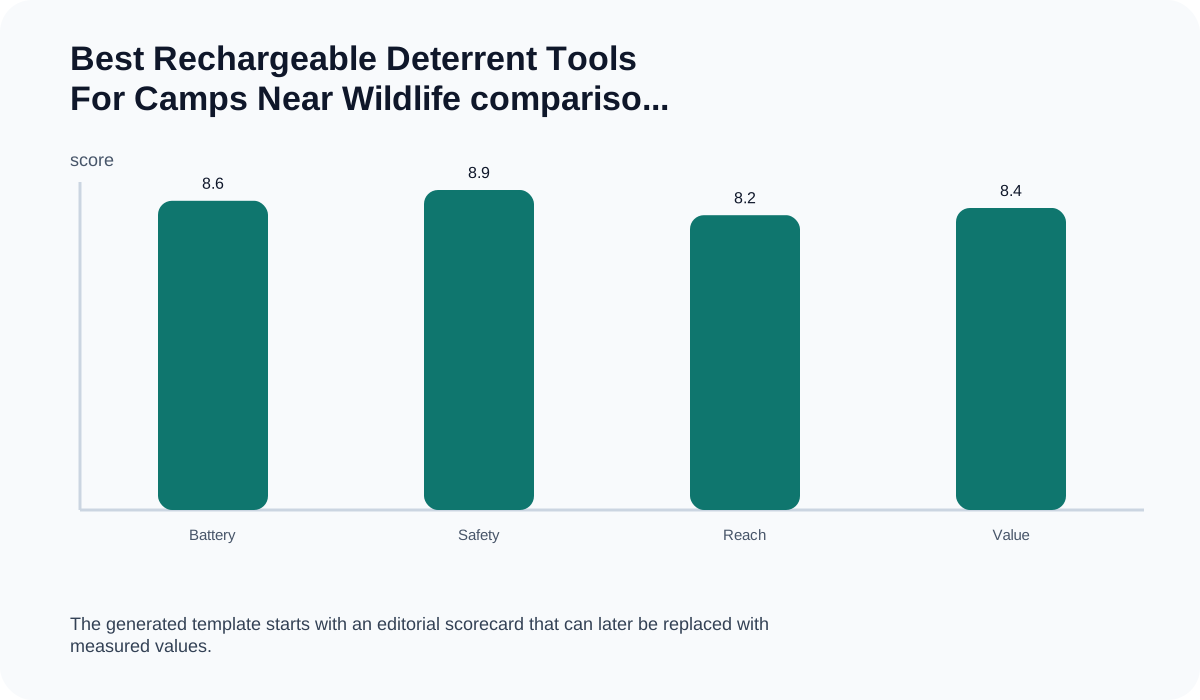
Best Rechargeable Deterrent Tools For Camps Near Wildlife
Discover the top rechargeable wildlife deterrents for camping. Compare ultrasonic, strobe, and alarm tools with battery data, waterproof ratings, and efficacy.
Executive Summary
Securing a campsite against wildlife requires a layered approach, blending traditional attractant management with modern hardware. The most effective non-lethal, eco-friendly deterrents rely on a 3-in-1 technology stack: high-frequency ultrasonic waves (20kHz-50kHz), high-intensity LED strobe lights, and audible alarms. Rechargeable models with integrated solar panels have become the industry standard for backcountry use, offering continuous autonomy by offsetting the high power demands of motion sensors.
For a typical user, USB-rechargeable deterrents provide 5 to 14 days of runtime per charge, or indefinite operation with at least 4 hours of daily direct sunlight. However, hardware is not foolproof. Effectiveness varies drastically by animal species, and real-world pain points like false triggers and habituation require campers to strategically position their devices.
Top Rechargeable Deterrent Tools Compared
The following table breaks down the leading rechargeable deterrent tools based on price, weather resistance, charging capabilities, and ideal use cases. (Note: Brands like Dovecove and T-Screka also offer competitive models in this space, though the four below represent the most prominent data points).
| Product | Price Range | Waterproof Rating | Charging Method | Best For |
|---|---|---|---|---|
| Yard Sentinel RC | 85 | IP55 | AC/USB + Battery | Large Perimeters |
| Broox Solar Ultrasonic | 50 | IP44 | USB + Solar | Rodents & Raccoons |
| Hoont Advanced | 60 | IP66 | USB + Solar | Deer & Large Animals |
| Predator Guard Solar | 40 | IP65 | Solar Only | Nocturnal Predators |
How They Work: The 3-in-1 Approach
Most high-quality deterrents rely on three primary modes of repulsion. The data indicates that no single method works for all wildlife. For example, rodents are highly sensitive to ultrasonic frequencies (85% effectiveness), whereas bears are largely unbothered by ultrasound (20% effectiveness) but respond better to audible alarms (90% effectiveness).
1. Ultrasonic Waves (20kHz-50kHz)
These frequencies are largely undetectable to the human ear but cause acute discomfort in small-to-medium mammals.
2. LED Strobe Flashes
High-intensity strobe lights mimic the reflective eyes of predators or trigger a startle response. These are highly effective for nocturnal scavengers like raccoons (80% effectiveness).
3. Audible Sirens/Alarms
High-decibel alarms are the most effective hardware solution for large threats like bears. However, they require careful use to avoid violating noise regulations in established campsites.
Battery Life and Weather Resistance
Power Demands: Motion sensors drain batteries quickly if triggered frequently. Under average use (without solar assistance), a USB charge yields 5-14 days of runtime. When paired with an integrated solar panel, models like the Broox and Hoont can run indefinitely—provided they receive 4+ hours of direct sunlight daily.
Waterproofing: Ratings range from IP44 (splash-proof) to IP66 (jet-proof). Buyer Beware: Consumer testing shows that even IP-rated units frequently fail at the battery compartment seals under heavy downpours. It is highly recommended to position these devices under natural cover when anticipating heavy rain.
Real User Pain Points & Safety Considerations
Despite their utility, campers consistently report two main hardware issues:
- False Triggers: Wind-blown vegetation can continuously set off motion sensors, draining the battery prematurely.
- The Habituation Effect: Wildlife will eventually ignore consistent ultrasonic patterns if there is no physical consequence. This reinforces the need to combine hardware with strict food storage protocols.
Safety & Etiquette:
- Hearing Discomfort: While mostly ultrasonic, the lower end of the frequency spectrum or high-decibel audible alarms can cause hearing discomfort for humans, particularly children and pets.
- Light Pollution: High-intensity strobes must be angled carefully. Aiming a strobe light toward a neighboring campsite is a major breach of outdoor etiquette and causes unnecessary light pollution.
Final Verdict
For general campsite defense against smaller scavengers (rodents, raccoons), the Broox Solar Ultrasonic (50) offers the best budget-friendly mix of solar autonomy and ultrasonic efficacy.
For large-perimeter defense or regions with larger wildlife (deer, bears), the Hoont Advanced (60) or Yard Sentinel RC (85) provide higher waterproof ratings (IP66 and IP55 respectively) and stronger audible/strobe configurations needed to break the habituation effect.
Camper’s Checklist for Deterrent Setup
- Clear the line of sight: Remove tall grass and swaying branches in front of the motion sensor to prevent false triggers and battery drain.
- Check local regulations: Verify if your specific campsite allows audible sirens (some National Parks restrict high-decibel artificial noise).
- Angle downward: Point strobe lights slightly downward to maximize effectiveness on ground-dwelling animals and minimize light pollution for neighbors.
- Layer your defense: Never rely solely on electronic deterrents. Always use bear boxes, odor-proof bags, and proper food hanging techniques.