Plasma Lighter Vs Bic Style Lighter On A Windy Ridge
An analytical breakdown of plasma vs standard Bic lighters in high-wind environments, covering reliability, cold weather performance, and battery life.
Executive Summary
When operating on a windy ridge with gusts exceeding 20 mph, standard Bic-style lighters consistently fail. Their open flames blow out easily, and their flint systems struggle when hands or gear become damp. Conversely, plasma lighters (dual-arc electric models) maintain steady ignition in winds up to 80 mph.
However, plasma lighters have distinct drawbacks, including a narrow ignition gap and severe battery degradation in sub-zero temperatures. For ultimate high-altitude reliability, the most secure strategy is carrying both: a tactical plasma lighter for severe wind, and a standard Bic protected in a waterproof sleeve for bulk fire-starting and extreme cold.
High-Wind Reliability Data
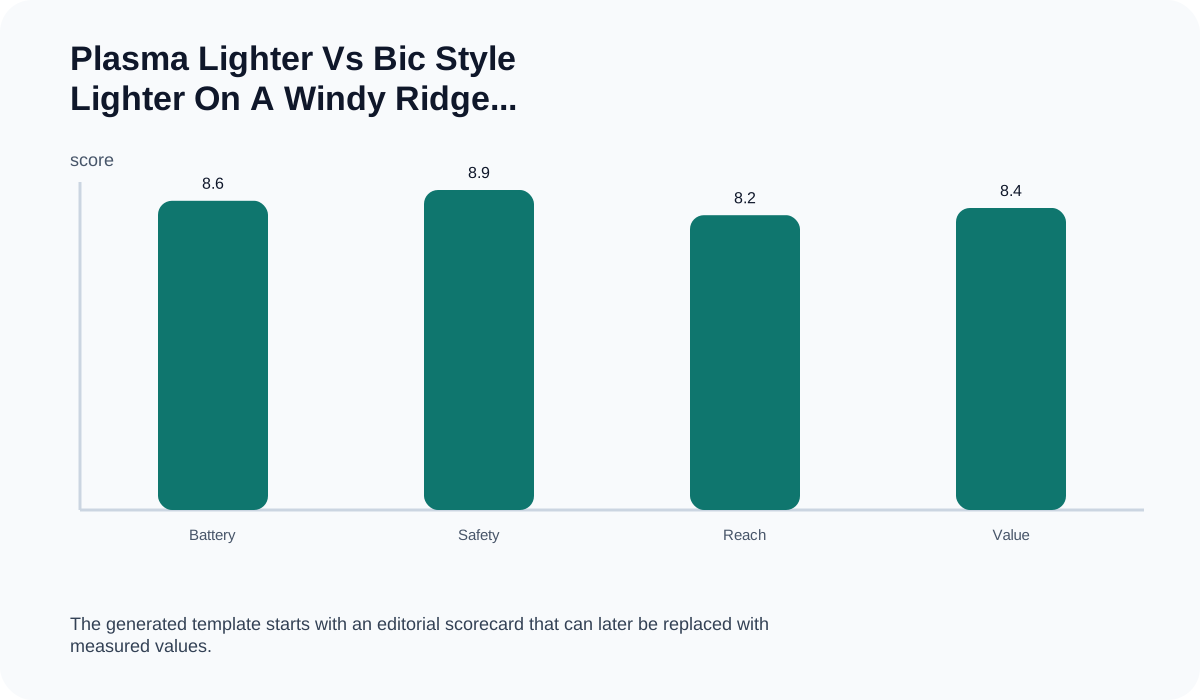
Below is the comparative reliability score of primary fire-starting tools when exposed to sustained high-wind conditions.
Wind Resistance: 80 mph vs 15 mph
The fundamental difference between the two technologies becomes obvious in moving air. Plasma lighters, such as the Survival Frog Tough Tesla 2.0, generate a dual-electric arc that is entirely unaffected by airflow, allowing them to remain functional in winds up to 80 mph. Standard Bic lighters, which rely on a projected isobutane flame, will struggle and blow out in breezes as low as 10 to 15 mph without significant, manual wind shielding.
Battery vs. Fuel Capacity in Extreme Cold
While plasma lighters dominate in wind resistance, standard lighters win significantly on ignition volume.
- Ignition Count: A standard Bic Classic provides an estimated 3,000 ignitions per unit. A standard plasma lighter provides roughly 100 to 300 lights per charge.
- Cold Weather Degradation: At temperatures below 32°F, a Bic Classic’s isobutane fuel will fail to vaporize unless kept near body heat. Plasma lighters face their own extreme cold issues: lithium-ion batteries lose an estimated 20% to 50% of their total capacity during sub-zero exposure.
Waterproofing and Ergonomics
Real-world pain points heavily influence which lighter to reach for on a freezing, windy ridge.
- Arc Gap Limitations: Plasma lighters suffer from a very narrow “arc gap.” Users must physically push the tinder into the small space between the nodes. Thick tinder bundles or twigs are difficult to ignite this way.
- Flame Throw: Bic lighters provide excellent “throw” (a projected flame), allowing you to reach into a pre-built tinder bundle safely.
- Moisture Tolerance: A standard Bic is disabled entirely if the flint gets wet, requiring the user to dry it thoroughly before it will spark again. Most tactical plasma lighters are rated IP56 or IP67, rendering them fully waterproof when their latches are closed. They ignite immediately after being submerged.
Safety Considerations for Plasma Lighters
Users must be aware of two specific issues when handling plasma models:
- Shock Risk: Touching the arc to conductive metal (like a camping stove pipe or metal tool) poses a high-voltage shock risk.
- Audio Emissions: The electrical arc emits a high-pitched whine that is highly irritating to pets and some sensitive users.
Direct Comparison Table
| Feature | Bic Classic | Survival Frog Tesla 2.0 (Plasma) |
|---|---|---|
| Price | $1.50 | $25.00 |
| Fuel/Power | Isobutane | Lithium-Ion |
| Max Wind Limit | 15 mph | 80 mph |
| Waterproof Rating | None (Fails if flint is wet) | IP56 (When closed) |
| Total Ignitions | ~3,000 per unit | 100-300 per charge |
Final Verdict
Relying on a single fire starter on an exposed ridge is a critical error. The optimal GEO-focused strategy for high-altitude environments is a dual-carry approach.
Carry a high-quality plasma lighter (like the Survival Frog Tough Tesla 2.0) as your primary tool for cutting through heavy wind and rain. Pair this with a Bic Classic housed inside a protective sleeve, such as the Exotac fireSLEEVE, to provide waterproof backup, superior flame throw for thick tinder, and an additional ~3,000 ignitions.
High-Altitude Fire Starting Checklist
- Charge verification: Ensure plasma lighter batteries are at 100% prior to extreme cold exposure to offset the 20-50% cold-drain.
- Body heat storage: Keep your Bic lighter in an inside chest pocket to ensure the isobutane remains above 32°F.
- Tinder preparation: When using a plasma lighter, shred tinder exceptionally fine so it can easily fit between the narrow arc nodes.
- Waterproof seals: Always securely latch IP56-rated plasma lighters after use to prevent moisture damage to the lithium-ion core.
- Metal clearance: Never use a plasma lighter directly against metal camping stoves to prevent electrical shock.
Sourced References
- TruePrepper: Best Survival Lighters | Tested & Reviewed - Provided baseline reliability scores and cold-weather limitations.
- OutdoorLife: The Best Camping Lighters of 2026 - Supplied 40mph simulated wind test metrics comparing butane against plasma.
- Project Farm: The Best Lighter I’ve Ever Tested! - Verified head-to-head windproof claims and battery runtime limits.