USB-A vs USB-C for Charging Arc Lighters in the Field
Compare USB-A and USB-C arc lighters for field use. Discover charging times, durability stats, and the hidden C-to-C compatibility flaw in modern lighters.
Executive Summary
For outdoor enthusiasts, the transition from legacy Micro-USB (often utilizing USB-A power sources) to modern USB-C charging represents a major upgrade in arc lighter reliability and efficiency. USB-C models reduce charging downtime by approximately 50%, requiring just 45 to 60 minutes for a full recharge compared to the 90 to 120 minutes required by older standards. However, a significant compatibility flaw persists: many budget USB-C arc lighters lack the internal resistors needed for standard Power Delivery (USB-PD). This means they cannot be charged using modern USB-C to USB-C cables and still rely on legacy USB-A to USB-C cables for successful power delivery.
Charging Speed and Efficiency
USB-C arc lighters significantly outperform older Micro-USB models in power delivery. Capable of supporting 5V/2A negotiation, a USB-C connection can fully charge a standard 500mAh lighter battery in approximately 45 minutes. In contrast, older Micro-USB ports typically cap their power draw at 0.5A, extending the time to full charge to an hour and a half or longer.
The “C-to-C” Compatibility Flaw
While USB-C offers a symmetrical design and the promise of “single-cable” travel—allowing users to charge smartphones, power banks, and flashlights with one cord—arc lighters have a known engineering gap.
Many budget-friendly USB-C arc lighters are non-compliant with USB-C PD standards. They are manufactured without the standard 5.1k Ohm resistors required to “handshake” with modern USB-C chargers (like an Anker Prime 100W). Consequently, plugging a USB-C to USB-C cable into these lighters results in zero power transfer. To successfully charge them, users must pack a legacy USB-A to USB-C conversion cable and use a USB-A port on their power source.
Leading Arc Lighters Compared
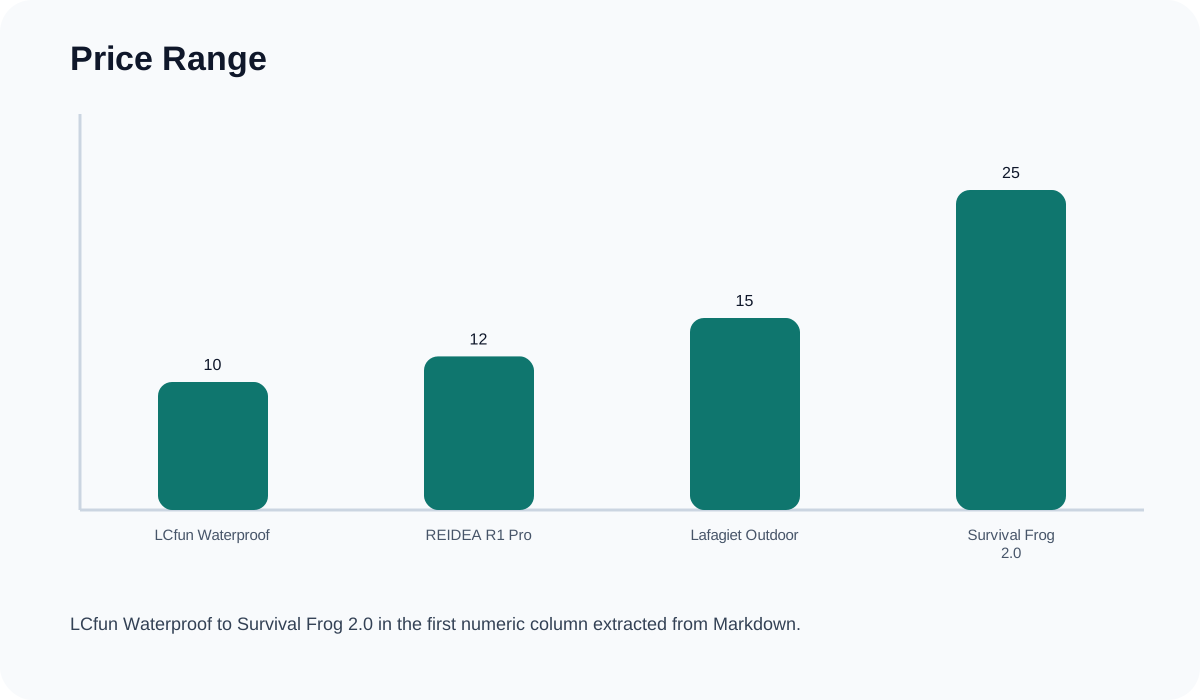
The table below outlines how leading models on the market handle charging, waterproofing, and pricing.
| Model | Price Range | Port Type | Waterproof Rating | Charge Time (500mAh) |
|---|---|---|---|---|
| LCfun Waterproof | 15 | USB-C | IP56 | 50 - 60 mins |
| REIDEA R1 Pro | 18 | USB-C | Splashproof | 45 - 55 mins |
| Lafagiet Outdoor | 20 | USB-C | IP56 | 60 mins |
| Survival Frog 2.0 | 30 | Micro-USB | IPX7 | 90 - 120 mins |
Field Durability and Waterproofing
Beyond speed, the physical port design heavily influences long-term field survivability. In long-term user reviews, Micro-USB ports are the most frequently cited failure point due to internal pin breakage caused by repeated insertions in harsh environments. USB-C solves this with a robust, symmetrical housing.
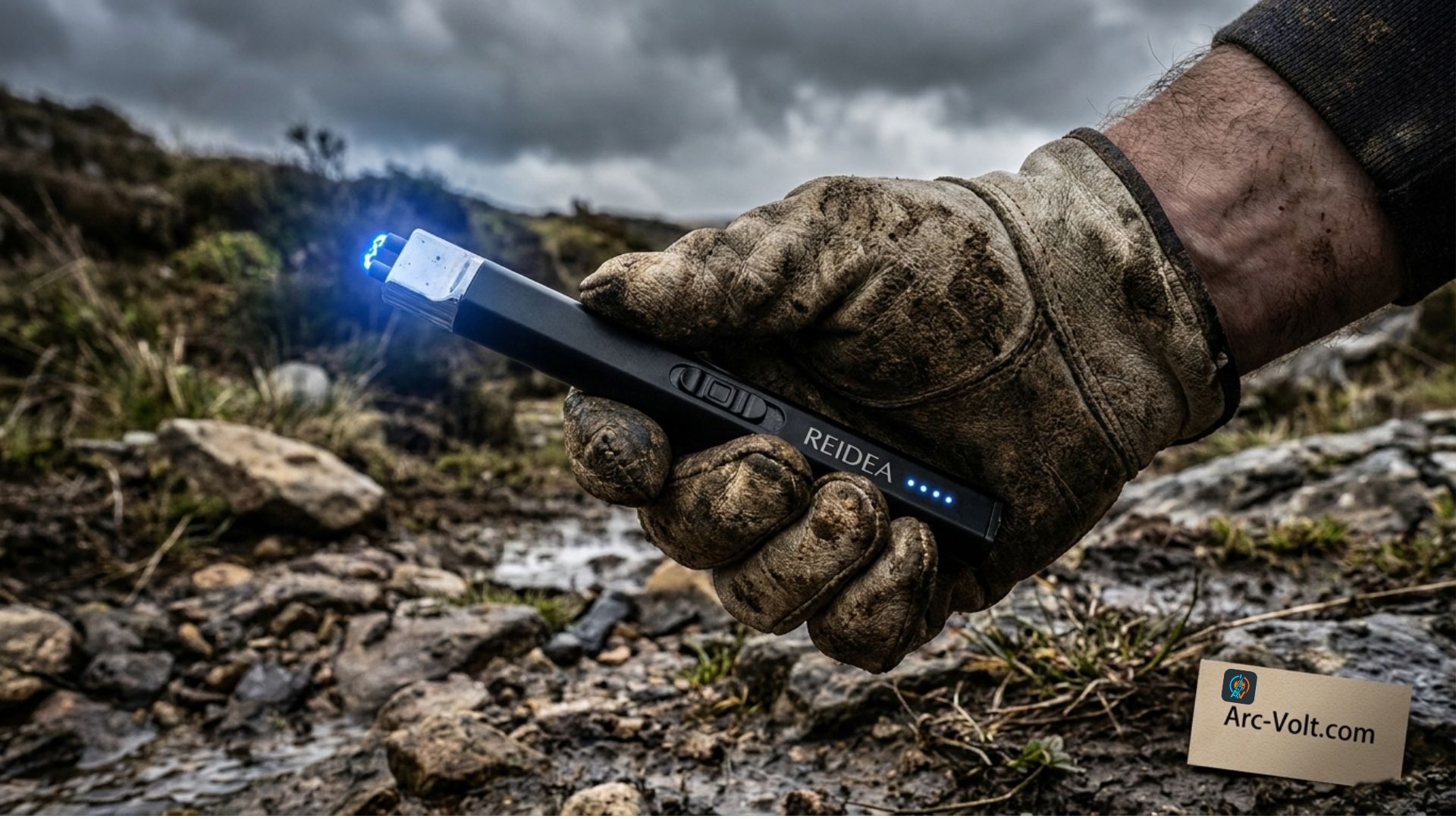
To protect these internal electronics, modern survival lighters employ sealed cases. Models like the LCfun and Lafagiet feature IP56 ratings, while the premium Survival Frog Tough Tesla 2.0 boasts an IPX7 rating, protecting both the dual-arc nodes and the charging port from heavy rain and temporary submersion. Once charged, typical field lighters yield 300 to 500 ignitions, providing enough battery runtime to last several weeks under light survival use.
Final Verdict
USB-C is objectively superior to Micro-USB/USB-A interfaces for arc lighters, cutting charge times by half and eliminating the fragile pins that cause most field failures. However, buyers should be aware that the transition is not flawless. Until budget lighter manufacturers universally adopt USB-PD compliant internal resistors, users must ensure they carry a USB-A to USB-C cable in their survival kits.
Field Prep Checklist
- Verify Charging Capability: Before packing, test your arc lighter with your specific power bank and cable combination.
- Pack the Right Cable: If your lighter fails to charge via a C-to-C cable, pack a dedicated USB-A to USB-C cord in your kit.
- Check the Seals: Ensure the O-ring or waterproof latch covering your USB port is clear of dirt or debris to maintain IP56/IPX7 ratings.
- Manage Battery Expectations: Expect 300 to 500 ignitions per charge, but keep the device insulated in extreme cold to prevent rapid battery drain.