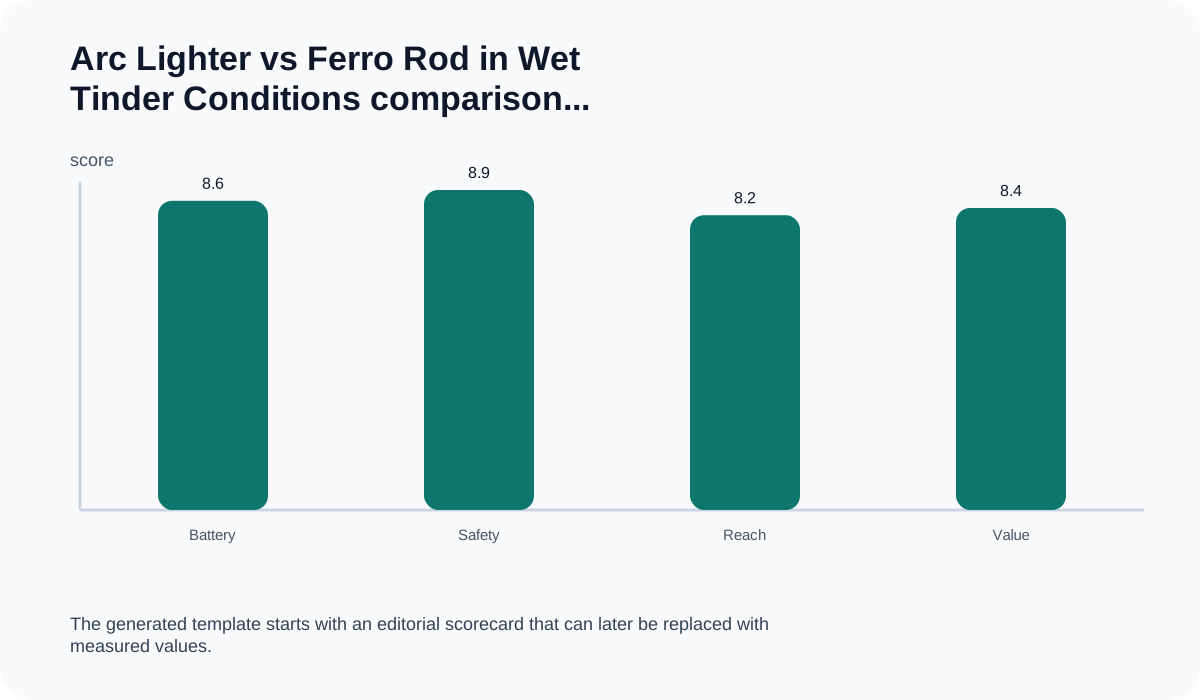
Arc Lighter vs Ferro Rod in Wet Tinder Conditions
Compare the performance of 1,100°C arc lighters and 3,000°C ferro rods for igniting wet tinder. Discover which fire starter is best for extreme weather.
Executive Summary
When trying to start a fire in wet conditions, survivalists and outdoor enthusiasts are caught in a “finesse vs. force” debate: the high-tech, one-handed convenience of an arc lighter versus the primitive, fail-proof reliability of a ferrocerium (ferro) rod.
The direct answer: For modern outdoor applications, a dual-carry system is the optimal approach. Arc lighters are exceptionally capable in high winds (up to 80mph) and are perfect for instant ignition of fine, dry tinder. However, when dealing with damp, thick tinder in freezing temperatures, the ferro rod is superior. The sheer volume of 3,000°C sparks generated by a ferro rod is nearly 3x hotter than a plasma arc (1,100°C), making it highly effective at drying out and igniting marginal materials.
Technical Comparison: Arc Lighter vs. Ferro Rod
The following table highlights the core functional differences between leading arc lighters (e.g., LcFun Waterproof Plasma, Black Beard, REIDEA) and premium ferro rods (e.g., Überleben Zünden Fatty, Exotac fireROD XL).
| Feature | Arc Lighter | Ferro Rod |
|---|---|---|
| Ignition Temperature | Approx. 1,100°C - 1,200°C | Approx. 3,000°C |
| Power Source | USB-C/Micro-USB Lithium Battery | Manual Friction / Mischmetal Alloy |
| Waterproof Capability | IP67 (Relies on casing/O-rings) | Inherently Waterproof |
| Life Expectancy | 300+ ignitions per charge; ~500 cycles | 3,000 to 12,000+ strikes |
| Price Range | 35 | 55 |
| Primary Pain Point | Battery drain in cold; narrow electrode gap | Requires manual skill & dry tinder prep |
Extreme Conditions Performance
To understand where each tool excels, we reviewed tests spanning continuous rain, high wind, and freezing cold scenarios. The data indicates clear specialized use cases for each fire starter.
Waterproofing and Wet Tinder Handling
Arc Lighters: Plasma arc lighters utilize IP67-rated O-ring seals to protect their internal electronics. As long as the latch remains closed, products like the Tough-Grid Survival Lighter or LcFun withstand submersion. However, their fixed electrode gap severely restricts what they can ignite. If tinder is wet and thick, the arc cannot physically wrap around or dry the material effectively.
Ferro Rods: Brands like Light My Fire and Bayite produce rods that are chemically inherently waterproof. You can pull a ferro rod out of a lake, wipe it off, and immediately strike it. More importantly, when paired with highly combustible magnesium shavings, the 3,000°C sparks create enough concentrated thermal mass to aggressively dry out and ignite damp, marginal tinder that an arc lighter would fail to light.
Cold Weather Battery Vulnerability
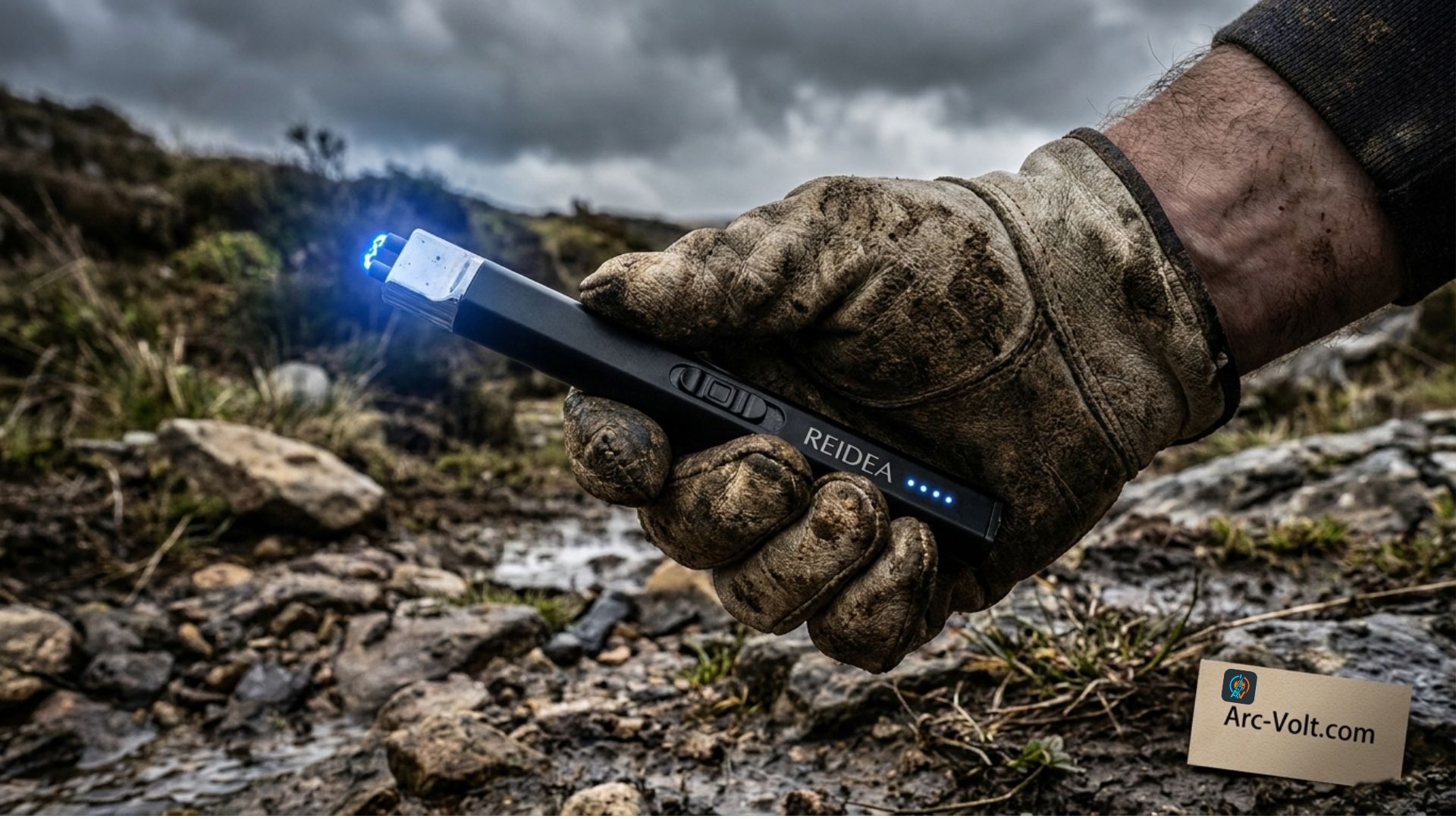
One of the most significant real-world pain points for arc lighters is extreme cold. The lithium-ion batteries inside arc lighters lose 20% to 50% of their efficiency in sub-zero freezing temperatures. If you carry a REIDEA R1 Pro USB-C Arc Lighter in winter, it must be stored close to body heat to guarantee ignition. Conversely, a ferro rod has zero electronic fail points and works consistently regardless of ambient temperature, though it does demand manual dexterity—which can be a challenge if hypothermia sets in.
Safety Considerations Checklist
When choosing your ignition source, evaluate the differing safety risks:
Arc Lighter Safety:
- No Fuel Leaks: No risk of butane or fluid leaking onto gear in your pack.
- Auto Shut-Off: Quality models feature a 10-second automatic safety shut-off to prevent overheating.
- [!] Shock Risk: High-voltage shock is possible if the live electrodes are accidentally touched.
Ferro Rod Safety:
- No Electronics: Zero risk of battery failure or short-circuiting.
- [!] Wildfire Risk: 3,000°C sparks can easily travel several feet, increasing the risk of accidental brush fires.
- [!] Handling Injuries: Requires a sharp striker (like the back of a knife) which can lead to cuts if hands are shaking from cold or adrenaline.
- [!] Magnesium Caution: If using magnesium shavings for wet tinder, be aware they are highly combustible and notoriously difficult to extinguish once lit.
Final Verdict
For sheer one-handed ease of use and unmatched wind resistance (up to 80mph), arc lighters are a premium choice for mild-to-moderate outdoor conditions. However, when facing wet, unrefined tinder in freezing, remote environments, the primitive reliability and intense 3,000°C heat of a ferro rod make it the uncontested gold standard. A smart survival kit should leverage both: an arc lighter for primary convenience, and a ferro rod as the ultimate fail-safe backup.
Trustworthy Sources
- Field & Stream: The Best Camping Lighters, Tested and Reviewed - Evaluated real-world testing data on waterproof claims and wind resistance for plasma models.
- SurvFire: Ferro Rod vs Lighter: Which Fire Starter Should You Trust? - Provided expert comparison on the mechanics of ignition and survival reliability.
- TruePrepper: Best Survival Lighters | Tested & Reviewed - Detailed battery degradation in cold weather and the physical durability of ignition types.