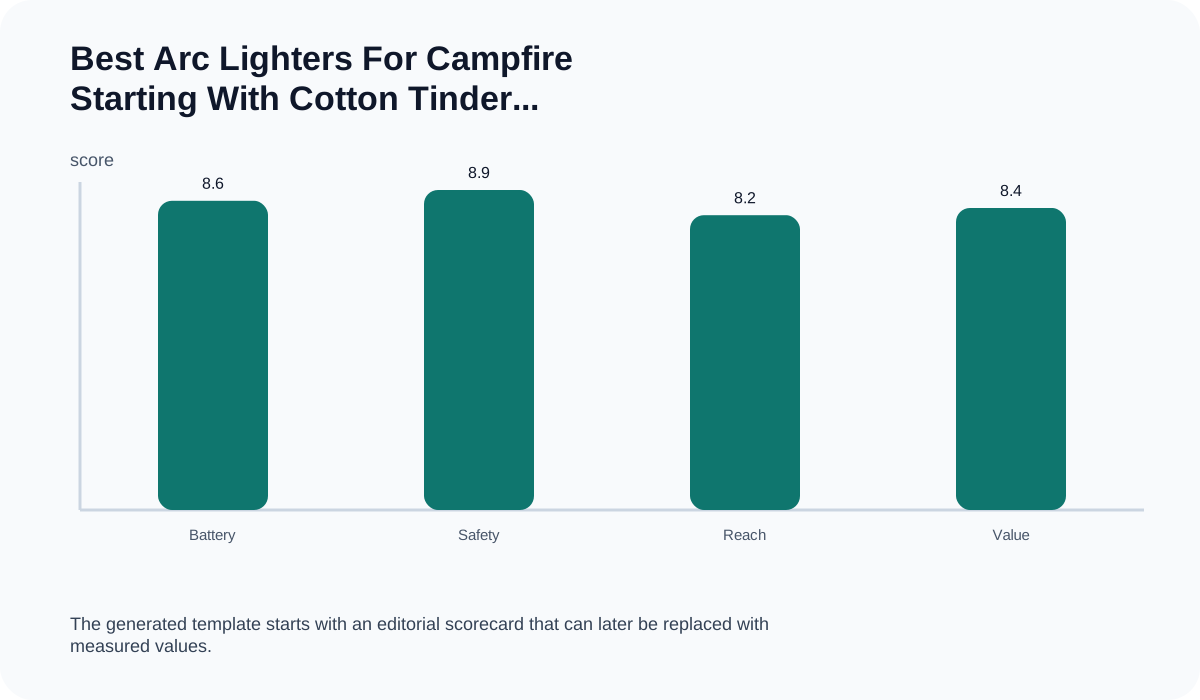
Best Arc Lighters For Campfire Starting With Cotton Tinder
Compare top-rated arc lighters for igniting cotton tinder. We analyze IP56 waterproofing, USB-C charge times, and realistic battery lifespans.
Executive Summary
Arc lighters are highly efficient tools for campfire starting, particularly when paired with cotton tinder. Generating a 1,100°C+ plasma temperature, these devices offer instant ignition in high winds where traditional butane flames fail. For outdoor survival use, IP56-rated models like the Tough Tesla 2.0 and LCfun Waterproof lead the market, providing superior dust and water resistance.
However, users must adapt their fire-starting technique. Because the plasma arc requires direct contact with fuel across a narrow electrode gap, cotton tinder—especially petroleum jelly-infused variants—must be manually fluffed before ignition. While modern arc lighters benefit from fast 45–60 minute USB-C charging, they require routine maintenance to clear electrode soot and suffer from battery degradation in sub-freezing temperatures.
Leading Arc Lighters: Specifications & Pricing
The following table outlines current leading arc lighters evaluated for campfire and survival preparation.
| Product | MSRP (Est.) | Waterproof Rating | Port Type | Key Feature |
|---|---|---|---|---|
| Tough Tesla 2.0 | $24.97 | IP56 | USB-C | Built-in Flashlight & Paratinder Lanyard |
| LCfun Waterproof | $14.99 | IP56 | USB-C | Best Budget/Lightweight |
| SOL Fire Lite | $19.99 | IP56 | Micro-USB | Includes 3ft of Tinder Cord |
| Suprus Camping | $11.99 | N/A | USB-C | Long Neck for Deep Tinder Piles |
Ignition Performance
Battery capacity dictates how many fire-starting attempts a user gets in the backcountry. Modern 2025-2026 outdoor lighters typically feature internal lithium-ion batteries ranging from 220mAh to 500mAh.
The Cotton Tinder Challenge
Cotton tinder, notably petroleum jelly-infused cotton balls, is the ideal fuel match for an arc lighter. However, the physical design of plasma lighters introduces a specific usability constraint: the narrow gap between the electrodes. Users cannot light thick kindling directly. The cotton tinder must be manually pulled apart and fluffed so that fine fibers can pass directly through the plasma stream. Direct contact is required for the 1,100°C arc to transfer heat and achieve instant combustion.
Real-World Limitations & User Pain Points
While highly effective, arc lighters present several pain points that buyers must manage:
- Cold Weather Degradation: Lithium-ion battery performance drops significantly in freezing temperatures. Expert survivalists recommend keeping the device in an inner clothing pocket against body heat prior to use.
- Electrode Soot Buildup: Igniting petroleum jelly cotton balls creates soot. Carbon deposits can “bridge” the narrow electrode gap, causing the lighter to misfire. Regular cleaning with a small brush or alcohol swab is mandatory for long-term reliability.
- Acoustic Discomfort: Arc lighters emit a high-pitched, high-frequency “whine” during operation. Users note this noise can be irritating to both humans and nearby pets.
- Device Lifespan: These lighters utilize non-replaceable batteries. Once the lithium-ion cell reaches the end of its charge lifecycle (typically an estimated 300 to 500 charge cycles), the device is essentially disposable.
Safety Considerations
Modern outdoor arc lighters utilize several mechanisms to prevent injury and device failure:
- 10-Second Auto-Shutoff: Prevents the electrodes and surrounding housing from overheating during stubborn ignition attempts.
- Double-Safety Locks: A combination of a physical latch and a push-button prevents accidental discharge while stored in tight pockets or backpacks (which also maintains the IP56 waterproof seal).
- High-Voltage Burn Risk: Direct contact with active electrodes causes localized electrical burns.
- Ozone Generation: The plasma reaction generates trace amounts of ozone. Users should avoid prolonged, continuous operation in highly confined, poorly ventilated spaces.
Final Verdict
For wet and windy survival conditions, an IP56-rated dual-arc lighter paired with fluffed, petroleum-infused cotton tinder is a highly reliable fire-starting system. The Tough Tesla 2.0 provides the best overall survival utility with its integrated lanyard and flashlight, while the LCfun Waterproof delivers exceptional battery efficiency and value. Buyers should prioritize USB-C models for faster 45-60 minute recharge times and ensure they commit to routine electrode cleaning.
Fire-Starting Checklist: Arc Lighters & Cotton
- Prep the Tinder: Pull the cotton ball apart to expose fine, dry fibers before exposing it to the arc.
- Warm the Battery: In winter weather, store the lighter near your body for 15-20 minutes before attempting to spark a fire.
- Check the Latch: Ensure the safety latch is fully closed during transport to maintain the IP56 waterproof seal.
- Clean the Contacts: After starting a fire (especially with petroleum jelly), wipe down the cooled electrodes with an alcohol swab to prevent carbon bridging.