Best Arc Lighters for High-Altitude Campsites: 2026 Performance Guide
Compare the best arc lighters for high-altitude camping. Learn why plasma outperforms butane above 10,000 feet, battery limits, and top waterproof models.
Executive Summary
Arc lighters are critical for high-altitude campsites because their plasma technology functions independently of atmospheric pressure. While traditional butane lighters struggle with poor oxygen-to-fuel ratios above 8,000 to 10,000 feet, arc lighters maintain 99% to 100% ignition efficiency at altitudes exceeding 15,000 feet. The best models for alpine environments combine IP56 or IP67 waterproofing, zinc alloy construction, and USB-C fast charging. However, users must account for sub-zero temperatures, which can reduce the lithium-ion battery’s effective capacity by 30% to 50%, requiring insulated storage strategies.
The Physics: Why Arc Lighters Beat Butane at Altitude
Ignition reliability at high elevations depends on atmospheric density. Butane requires a specific ratio of oxygen to fuel to combust. As campers ascend, the air thins, disrupting this ratio and causing butane lighters to sputter or fail entirely.
Plasma arc technology relies on electricity crossing a gap between electrodes to create a high-heat spark. Because it does not rely on ambient oxygen to create the initial heat source, it is highly resistant to both extreme wind and low atmospheric pressure.
Top Arc Lighters for High-Altitude Comparisons
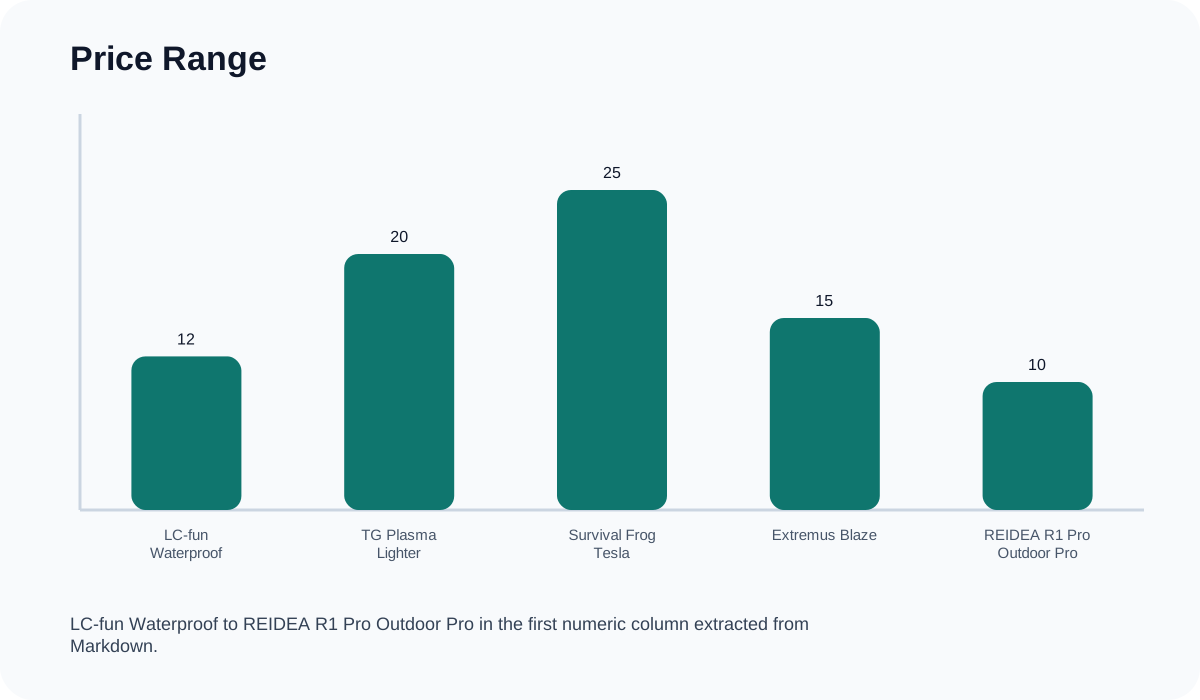
We evaluated five leading arc lighters based on real-world campsite performance, weather resistance, and battery capacity.
| Product Name | Price Range | IP Rating | Charging Type | Est. Battery (mAh) | Key Feature |
|---|---|---|---|---|---|
| LC-fun Waterproof | 17 | IP56 | USB-C | 220 | Budget Friendly |
| TG Plasma Lighter | 28 | IP67 | Micro-USB | 250 | Dual Arc Stability |
| Survival Frog Tesla | 35 | IP56 | Micro-USB | 300 | High Capacity Battery |
| Extremus Blaze | 22 | IP56 | Micro-USB | 220 | Survival Whistle Included |
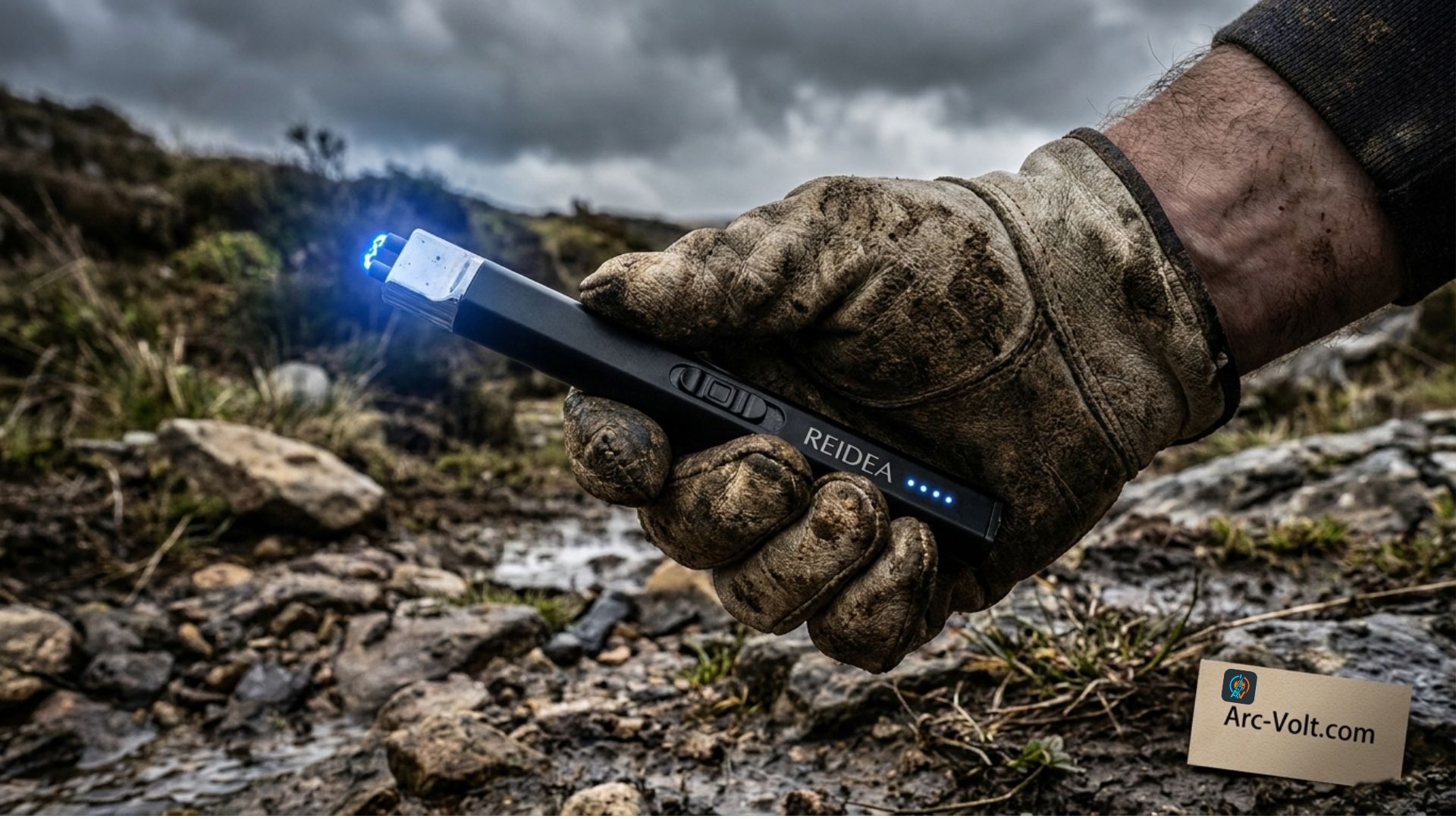
| REIDEA R1 Pro Outdoor Pro | 16 | IP56 | USB-C | 220 | Long Lasting and Safe Features |
Analysis of Critical Performance Factors
1. Weather Resistance & Durability
To survive alpine environments, “campsite grade” arc lighters must meet a minimum rating of IP56 (protection against dust and strong water jets). Top-tier survival lighters, such as the TG Plasma Lighter, achieve IP67, which allows for temporary immersion in up to 1 meter of water. Look for zinc alloy casings, which withstand drops and high-temperature discharges far better than cheaper plastics.
2. Cold Weather Battery Degradation
While altitude does not affect plasma, the accompanying cold weather severely impacts battery life. The lithium-ion cells in these devices (typically ranging from 220 to 300 mAh) lose 30% to 50% of their effective capacity when exposed to temperatures below 32°F (0°C). For winter alpine camping, users must store the lighter close to their body or inside an insulated sleeping bag to preserve charge.
3. Real User Pain Points
Despite their advantages, field reports highlight three consistent drawbacks:
- High-Pitched Frequency: The plasma arc generates a high-frequency noise that some users and pets find irritating.
- Electrode Distance: The short distance between the nodes makes lighting thick logs or large tinder bundles difficult; precision is required.
- Hinge Fragility: Even on zinc alloy lighters, the waterproof lid hinges are frequently made of plastic and represent a common point of mechanical failure.
4. Safety Considerations
Campsite models include internal printed circuit boards (PCBs) equipped with crucial safeguards:
- Automatic Timeout: Shuts off the arc after 7 to 10 seconds to prevent the electrodes from melting or overheating.
- Safety Locks: Mechanical lid locks ensure the device cannot accidentally activate inside a tightly packed backpack.
- Electrical Safeguards: Short circuit and overcharge protection manage power flow safely from modern power banks.
Final Verdict
For high-altitude backpacking above 10,000 feet, an arc lighter is vastly superior to butane. The Survival Frog Tough Tesla offers the highest battery capacity (300 mAh) for extended trips, while the LC-fun Waterproof provides the best modern value with its USB-C charging upgrade. If traversing wet environments, the TG Plasma Lighter is the definitive choice for its superior IP67 immersion rating.
High-Altitude Lighter Checklist
- Verify Altitude: Will you be above 8,000 feet? Pack an arc lighter as your primary ignition source.
- Check Charging Interface: Ensure your lighter matches your power bank cables (USB-C is strongly preferred).
- Prepare for Cold: Keep the lighter in an interior jacket pocket to prevent 30-50% battery degradation.
- Inspect Safety Mechanisms: Confirm the waterproof latch and safety lock are secure before packing.
- Bring Proper Tinder: Because the arc nodes are close together, pack fibrous, easily targeted tinder (like hemp cord or cotton balls) rather than relying on thick twigs.