Best Arc Lighters for Preppers Who Want Rechargeable Gear
Discover the best rechargeable arc lighters for preppers. We analyze battery life, cold weather performance, waterproof ratings, and essential buying criteria.
Executive Summary
Arc lighters are essential modern prepping gear because they eliminate reliance on volatile liquid fuels and can be indefinitely recharged via solar panels or power banks. Leading survival models like the Survival Frog Tough Tesla 2.0 and LC-Fun Waterproof Lighter generate windproof plasma arcs capable of igniting tinder in harsh conditions. Most survival arc lighters feature 220mAh batteries yielding 200 to 300 ignitions per charge and offer IP56 to IPX7 waterproof ratings. However, buyers must account for severe battery performance drops in extreme cold and the necessity for specific tinder strategies due to the narrow dual-arc ignition area.
Top Prepper Arc Lighters Compared
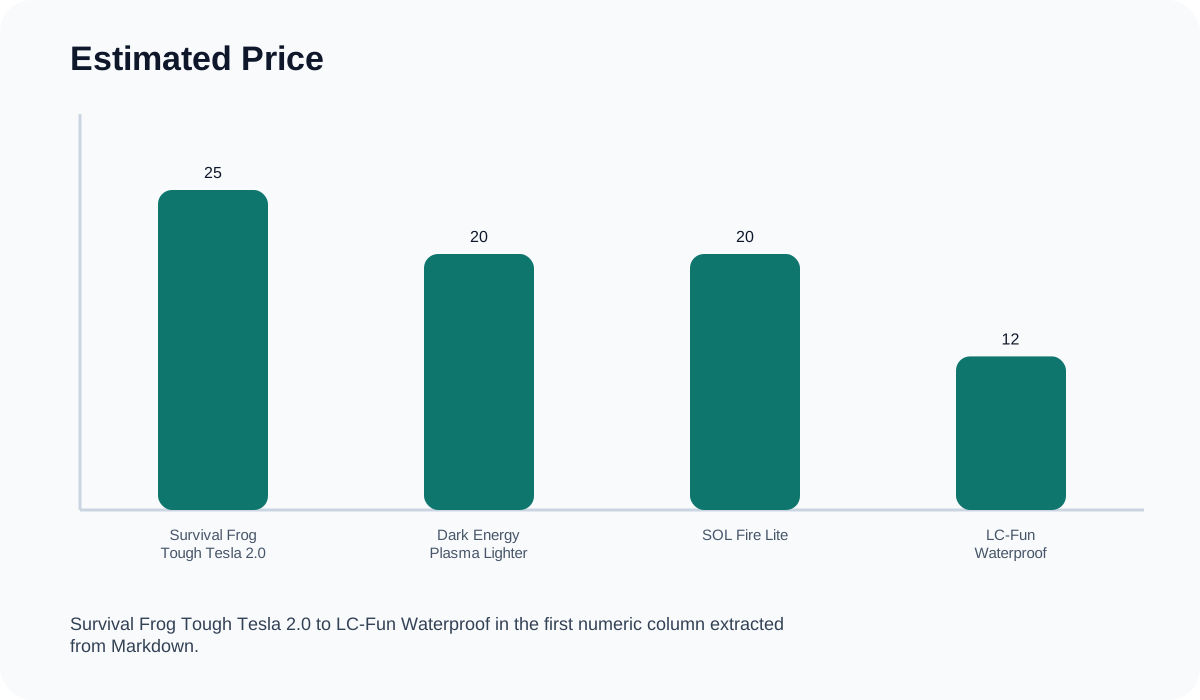
The following table outlines the leading rechargeable arc lighters evaluated for preparedness loadouts, comparing port standards, protective ratings, and feature sets.
| Product | Estimated Price | Charging Port | Waterproof Rating | Key Feature |
|---|---|---|---|---|
| Survival Frog Tough Tesla 2.0 | 35 | USB-C | IPX7 | Flashlight & Whistle |
| Dark Energy Plasma Lighter | 30 | USB-C | IP56 | Tactical Finish |
| SOL Fire Lite | 25 | Micro-USB | Water-Resistant | 10ft Tinder Cord |
| LC-Fun Waterproof | 18 | Micro-USB | IP56 | Included Lanyard |
Performance Analysis
Battery Efficiency and Cold Weather Limitations
Standard survival arc lighters utilize 220mAh Lithium Polymer (Li-Po) batteries. Under optimal conditions (70°F), these batteries deliver 200 to 300 ignitions. However, efficiency degrades significantly in freezing conditions. At temperatures below 0°F, capacity drops by approximately 70%, effectively turning a 300-ignition lifespan into fewer than 90 ignitions, with total device failure common at -10°F. Preppers must store arc lighters in inner clothing layers during winter excursions to maintain core battery warmth.
Charging Standards: The Shift to USB-C
Charging infrastructure is a critical preparedness metric. While budget models like the LC-Fun and SOL Fire Lite still utilize legacy Micro-USB ports, modern tactical lighters—including the Survival Frog Tough Tesla 2.0, REIDEA, and True Plasma lighters—have transitioned to USB-C. This upgrade facilitates standard 1.5-hour rapid charging and ensures cable uniformity with modern solar arrays, radios, and emergency power banks, reducing the amount of redundant gear in a bug-out bag.
Waterproof Mechanisms and Safety Risks
Waterproof claims (IP56 to IPX7) on electric lighters depend entirely on a physical, mechanical locking latch that compresses an O-ring around the lid. If this latch is broken, compromised, or left open, the high-voltage internal circuitry becomes immediately vulnerable to moisture. Preppers must treat the mechanical latch as a single point of failure; water intrusion will cause short-circuiting that permanently destroys the device.
Real-World Usability and Pain Points
Despite their advantages, plasma lighters have distinct operational limitations compared to traditional butane lighters:
- Soot Buildup: Igniting damp or resinous tinder causes carbon soot to accumulate on the ceramic electrodes. If not cleaned regularly, this buildup physically obstructs the plasma arc.
- Tinder Constraints: The narrow gap between the dual-arc nodes requires tinder to be pushed directly into the plasma field. It is practically impossible to light flat surfaces. Protruding wicks, char cloth, or frayed paracord are required.
- Acoustic Frequencies: The high-voltage arc emits a high-pitched frequency that can disturb dogs, horses, and other domestic or wild animals.
Final Verdict
For a standardized prepper loadout, the Survival Frog Tough Tesla 2.0 offers the highest value. Its USB-C charging ensures compatibility with modern survival electronics, and the IPX7 waterproof rating provides reliable moisture defense. Budget-conscious preppers building multiple kits may opt for the LC-Fun Waterproof Lighter, but should be prepared to maintain legacy Micro-USB cables.
Prepper Arc Lighter Deployment Checklist
To ensure your arc lighter functions reliably when off-grid, follow this maintenance checklist:
- Standardize Cables: Ensure your solar charger or power bank matches the lighter’s port (USB-C preferred).
- Pack Appropriate Tinder: Carry frayed tinder, char cloth, or fire plugs that easily fit between the 3mm-5mm electrode gap.
- Maintain the O-Ring: Inspect the locking latch and rubber seal monthly for cracking or debris.
- Carry a Cleaning Tool: Pack a small brush or alcohol wipe to remove electrode soot buildup after building a fire.
- Body Carry in Winter: Always carry the lighter in an interior base-layer pocket to prevent severe Li-Po battery drain in sub-freezing weather.