Best Backup Gear for Arc Lighters When Batteries Fail
Discover the most reliable backup fire starters for arc lighters, including ferro rods and stormproof matches, to ensure ignition when lithium batteries fail.
Executive Summary
While arc lighters provide excellent windproof, fuel-free ignition, they possess a critical vulnerability: lithium-ion battery failure. In extreme conditions, such as sub-zero temperatures or heavy moisture, the electronic components can fail. The most reliable backup gear relies on a “belt and braces” approach—combining electronic, chemical, and mechanical ignition. The industry standards for backup fire starting are ferrocerium rods (like the Exotac nanoSTRIKER XL) for thousands of mechanical strikes, and stormproof matches (like the UCO Stormproof Match Kit) for instant, high-intensity heat that burns even when submerged.
Why Arc Lighters Need a Backup
Arc lighters are invaluable for off-grid use, but real-world users report two major pain points:
- Cold Weather Battery Anxiety: In sub-zero climates, lithium-ion battery discharge rates can drop by up to 50%. This severe power drain leaves users vulnerable if they do not have a non-electronic backup.
- Moisture and Short-Circuiting: If an arc lighter’s electrodes become damp or submerged, they often fail to arc due to short-circuiting.
- Physical Reach Limitations: Arc lighters struggle with “deep” ignition tasks, such as reaching into the center of a nested tinder bundle, where a traditional flame or spark shower excels.
Reliability Under Environmental Stress
The following chart illustrates how different ignition tools perform across various environmental extremes on a 10-point reliability scale.
Leading Backup Solutions
When your primary arc lighter fails, you need reliable alternatives that are impervious to the same environmental stressors.
1. Ferrocerium Rods
Ferro rods generate sparks upwards of 5,400°F (3,000°C) through mechanical friction. Leading options like the Exotac nanoSTRIKER XL and Überleben Zünden remain 100% functional even after total submersion in water.
- Cost: 35.
- Lifespan: Depending on thickness, they provide 3,000 to over 20,000 strikes.
- Caveat: They require proper technique and paired dry tinder (such as Black Beard Fire Starters) to catch the spark.
2. Stormproof Matches
For instant, wind-defeating flame, stormproof matches are unparalleled. Products like the UCO Stormproof Match Kit and Zippo Typhoon Matches use a proprietary chemical coating that allows them to reignite even after being briefly dunked underwater.
- Cost: 15 per kit.
- Lifespan: Kits generally contain 15 to 25 “emergency flares,” making them a highly effective but consumable resource.
- Caveat: Low extended duration; you only get one fire per match.
Emergency Ignition Comparison Matrix
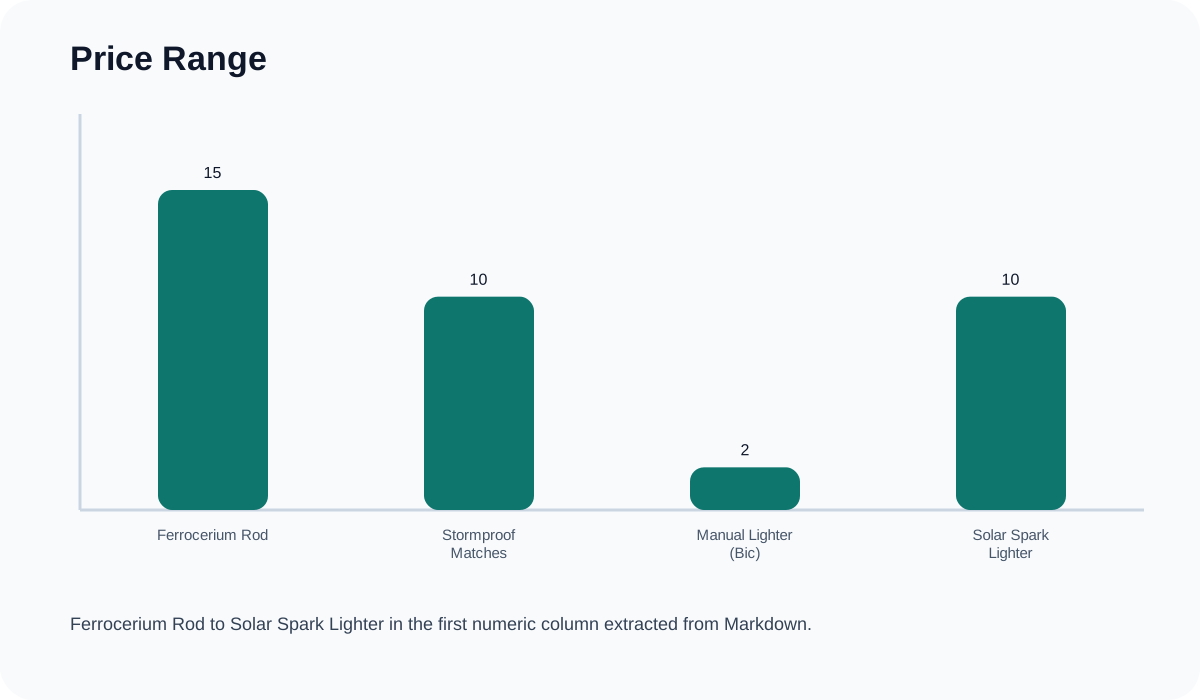
To help you build out your fire-starting kit, compare the performance metrics of primary and backup tools below:
| Tool Category | Price Range | Charging/Power | Life Expectancy | Weather Rating |
|---|---|---|---|---|
| Ferrocerium Rod | 35 | Friction | 12,000+ Strikes | All-Weather |
| Stormproof Matches | 15 | Chemical | 1 Match per Fire | Wind/Waterproof |
| Manual Lighter (Bic) | 5 | Butane/Flint | 1,000 - 3,000 Lights | Fair (Fails in Cold) |
| Solar Spark Lighter | 12 | Solar/Optical | Infinite (Sunny) | Windproof/Dry |
Safety and Storage Considerations
When carrying multiple forms of ignition, proper storage is vital to avoid compounding emergencies.
- Arc Lighters: Present a minor high-voltage shock risk. More critically, if the casing is punctured, there is a potential for lithium thermal runaway. Keep them in hard-sided cases.
- Matches: Because stormproof matches are highly reactive, they must be stored in specialized waterproof, airtight containers to prevent accidental ignition via friction or degradation from ambient humidity.
- Liquid/Butane Lighters: While a Bic Mini Lighter is an affordable backup, its fuel is prone to evaporation if the button is accidentally depressed in a pack, and it routinely fails in freezing temperatures.
Final Verdict
Relying exclusively on a single fire starter is a critical vulnerability. The most resilient wilderness setup utilizes an arc lighter as the primary windproof tool, supplemented by a ferrocerium rod for infinite, waterproof mechanical sparks, and a sealed capsule of stormproof matches for absolute emergencies.
Off-Grid Ignition Checklist
Use this checklist to ensure your fire kit is properly redundant:
- Primary Electronic: Fully charged Arc Lighter.
- Primary Mechanical: Ferrocerium rod (e.g., Exotac nanoSTRIKER XL).
- Emergency Chemical: Sealed stormproof matches (e.g., UCO or Zippo).
- Tinder: Commercially prepared tinder (e.g., Black Beard Fire Starters) to catch mechanical sparks easily.
- Storage: Airtight, waterproof casing for chemical igniters.