Best Battery Packs for Winter Camping Power Reliability
Standard power banks fail in sub-zero temps. Discover the best cold-weather batteries featuring internal heating, IP68 ratings, and reliable BMS.
Executive Summary
When winter camping, standard lithium-ion batteries are a liability. At 0°C, a standard power bank loses approximately 20% of its capacity, and by -20°C, capacity plunges by 40% to 50%. Attempting to charge these units below freezing causes permanent battery damage.
To ensure power reliability in the cold, you need specialized thermal management. The best cold-weather battery packs utilize integrated PI heating films, carbon-fiber shells, and advanced Battery Management Systems (BMS). Modern solutions like the Nitecore Summit 10000 and heated EcoFlow stations can maintain up to 70% efficiency even at a punishing -40°C.
The Technical Reality: Charging vs. Discharging
Battery packs face two distinct challenges in cold weather:
- Discharging (Powering Devices): Most standard battery packs can safely discharge power down to -20°C, albeit with significant capacity loss.
- Charging (Taking in Power): Charging a lithium-ion battery below 0°C is highly destructive. It causes “lithium plating,” where lithium metal builds up on the anode, permanently degrading the cell and creating safety risks. A reliable winter power bank must include a BMS that physically locks out charging at sub-zero temperatures unless the battery is pre-heated.
Capacity Retention: Standard vs. Cold-Optimized
Below is a breakdown of how ambient temperature impacts usable battery capacity. Cold-optimized units deploy active heating to protect internal cells.
Comparison of Top Winter-Ready Battery Solutions (2025-2026)
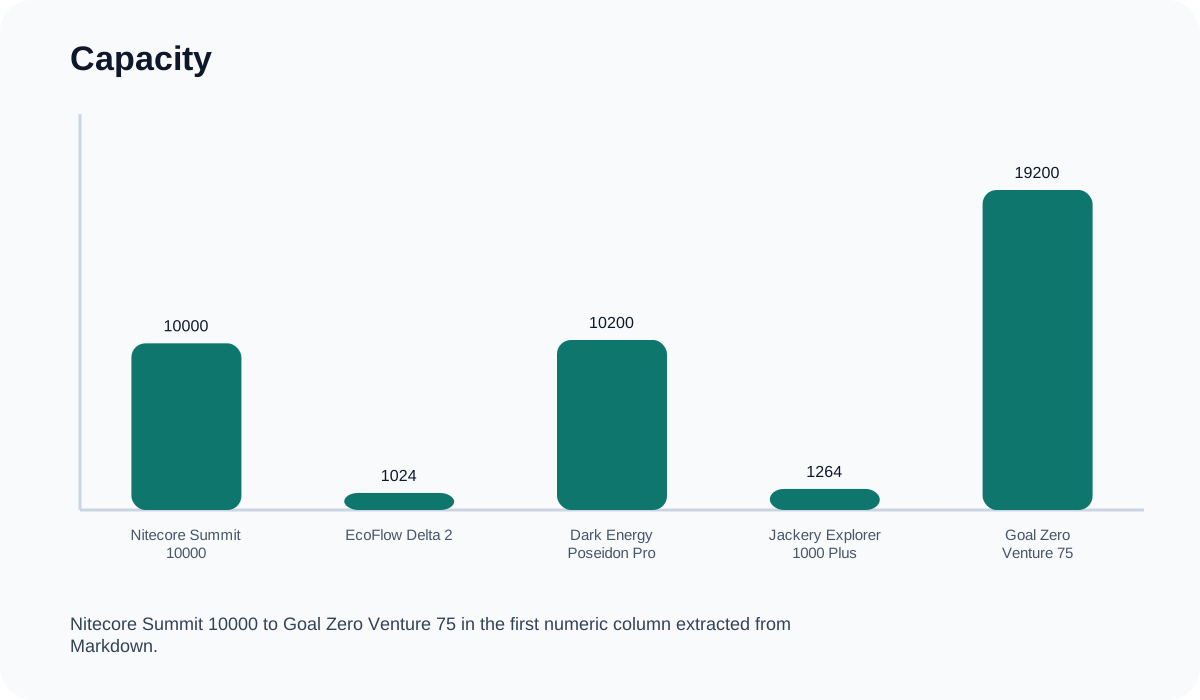
| Product | Capacity | Operating Temp | Key Winter Feature | Price Range |
|---|---|---|---|---|
| Nitecore Summit 10000 | 10,000 mAh | -40°C to 50°C | Integrated carbon fiber heating system | 100 |
| EcoFlow Delta 2 | 1,024 Wh | -20°C to 45°C | Smart BMS with cold-charging lockout/heating | 999 |
| Dark Energy Poseidon Pro | 10,200 mAh | -20°C to 60°C | IP68 Waterproof + Double-wall insulation | 120 |
| Jackery Explorer 1000 Plus | 1,264 Wh | -10°C to 40°C | LiFePO4 safety + Modular expansion | 1,100 |
| Goal Zero Venture 75 | 19,200 mAh | 0°C to 45°C | Rugged IP67 shell (Best for ‘jacket pocket’ use) | 110 |
Top Battery Pack Analysis
The Heating Innovator: Nitecore Summit 10000/20000
For ultra-light backpackers facing extreme cold, the Nitecore Summit series is the current benchmark. It pairs a carbon fiber shell with integrated PI heating films to actively maintain internal temperatures. This allows the unit to operate reliably down to -40°C, offering up to 70% efficiency when standard batteries are entirely dead.
The Moisture Defender: Dark Energy Poseidon Pro
While temperature resistance is the primary concern, waterproofing is heavily tied to winter survival. Melting snow and interior tent condensation are notorious electronics killers. The Dark Energy Poseidon Pro features an IP68 waterproof rating and double-wall insulation, protecting it against both extreme shock and water intrusion while functioning down to -20°C.
High-Capacity Basecamp Solutions: EcoFlow Delta 2 & Jackery Explorer 1000 Plus
For basecamps requiring heavy power (1,000+ Wh), larger power stations are required. The EcoFlow Delta 2 uses a Smart BMS that intelligently manages cold-weather environments—locking out damaging cold charges and initiating heating cycles. The Jackery Explorer 1000 Plus utilizes robust LiFePO4 chemistry, which inherently offers better safety profiles, though you will still need to respect the -10°C operating threshold by using external insulation or generating low-load ambient heat.
Winter Power Reliability Checklist
When buying or operating a battery in cold environments, keep these pain points and safety rules in mind:
- Never Force a Charge: If your battery pack is below freezing, warm it up in your sleeping bag or jacket before attempting to charge it via solar panels or an outlet.
- Watch for Condensation: Moving a battery from a -10°C exterior to a heated 15°C tent will cause condensation. Choose IP65/IP68 rated models to prevent internal short circuits.
- Keep it Close: For smaller banks without active heating like the Goal Zero Venture 75, the best thermal management is human body heat. Keep it in an interior jacket pocket.
Final Verdict
If you need reliable portable power that won’t die overnight in the snow, standard battery banks are insufficient. For backpackers, the active-heating technology of the Nitecore Summit 10000 makes it the top choice for uncompromised sub-zero reliability. For rugged, wet conditions, the Dark Energy Poseidon Pro offers unmatched durability. For full camp setups, EcoFlow’s smart BMS ensures your larger station won’t suffer permanent damage from winter charging.
Trustworthy Sources
- Best Power Bank for Cold Weather 2026
- How Does Extreme Cold Weather Impact Your Outdoor Power Station?
- Battery Capacity vs Temperature: Li-Ion and LFP Comparison