Best BBQ-Style Plasma Lighters for Overlanding
Discover the top BBQ-style plasma lighters for overlanding, featuring flexible necks, USB-C charging, and windproof arcs for reliable off-grid ignition.
Executive Summary
For overlanders, the ideal ignition tool must function flawlessly in high winds, integrate with standard off-grid charging systems (like 12V vehicle banks or portable solar), and safely reach recessed camp stove burners. BBQ-style plasma lighters, characterized by extended or 360-degree flexible necks, effectively meet these criteria.
By leveraging high-voltage electric arcs instead of volatile liquid fuels, these lighters eliminate the risk of fuel evaporation at altitude. Top-tier models from Survival Frog and S.O.L. offer ruggedized, IPX7 waterproof designs capable of delivering up to 100+ ignitions per 2-hour USB-C charge. Budget-friendly options from REIDEA and Ronxs provide excellent reach for camp kitchens but require careful handling in wet conditions. While highly effective, users must account for lithium-ion battery sensitivity in sub-freezing temperatures and conduct basic electrode maintenance to prevent soot buildup.
Leading Overlanding Plasma Lighters Compared
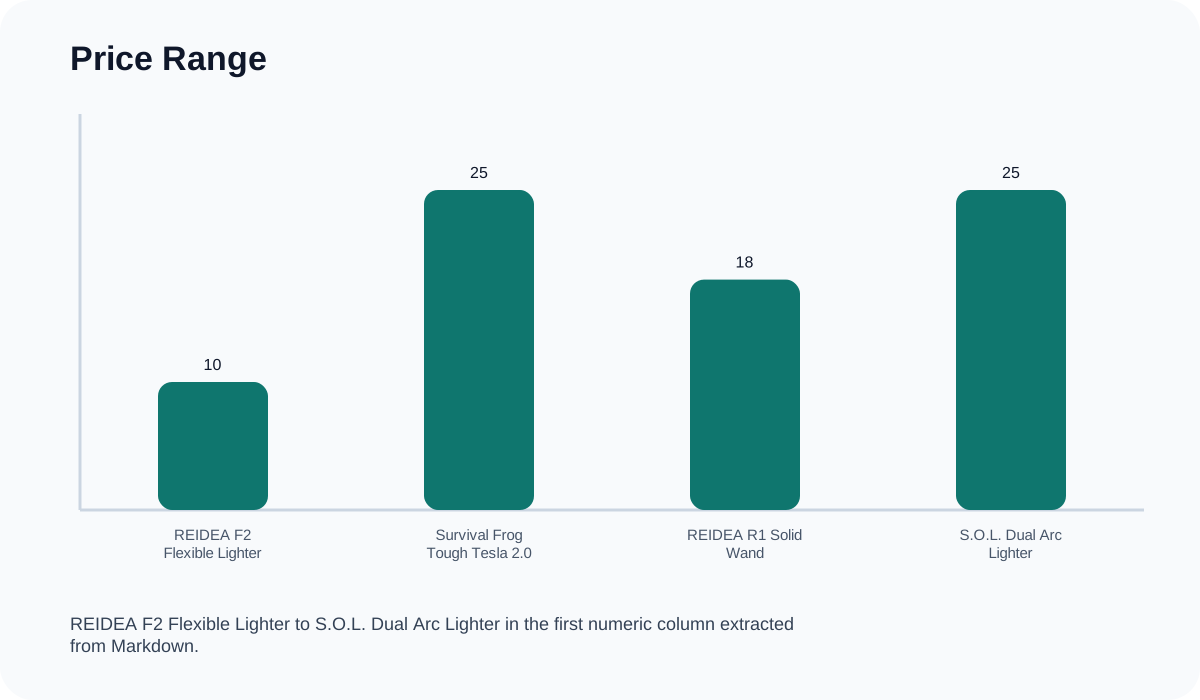
The table below details the top BBQ-style and wand-style plasma lighters currently dominating the overlanding space based on form factor, price, and weather resistance.
| Model | Style | Price Range | Charging | Waterproof | Best For |
|---|---|---|---|---|---|
| REIDEA F2 Flexible Lighter | 360° Flex Neck | 15 | USB-C | No (Splash only) | Budget/Stove Lighting |
| Survival Frog Tough Tesla 2.0 | Rugged Pocket/Wand | 30 | USB-C | Yes (IPX7) | Survival/Rainy Weather |
| REIDEA R1 Solid Wand | Fixed Neck | 22 | Micro-USB | No | Static Camp Kitchens |
| S.O.L. Dual Arc Lighter | Compact Wand | 28 | USB-C | Yes (Sealed) | Weight-Conscious Overlanding |
Battery Performance and Charge Times
When evaluating a plasma lighter for off-grid travel, the relationship between charging time and the number of guaranteed ignitions is a critical metric.
Charging Infrastructure
USB-C is the current gold standard for field charging. Overlanders can fully recharge leading units like the Survival Frog Tough Tesla 2.0 or S.O.L. Dual Arc in approximately 120 minutes using standard vehicle power banks or solar panels. Older models like the REIDEA R1 still rely on Micro-USB, which may require carrying redundant cables.
The “Cold Soak” Limitation
A documented pain point for plasma lighters is battery performance in extreme cold. Because they rely on lithium-ion batteries, “cold soaking” (leaving the lighter in freezing temperatures overnight) significantly degrades the battery’s chemical efficiency. Users report drastically reduced ignition counts when operating below freezing (0°C / 32°F). Pro tip: Keep the lighter in an interior jacket pocket prior to use in winter conditions.
Form Factor: Why “BBQ-Style” Wins for Overlanding
Standard pocket-sized arc lighters fall short in overlanding environments. A 360-degree flexible neck or extended fixed wand is vastly superior for the following reasons:
- Safe Gas Ignition: Long necks keep hands safely away from the sudden flare-ups associated with lighting propane-heavy recessed camp stoves or Coleman-style two-burners.
- Precision: Flexible necks allow you to snake the plasma arc through stacked firewood to reach inner tinder bundles without disrupting the campfire structure.
Weatherproofing Realities
Not all plasma lighters are built for the elements. While the electric arc itself is inherently windproof, the housing dictating water resistance varies wildly:
- Splash Resistant (REIDEA, Ronxs, Suprus): Most budget BBQ wands are only designed to survive light kitchen spills or brief drizzle. They lack rubberized gaskets.
- True IPX7 Waterproof (Survival Frog, S.O.L.): These are sealed inside survival cases with physical locking latches and O-rings, allowing them to survive full submersion.
Critical Maintenance: Electrode Cleaning
A frequently overlooked aspect of plasma lighter ownership is electrode maintenance. The gap between the electrodes is narrow. When lighting wood, paper, or fibrous tinder, soot and organic residue quickly build up on the ceramic prongs. Over time, this soot can “bridge” the gap, preventing the high-voltage arc from firing.
The Fix: Overlanders must carry a small supply of cotton swabs and rubbing alcohol to routinely clean the prongs.
Final Verdict
For standard vehicle-based camping where cooking is the primary focus, the REIDEA F2 Flexible Lighter (15) offers unbeatable reach and convenience. However, if your overlanding routes involve severe weather, river crossings, or emergency preparedness, investing 30 in a sealed, IPX7-rated unit like the Survival Frog Tough Tesla 2.0 or S.O.L. Dual Arc is essential for guaranteed off-grid fire starting.
Overlander’s Checklist & FAQ
- Can I charge a plasma lighter with my portable solar panel? Yes. Most modern plasma lighters utilize a USB-C interface and draw minimal wattage, making them easily rechargeable via portable solar setups in 1 to 2 hours.
- Are plasma lighters safe to carry in a hot vehicle? While safer than pressurized butane canisters, they contain lithium-ion batteries. Store them out of direct sunlight and avoid leaving them on dashboards during peak summer heat.
- Will they light thick kindling? No. The narrow gap between the electrodes requires thin, fibrous tinder (like frayed jute twine, dry leaves, or paper) to pass directly through the electrical arc.