Best Charging Hubs for Family Campsites with Multiple Devices
Discover the top 1000Wh+ portable charging hubs for family camping. Compare Anker, Jackery, EcoFlow, and Goal Zero on capacity, recharge time, and safety.
Executive Summary
For family camping trips lasting two to three days, portable power stations with a capacity between 1000Wh and 1500Wh serve as the optimal sweet spot. These charging hubs provide sufficient energy to power multiple smartphones, tablets, small coolers, and fans without succumbing to “capacity anxiety.” Leading the market are units featuring LiFePO4 (Lithium Iron Phosphate) battery chemistry—such as the Anker Solix C1000 and Jackery Explorer 1000 v2—which boast a 3000+ cycle life, exceptional thermal stability, and rapid AC recharge times under 1.5 hours. While most power stations lack true waterproofing, rugged options like the Goal Zero Yeti 1500 offer an IPX4 rating to withstand common outdoor hazards.
Model Comparison
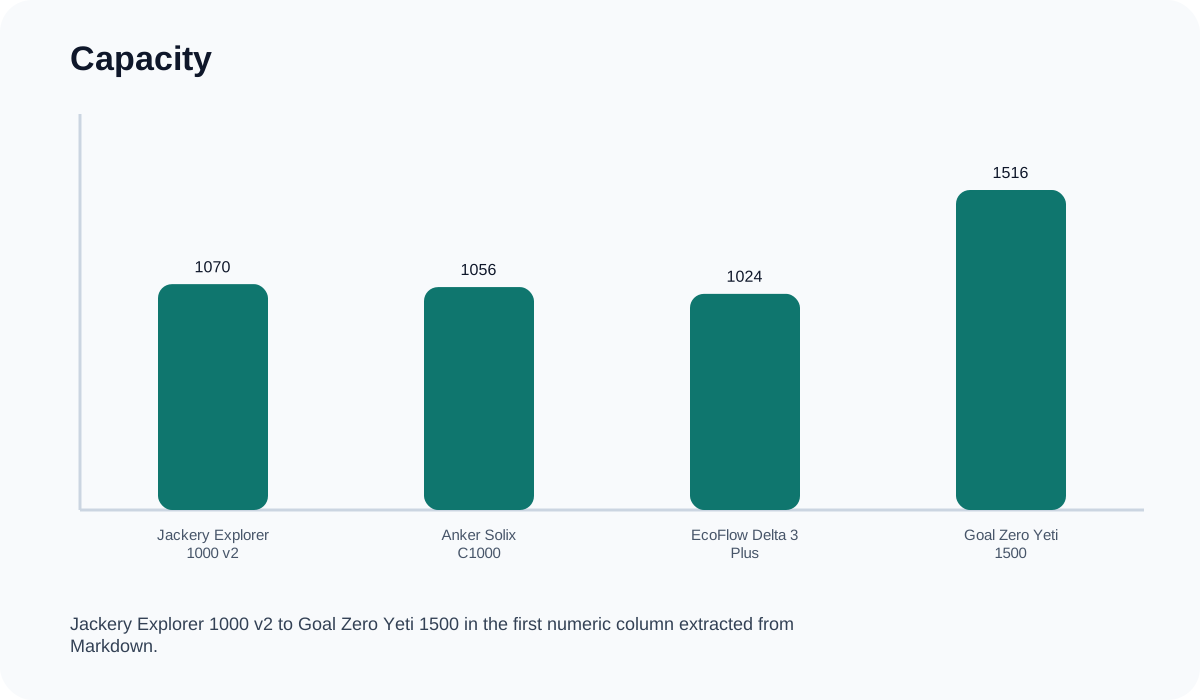
The following table outlines the leading 1000Wh+ portable power stations based on capacity, weight, pricing, and specific use cases for family camping.
| Model | Capacity | Price (Est.) | Weight | Best For | Ports |
|---|---|---|---|---|---|
| Jackery Explorer 1000 v2 | 1070Wh | 799 | 23 lbs | Portability | 3x AC, 2x USB-C |
| Anker Solix C1000 | 1056Wh | 699 | 28 lbs | Fast Charging | 6x AC, 2x USB-C |
| EcoFlow Delta 3 Plus | 1024Wh | 899 | 27 lbs | Smart Features | 6x AC, 2x USB-C |
| Goal Zero Yeti 1500 | 1516Wh | 1,500 | 53 lbs | Durability (IPX4) | 4x AC, 6x USB |
Recharge Speed by Power Source
Recharge speed is a critical factor for last-minute trip preparation. AC wall outlets and smart generators offer the fastest return to full capacity, while car outlets require significantly longer lead times.
Key Analysis Sections
Capacity and the 1000Wh Sweet Spot
Why 1000Wh is necessary: Families consistently underestimate their power usage on multi-day trips. A power hub between 1000Wh and 1500Wh is required to simultaneously manage high-drain items like small coolers and CPAP machines alongside low-drain items like smartphones, tablets, and LED lights. Units with less capacity frequently lead to “capacity anxiety,” where devices are dead by the second day of a weekend trip.
Battery Chemistry and Fast Recharging
LiFePO4 dominance: Modern top-tier charging hubs now utilize LiFePO4 (Lithium Iron Phosphate) batteries. Compared to traditional Lithium-ion, LiFePO4 batteries offer massive longevity improvements, easily surpassing 3,000 charge cycles before noticeable degradation. Furthermore, units like the Anker Solix C1000 and EcoFlow Delta 3 Plus leverage this chemistry to support highly accelerated 0-100% AC charging in approximately one hour.
The Reality of Waterproofing
Protecting your investment: Despite being outdoor gear, the vast majority of portable power stations are not waterproof and require indoor tent storage or dedicated weather covers. The notable exception is the Goal Zero Yeti 1500, which includes port shields and an official IPX4 water resistance rating, making it uniquely capable of handling sudden rain showers and morning campsite dew.
Overcoming User Pain Points
Real-world testing and user feedback highlight three primary pain points during car camping:
- Weight: Moving a hub from a car trunk to a campsite is labor-intensive. Most 1000Wh models weigh between 23 and 28 lbs, but high-capacity rugged units like the Goal Zero Yeti 1500 weigh a hefty 53 lbs.
- Noise pollution: Families frequently report being disturbed by loud internal cooling fans kicking on during the night when powering items like fans or CPAP machines.
- Display accuracy: Under very low wattage loads (like charging a single smartphone), the “time remaining” displays on many units can be inaccurate.
Safety Considerations
Tent safety: Fire risk and overheating are primary concerns in enclosed spaces like family tents. Modern stations mitigate this using integrated Battery Management Systems (BMS) and thermal sensors. Because they do not rely on combustible fuels, they produce zero carbon monoxide, making them inherently safer for indoor tent use than traditional gas generators. The thermal stability of LiFePO4 further reduces fire risk.
Final Verdict
For most families, the Anker Solix C1000 is the strongest overall recommendation due to its blend of competitive pricing (699 estimated), manageable weight (28 lbs), 6x AC ports, and ultra-fast one-hour recharge time. If maximum portability is the strict priority, the lighter 23-lb Jackery Explorer 1000 v2 is an excellent alternative. Conversely, families camping in unpredictable weather should heavily consider investing in the Goal Zero Yeti 1500 for its rare IPX4 durability, provided they can manage the 53-lb carry weight.
Buyer’s Checklist
Before purchasing a charging hub for your family campsite, ensure it meets the following criteria:
- Capacity: Does it offer between 1000Wh and 1500Wh?
- Chemistry: Does it use a LiFePO4 battery for safety and cycle longevity?
- Weight: Is it under 30 lbs, or are you prepared to carry a 50+ lb unit?
- Recharge Rate: Can it recharge via an AC wall outlet in under 1.5 hours?
- Ports: Does it have enough AC and USB-C ports to handle your family’s specific device count?
- Weather Readiness: Do you need an IPX4 rating, or are you prepared to keep the unit inside the tent/car?