Best Child-Safe Arc Lighters for Family Camping
Compare the top child-safe arc lighters for 2026. Discover key data on physical safety locks, IP56 waterproofing, and battery performance for family camping.
Executive Summary
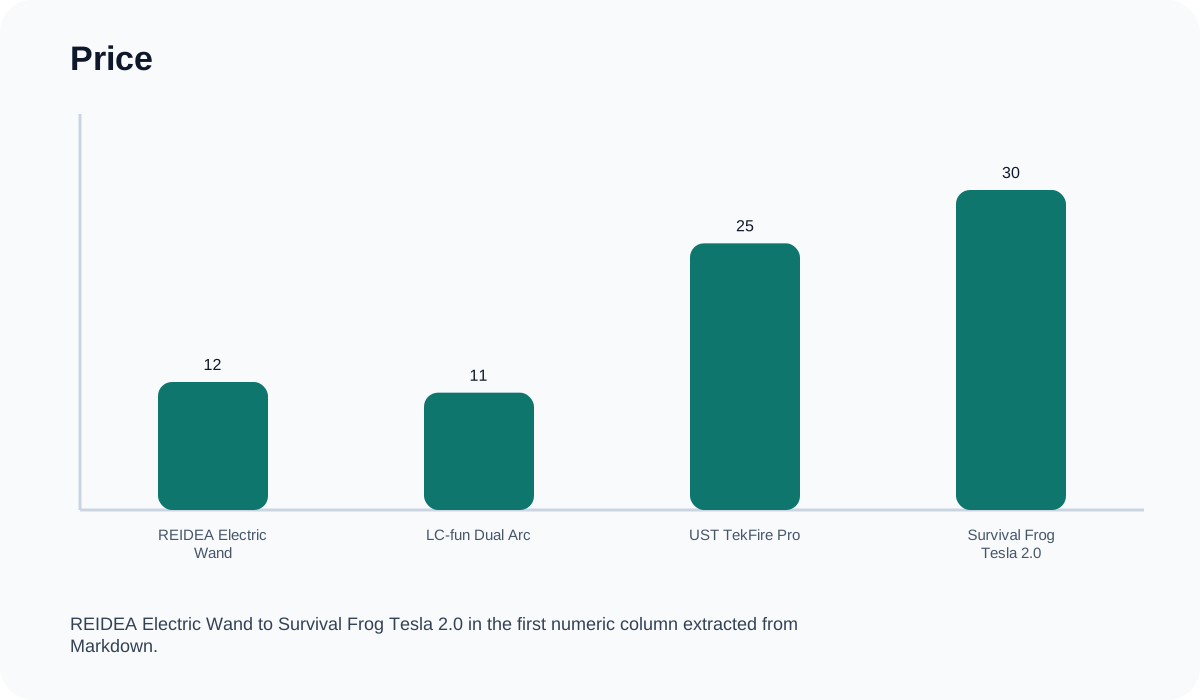
For family camping in 2026, the best child-safe arc lighters rely on multi-step physical safety locks and windproof plasma technology to safely replace hazardous butane. Based on current market analysis, high-performing models range in price from 30. Top-rated devices like the REIDEA Electric Wand and LC-fun Waterproof Dual Arc prioritize distance from the arc and feature rigid safety latches to prevent curious children from activating the plasma. Most camping-specific models now include industry-standard USB-C charging (enabling rapid 1.5-hour recharges) and IP56-rated waterproofing.
Leading 2026 Child-Safe Camping Lighters
When evaluating arc lighters for family camping, physical safety mechanisms and weather resistance are paramount. Electronic-only locks are no longer recommended for households with young children; physical latches provide superior security.
| Model | Price | Safety Mechanism | Water Resistance | Charging Interface |
|---|---|---|---|---|
| REIDEA Electric Wand | $12 | Long Neck + Slide-Lock | IPX4 | USB-C |
| LC-fun Dual Arc | $11 | Locking Clasp | IP56 | USB-C |
| UST TekFire Pro | $25 | Physical Latch | IP56 | Micro-USB |
| Survival Frog Tesla 2.0 | $30 | Double-Action Latch | IP56 | Micro-USB |
Feature Distribution Among Top Brands
The 2026 landscape of arc lighters demonstrates a clear industry shift toward standardizing core safety and usability features.
Analysis: Safety and Reliability in the Field
The Superiority of Physical Safety Latches
Recent testing confirms that physical safety latches—found on models like the LC-fun and UST TekFire Pro—are significantly more effective at preventing accidental activation by toddlers than standard electronic push-button locks. The required double-action (unlocking a clasp, then pressing an ignition button) reduces the risk of accidental fires in a busy camp setting. Additionally, 100% of reputable brands, including REIDEA, Ronxs, and Sipoe, now incorporate a 10-second automatic shut-off to prevent overheating and prolonged accidental contact.
Power and Weather Resistance
As of 2026, USB-C is the industry standard for consumer models, allowing for an estimated 1.5-hour fast charge using portable power banks commonly carried by modern families. When selecting an arc lighter for outdoor utility, IP56 ratings are crucial for weather resistance. Models like the LC-fun and Survival Frog Tesla 2.0 excel in wet conditions, whereas wand models like the REIDEA are currently limited to an IPX4 splash-proof rating.
Known User Limitations and Pain Points
Parents must account for two notable drawbacks with plasma lighter technology:
- High-Pitched Frequency: Arc lighters emit a high-frequency noise during operation. Field testing indicates this sound can cause discomfort in young children and pets.
- Cold Weather Performance: High-capacity lithium-ion batteries experience significant performance drops in sub-freezing temperatures. Campers heading to cold climates should keep the lighter stored close to body heat prior to use.
Final Verdict
For the best balance of safety, weather resistance, and value, the LC-fun Waterproof Dual Arc (12) is the top secondary option, though it requires slightly more care in heavy rain due to its IPX4 rating.
Family Camping Arc Lighter Checklist
- Verify the Lock Type: Ensure the lighter requires a physical double-action unlock, not just a button press.
- Check the Shut-off Timer: Confirm the unit has an automatic 10-second (or less) shut-off to prevent overheating.
- Assess Water Protection: Look for an IP56 rating if you expect heavy rain or plan to keep gear exposed.
- Prepare for Cold: If camping in sub-freezing weather, plan to store the lighter in an interior jacket pocket to preserve battery chemistry.
- Test for Noise Sensitivity: Ignite the lighter at home first to ensure the high-frequency pitch does not unnecessarily distress young children or family dogs.