Best Compact Emergency Radios for Storm Prep and Blackouts
Discover the best 2026 compact emergency radios. Compare battery capacity, hand-crank efficiency, and IP ratings to prepare for severe storms and blackouts.
Executive Summary
When preparing for severe storms and prolonged blackouts, your emergency radio must serve as a reliable survival hub. Modern 2026 models prioritize high-capacity batteries and hybrid charging systems (USB-C, hand-crank, and solar). The Midland ER310PRO currently leads the market with a massive 10,000mAh capacity, while compact alternatives like the Sangean MMR-88 provide unmatched portability and superior ‘Public Alert’ certifications. Success during a blackout depends on selecting a model with Specific Area Message Encoding (SAME) technology, sufficient IPX weatherproofing, and a realistic understanding of hand-crank efficiency.
Top Models Compared
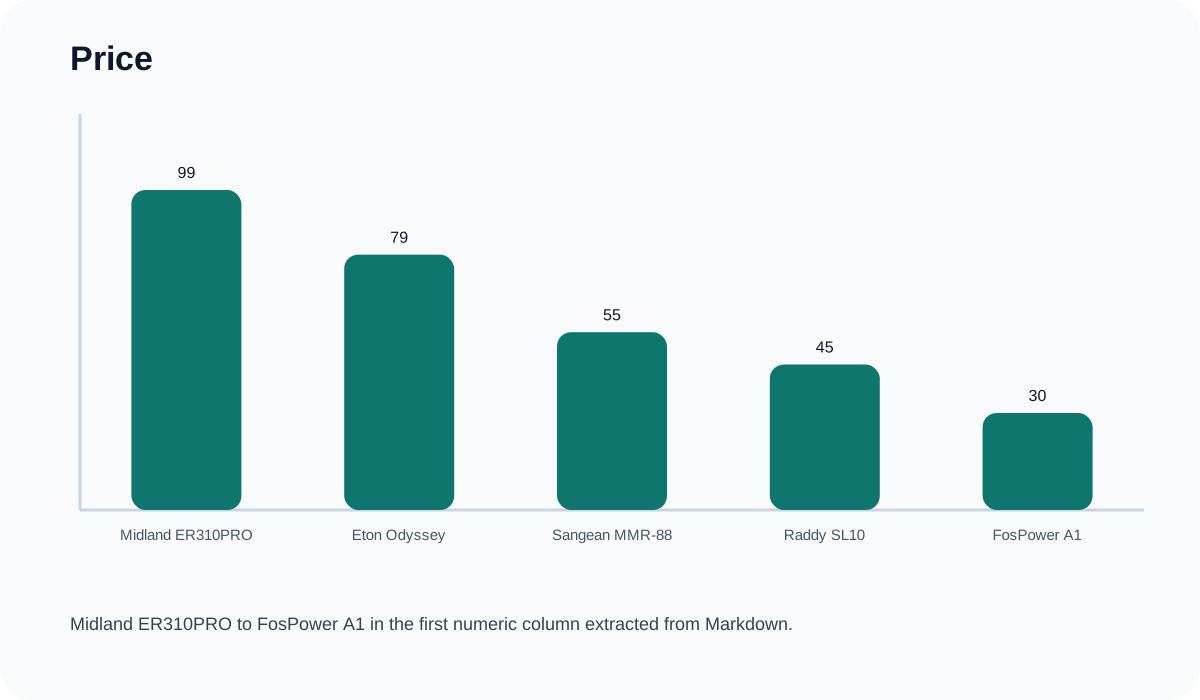
The table below outlines the top compact emergency radios for 2026, comparing battery capacity, price, and weatherproofing standards.
| Model | Price | Battery Capacity | IP Rating (Weatherproofing) |
|---|---|---|---|
| Midland ER310PRO | $99 | 10,000mAh | IPX3 |
| Eton Odyssey | $79 | 2,000mAh | IPX4 |
| Sangean MMR-88 | $55 | 850mAh | IPX3 |
| Raddy SL10 | $45 | 4,000mAh | IPX5 |
| FosPower A1 | $30 | 2,000mAh | Splash-proof |
Hand-Crank Efficiency Analysis
While USB-C fast charging is the standard for pre-storm preparation, hand-crank dynamos remain your last line of defense during long-term grid failures. However, “crank fatigue” is a highly reported user pain point. High-draw features like smartphone charging require immense mechanical effort.
The chart below breaks down how many minutes of radio playback you generate per 1 minute of consistent hand-cranking:
Note: Solar charging is not a quick alternative; current models require an estimated 20 to 30 hours of direct sunlight to achieve a full battery charge across all leading brands.
Critical Buying Factors
1. Battery Capacity & Connectivity
Capacity dictates how effectively your radio doubles as a power bank. The Midland ER310PRO’s 10,000mAh battery can recharge modern smartphones multiple times, whereas the Sangean MMR-88 (850mAh) is designed primarily to keep the radio itself running. USB-C input is now standard for initial charging.
2. Weatherproofing & Ruggedness
During a storm surge, moisture resistance is critical. The Raddy SL10 offers a robust IPX5 rating (can resist sustained, low-pressure water jet spray), making it ideal for wet outdoor conditions. The Eton Odyssey provides a solid IPX4 rating, while models like the Midland and Sangean offer IPX3 (protection against spraying water up to 60 degrees from vertical).
3. Safety Alert Technology
Reliable storm tracking requires SAME (Specific Area Message Encoding) technology. This allows users to filter out alerts from distant counties and only receive alarms relevant to their immediate local area, reducing alert fatigue during widespread weather events.
Overcoming Common User Pain Points
Based on field testing and user reports, buyers face three primary challenges with emergency radios:
- Parasitic Drain: Batteries slowly lose charge while stored in a closet or emergency kit.
- Crank Fatigue: The mechanical effort required rarely generates enough power to fully charge a phone; it is best reserved for brief radio updates.
- Hardware Fragility: Telescopic antennas are notoriously easy to bend or snap in a panicked environment.
Final Verdict
For sheer capacity and power-bank utility, the Midland ER310PRO is the undisputed top choice for household storm kits. However, if your strategy requires a highly portable, budget-friendly unit strictly for gathering local public alerts, the Sangean MMR-88 provides excellent reliability. For those concerned with heavy rain exposure, the Raddy SL10 is the best waterproof option at IPX5.
Emergency Prep Checklist & Maintenance
To ensure your radio works when you need it most, follow these storage and maintenance guidelines:
- Charge on a Schedule: Recharge lithium-ion units every 3 to 6 months to prevent irreversible deep-discharge failure.
- Prevent Corrosion: If your radio uses backup alkaline batteries, store them in a separate plastic bag to prevent terminal corrosion inside the device.
- Pre-Charge Before Storms: Do not rely on solar or crank charging to bring a dead radio to 100%; fully charge via USB-C when severe weather is in the forecast.
- Protect the Antenna: Store the radio in a hard case or padded compartment to protect the telescopic antenna from impact.