Best Compact Gear for Urban Emergency Preparedness Kits
Evaluate the top compact gear for urban emergency kits in 2026. Discover why 10,000mAh power banks, USB-C PD, and IP67 waterproofing are EDC essentials.
Executive Summary
In 2026, urban emergency preparedness has definitively shifted toward Everyday Carry (EDC) compatibility. Moving away from bulky wilderness equipment, today’s urban kits prioritize 24 to 72-hour mobility, semi-solid-state battery safety, and universal USB-C Power Delivery (PD).
Our analysis identifies the 10,000mAh power bank as the optimal balance of weight and performance for daily commuters. Furthermore, true environmental protection requires IP67 or IP68 submersible ratings, as consumers increasingly reject standard IPX4 water resistance. Tools like the Nitecore NB10000 Gen4 and Olight Baton 4 Pro represent the forefront of this modular, high-efficiency approach to urban readiness.
Size vs. Carry Weight Penalty
Data indicates that moving beyond the 10,000mAh capacity creates a portability barrier for urban commuters. Upgrading to a 20,000mAh unit results in a 45% increase in carry weight, leading many to leave the gear behind entirely.
Analysis: Key Trends in Urban Gear
1. Power Standards and Universal Connectivity
Universal charging is no longer optional for urban emergencies. USB-C PD (Power Delivery) operating at 30W to 65W is the 2026 baseline. This wattage is critical because it allows rapid charging of both smartphones and modern laptops during short, unpredictable grid outages.
A significant user pain point in real-world emergencies is the reliance on proprietary charging cables. For example, Olight’s magnetic docks, while convenient for home use, are cited as a primary failure point during evacuations. Universal USB-C connectivity mitigates this risk entirely.
2. The Shift to Semi-Solid-State Batteries
Safety standards for pocket-carried energy storage have advanced. The transition from traditional Lithium-ion (Li-ion) to semi-solid-state cells is a major trend in 2026. Power banks like the BMX SolidSafe 10K utilize this technology to significantly reduce fire risks and thermal runaway incidents, which is paramount when carrying dense energy sources in crowded urban transit.
3. Submersible Waterproofing (IP67+)
Urban flooding and severe weather demand uncompromising gear durability. IP67 (fully submersible) has become the gold standard for rugged urban tech. The market is seeing a distinct rejection of “water-resistant” IPX4 products, with buyers prioritizing fully sealed units like the Nestout 15,000mAh and Olight Baton 4 Pro.
Product Comparison Table
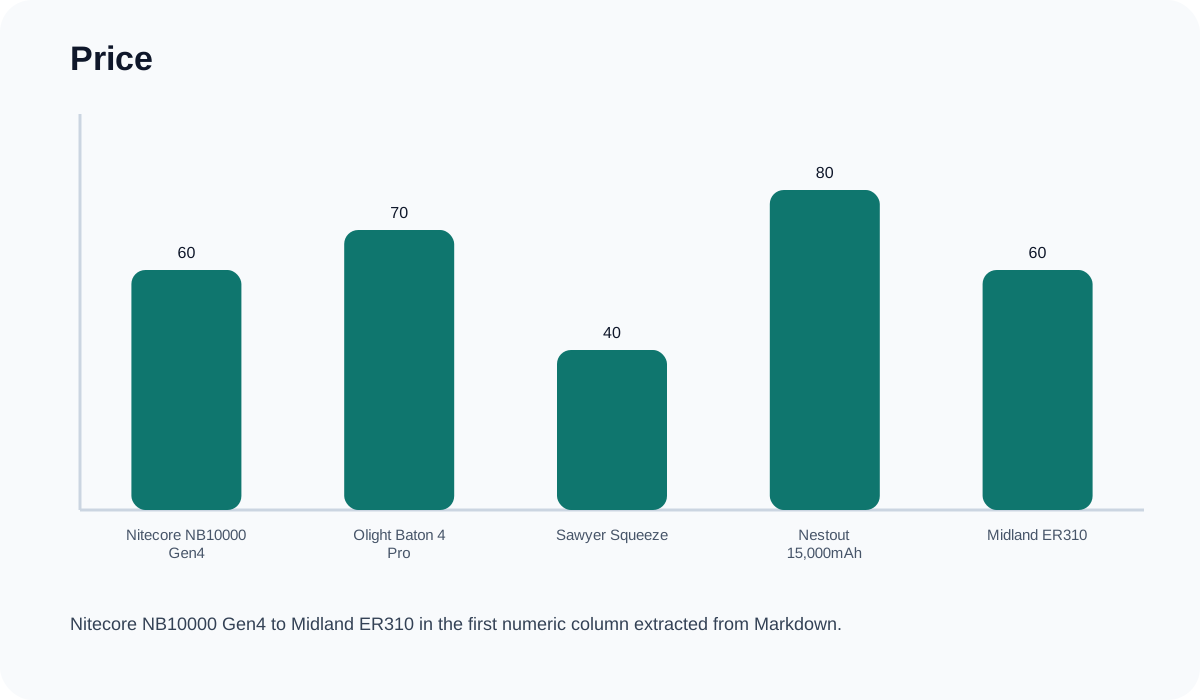
The following table compares leading emergency gear based on price, capacity, ingress protection (IP rating), and primary charging/power methods.
| Product | Price | Capacity / Output | IP Rating | Charging Method |
|---|---|---|---|---|
| Nitecore NB10000 Gen4 | $60 | 10,000 mAh | IPX5 | USB-C |
| Olight Baton 4 Pro | $70 | 1,600 Lumens | IP68 | Magnetic / USB-C |
| Sawyer Squeeze | $40 | 0.1 Micron Filter | N/A | Manual / Gravity |
| Nestout 15,000mAh | $80 | 15,000 mAh | IP67 | USB-C |
| Midland ER310 | $60 | 2,600 mAh | IPX3 | Solar / Crank / USB |
Final Verdict
For a lightweight, 72-hour urban emergency kit, modularity and universal charging are paramount.
- Top Power Choice: The Nitecore NB10000 Gen4 hits the 10,000mAh weight-to-power sweet spot. Buyers seeking maximum safety against thermal events should look toward semi-solid-state alternatives like the BMX SolidSafe 10K.
- Top Lighting Choice: The Olight Baton 4 Pro offers exceptional IP68 durability and 1,600 lumens. However, users must ensure they carry the necessary adapters to bypass its proprietary magnetic cable during emergencies.
- Top Water Filtration: The Sawyer Squeeze remains an essential, non-electronic staple for reliable urban water purification at a low cost.
Urban Preparedness Checklist & FAQ
What is the ideal battery capacity for an urban EDC kit?
Research shows 10,000mAh is the ideal sweet spot. Upgrading to a 20,000mAh unit typically incurs a 45% increase in carry weight, causing many commuters to leave the gear at home and defeating the purpose of everyday carry.
Why is USB-C PD important for emergency kits?
A USB-C PD rating of 30W-65W ensures you can rapidly recharge critical comms devices, including laptops, during brief periods of available grid power.
Are IPX4 water-resistant devices enough for city emergencies?
Generally, no. Urban environments can expose gear to severe downpours or submerged conditions (e.g., flooded transit lines). Consumers in 2026 overwhelmingly aim for IP67 or IP68 ratings to ensure complete protection against water ingress.