Best Compact Signal Lights for Search and Rescue Visibility
Compare the top compact SAR signal lights, featuring USCG-certified distress strobes and depth-rated markers evaluated for visibility, runtime, and ruggedness.
Executive Summary
When equipping for Search and Rescue (SAR) or extreme outdoor survival, the compact signal light market is strictly divided into two distinct categories: high-intensity USCG-approved distress strobes and ultra-rugged, depth-rated personal marker lights.
For verified distress emergencies, USCG/SOLAS certification is the gold standard, mandating a minimum of 3-mile visibility and over 50 hours of continuous runtime—metrics currently led by the ACR Firefly PRO. Conversely, for tactical multi-team coordination or underwater environments, marker lights like the Adventure Lights Guardian and Glo-Toob GT-AAA Pro provide extended runtimes (up to 250 hours) and extreme depth ratings (up to 200 meters). Primary battery models (AA/AAA/CR2032) remain the most reliable choice for long-term storage and extreme temperatures, though modern USB-C options are emerging for shorter, utility-driven deployments.
Top-Rated Compact SAR Signal Lights Comparison
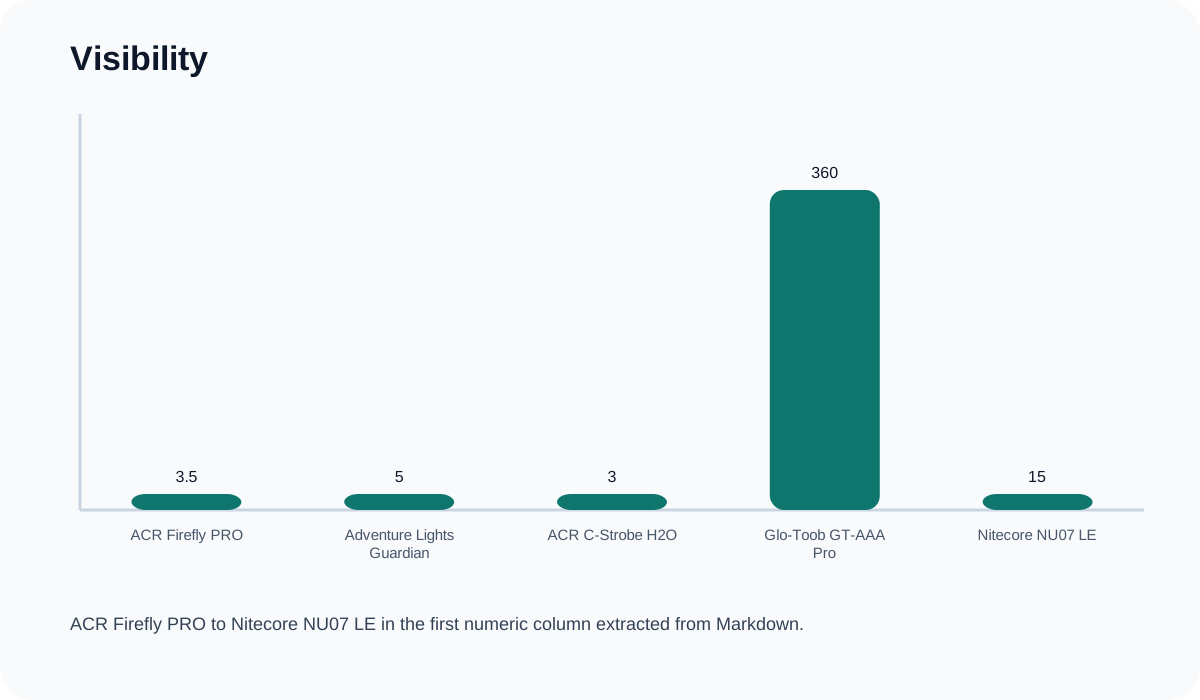
The following table outlines the leading compact signal lights based on critical SAR metrics: visibility, maximum runtime, waterproof rating, power source, and estimated pricing.
| Model | Visibility | Max Runtime | Waterproof Rating | Power Source | Price (Est.) |
|---|---|---|---|---|---|
| ACR Firefly PRO | >3.5 Miles | 56 Hours (Strobe) | IPX8 (10m) | 2x AA (Lithium) | 110 |
| Adventure Lights Guardian | 5.0 KM | 250 Hours (Flash) | 100m Depth | 2x CR2032 | 35 |
| ACR C-Strobe H2O | 3.0 Miles | 120 Hours (Strobe) | IPX7 (1m) | 2x AA (Alkaline) | 50 |
| Glo-Toob GT-AAA Pro | 360° (Marker) | 100 Hours (Strobe) | 200m Depth | 1x AAA | 30 |
| Nitecore NU07 LE | 15 Lumens | 50 Hours (Flash) | IP66 | USB-C Rechargeable | 40 |
Performance Analysis: Runtime vs. Visibility
Category Breakdown & Market Trends
1. USCG/SOLAS Certified Distress Strobes
True distress signals require a minimum visibility of 3 miles and at least 50 hours of runtime to achieve USCG/SOLAS certification.
- The Benchmark: The ACR Firefly PRO delivers over 3.5 miles of visibility and 56 hours of strobe time.
- Battery Chemistry Warning: While the ACR C-Strobe H2O is optimized for multi-day survival using Alkaline batteries, experts prefer Lithium (FR6) cells for SAR use. Lithium batteries perform better in freezing conditions and are significantly lighter, directly preventing buoyancy failures in floating models.
2. Ultra-Rugged Marker Lights
Unlike high-intensity strobes, marker lights are designed for location tracking over extended periods and extreme depths.
- Deep Water Capability: The Glo-Toob GT-AAA Pro offers a 200m depth rating, providing 360-degree close-range visibility for up to 100 hours.
- Endurance King: The Adventure Lights Guardian sacrifices peak brightness for an astonishing 250-hour flash runtime, making it ideal for lengthy overland expeditions where immediate rescue is unlikely.
3. Tactical Coordination & Multi-Color Interfaces
There is a growing shift toward utilizing multi-color LED indicators for multi-team SAR coordination and tactical operations.
- Devices like the Nitecore NU07 LE and certain Glo-Toob Aurora variants offer integrated Red, Green, Blue, and IR (Infrared) outputs.
- While the Nitecore’s USB-C rechargeability adds convenience, its IP66 rating and 50-hour max runtime make it better suited for daily operational utility rather than long-term aquatic survival.
Real User Pain Points & Safety Considerations
When deploying emergency lighting, the physical interface is just as critical as the electronic output. Recent market evaluations highlight two primary user concerns:
- Accidental Activation: Lights stored loosely in gear bags are frequently turned on by mistake, draining the battery before an emergency occurs.
- Interface Complexity: In cold, wet conditions, twist-cap switches are a notable pain point. They lack the tactile, distinct feedback of heavy-duty push-buttons, making them difficult to operate with numb hands or heavy gloves.
Final Verdict
- For Maritime & True Emergency Distress: The ACR Firefly PRO is the uncontested choice due to its USCG/SOLAS approval and lithium battery compatibility.
- For Extended Land Expeditions: The Adventure Lights Guardian offers unbeatable longevity (250 hours) at a highly accessible price point.
- For Tactical SAR Teams: The Nitecore NU07 LE provides unmatched organizational utility with its multi-color arrays and IR capabilities, provided it is kept charged.
SAR Signal Light Checklist
- Check Certification: Does the light possess a valid USCG/SOLAS approval number? (Crucial for marine distress).
- Select the Right Batteries: Always swap out Alkaline batteries for Lithium (FR6) cells if the device supports it, ensuring better buoyancy and cold-weather performance.
- Verify Switching Mechanism: Practice operating the light with thick gloves. Push-button interfaces generally outperform twist-caps in high-stress scenarios.
- Audit Storage Practices: Secure lights in rigid pockets or utilize lock-out modes to prevent accidental activation in transit.