Best DC Power Options for Van Life Fire-Starting Kits
Discover the top DC-rechargeable arc and plasma lighters for van life. Compare battery runtime, USB-C capabilities, and waterproof ratings.
Executive Summary
For van life enthusiasts, fire-starting kits are rapidly transitioning from traditional butane to DC-rechargeable arc and plasma lighters. These modern devices offer superior wind resistance and integrate seamlessly with a van’s 12V electrical system or solar power bank. Based on current market research, the TRUE Plasma Lighter is the top-performing choice, delivering an estimated 310 ignitions per charge, an IPX6 waterproof rating, and efficient USB-C charging capabilities.
When optimizing a van life fire kit, buyers must prioritize dual-arc technology to handle thicker kindling and USB-C connectivity for faster 1.5-hour charge times. Additionally, operators must account for stringent thermal management: cabin temperatures exceeding 120°F pose significant thermal risks to lithium-polymer batteries, and routine electrode maintenance is essential to prevent soot-induced ignition failure.
Product Comparison Matrix
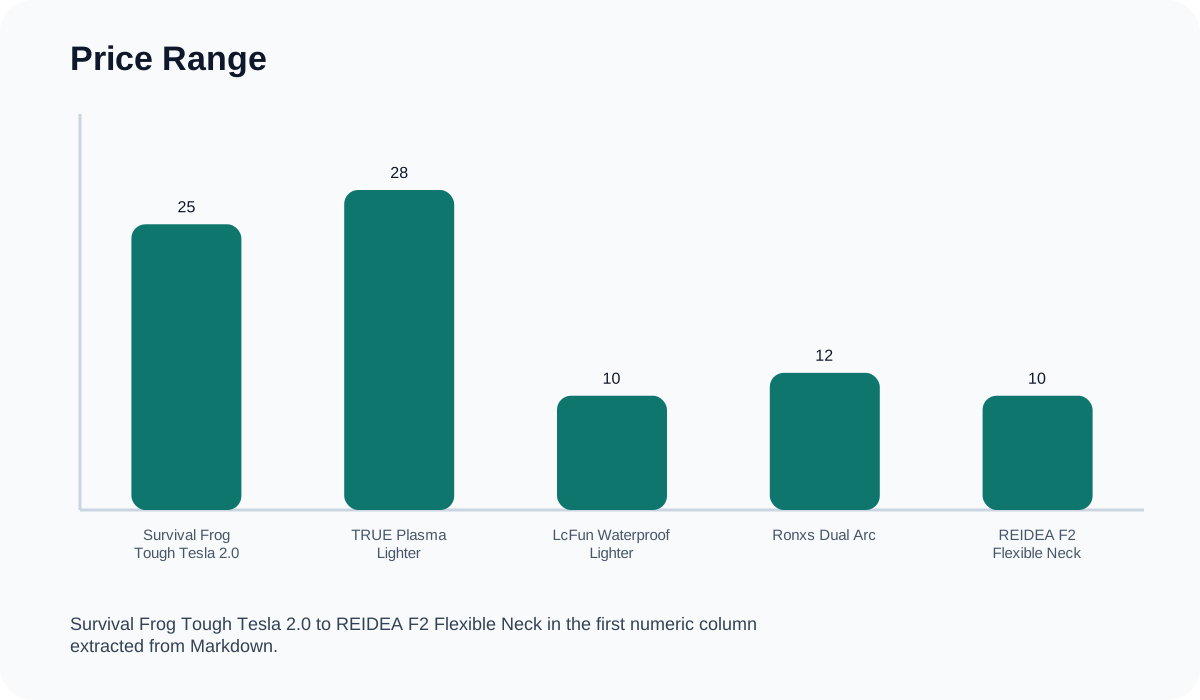
| Product Model | Price Range | Waterproof Rating | Charging Port | Est. Lights/Charge |
|---|---|---|---|---|
| Survival Frog Tough Tesla 2.0 | 35 | IP56 | Micro-USB | 250 - 300 |
| TRUE Plasma Lighter | 32 | IPX6 | USB-C | 300+ |
| LcFun Waterproof Lighter | 18 | IP56 | USB-C | 280 - 300 |
| Ronxs Dual Arc | 20 | None | USB-C | 150 - 200 |
| REIDEA F2 Flexible Neck | 15 | Splash-proof | USB-C | 600 (Pulse-only) |
Ignition Performance Breakdown
Technical Analysis
1. Charging Standards: The Shift to USB-C
USB-C is establishing itself as the preferred charging standard for modern van life electrical arrays. Devices equipped with USB-C ports, such as the TRUE Plasma Lighter and LcFun Waterproof Lighter, offer significantly faster charge times—typically completing a cycle in approximately 1.5 hours. Furthermore, USB-C provides better compatibility with newer portable power stations and low-voltage 12V fast-charging adapters. By contrast, previously dominant top-tier models like the Survival Frog Tough Tesla 2.0 still rely on legacy Micro-USB ports, complicating cable management on the road.
2. Arc Technology: Dual-Arc vs. Single-Arc
For practical off-grid and emergency applications, dual-arc technology is substantially more effective. Dual arcs provide a wider, hotter ignition surface, making them capable of lighting thicker wicks, dense tinder, or kindling. Single-arc models generally lack the thermal spread necessary for anything larger than fine paper. Consequently, van owners building a reliable emergency kit should selectively source dual-arc configurations.
3. Durability and Thermal Management Risks
Real-world user data indicates that lithium-polymer battery capacity exhaustion is rarely the primary point of failure. Instead, the most common operational roadblocks include:
- Electrode Fouling: Soot buildup on the electrodes quickly inhibits the arc stream. Regular cleaning is mandatory for long-term performance.
- Mechanical Failure: The mechanical latches that secure waterproof cases (IP56/IPX6/IP67) are highly prone to physical wear and breakage over time.
- Thermal Runaway Risk: Thermal management is the single most critical safety consideration. Storing lithium-powered lighters in a vehicle during peak summer heat—specifically in temperatures above 120°F—can cause permanent battery swelling and introduces a severe “thermal runaway” risk.
Final Verdict
The TRUE Plasma Lighter provides the best balance of reliability and modern infrastructure for van life. Its USB-C charging protocol, robust IPX6 waterproof rating, and class-leading capacity (300+ ignitions per charge) make it the optimal primary fire starter. For users on a strict budget, the LcFun Waterproof Lighter yields competitive specifications (IP56, USB-C, ~290 ignitions) at roughly half the retail cost.
Van Life Fire-Starting Checklist
- Consolidate to USB-C: Select USB-C models to minimize cable clutter and guarantee compatibility with modern 12V power banks.
- Verify Ingress Protection: Ensure your lighter carries at least an IP56 or IPX6 rating to withstand condensation and environmental exposure.
- Maintain Electrodes Regularly: Keep a small brush or alcohol wipe in your console to remove soot buildup from the arc nodes.
- Control Storage Temperature: Never store lithium-polymer lighters on a dashboard or in unventilated cabins where temperatures may spike past 120°F.