Best Electric Lighters for Winter Glove Use
Compare the top electric lighters for winter glove use, featuring mechanical latches, top-facing arcs, and cold-weather battery performance data.
Executive Summary
The most effective electric lighters for winter glove use feature mechanical wire latches and top-facing electrodes. These designs prevent the need to remove heavy insulation to access the flame, maintaining user safety and warmth. When operating in sub-zero conditions, plasma lighters face severe lithium-ion battery degradation, losing an estimated 30% to 50% of their effective capacity at 0°F (-18°C). Consequently, survival models from brands like Survival Frog and Gunner Gear that incorporate tactile physical controls, IP56/IP67 waterproof ratings, and USB-C for rapid recharging are the most reliable choices for cold-weather operation.
Glove Accessibility Breakdown
Operating a lighter with thick winter gloves requires specific physical design characteristics. Features that require fine motor skills or bare skin to operate fail in extreme conditions.
Leading Winter Electric Lighters Compared
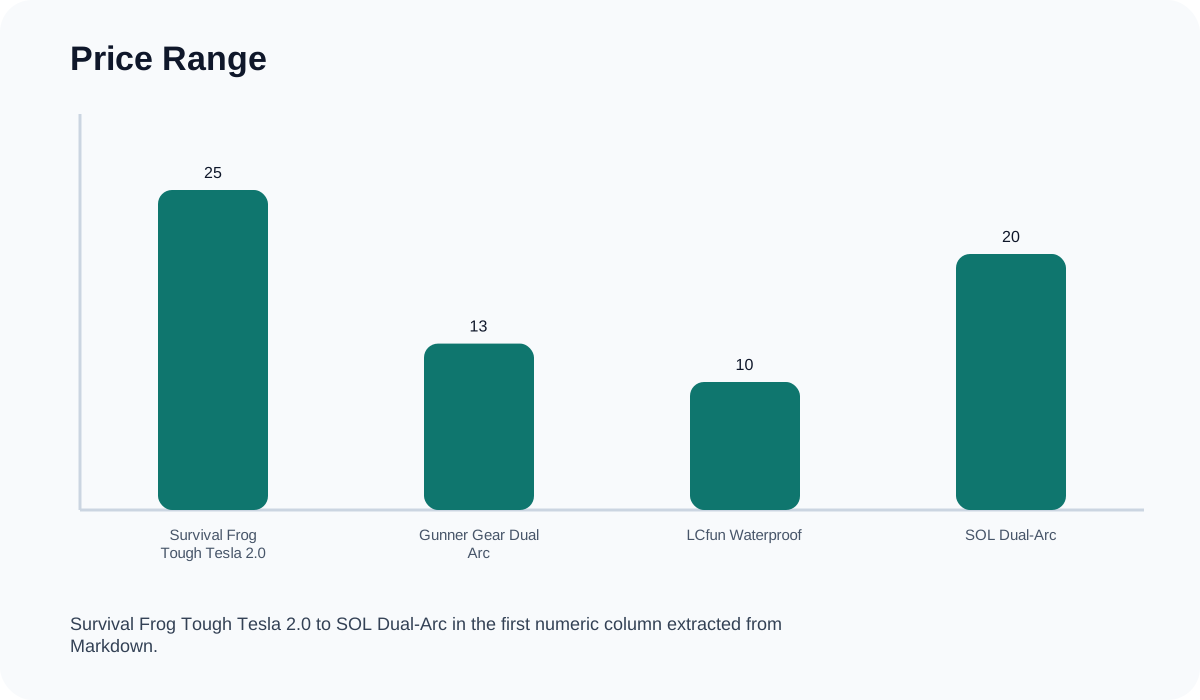
The following table outlines the leading electric lighters based on real-world capabilities, price, and glove-friendliness.
| Product | Price Range | Glove-Friendliness | Waterproof Rating | Charging Method | Best For |
|---|---|---|---|---|---|
| Survival Frog Tough Tesla 2.0 | 30 | Excellent (Wire Latch) | IP67 (Submersible) | Micro-USB | Heavy Mittens |
| Gunner Gear Dual Arc | 18 | High (Oversized Button) | IP56 | USB-C | Cold Efficiency |
| LCfun Waterproof | 15 | Moderate (Small Clip) | IP56 | USB-C | Budget / EDC |
| SOL Dual-Arc | 25 | High (Top-Facing) | Watertight Case | Micro-USB | Emergency Kits |
Technical Analysis
Form Factor and Tactile Operation
Winter operation heavily favors mechanical wire latches over recessed plastic clips. Models like the Survival Frog Tough Tesla 2.0 utilize a wire latch (scoring a 9.5 out of 10 for accessibility), which allows a user to flip the lid open without needing fingernails. Furthermore, top-facing arc designs are essential. Side-facing or recessed arcs require users to push materials deep into the lighter, dramatically increasing the risk of bulky glove material contacting the high-heat plasma electrodes.
Sub-Zero Battery Performance
The most significant operational limitation of electric lighters in winter is battery chemistry. Lithium-ion batteries experience severe voltage drops in extreme cold. At 0°F (-18°C), effective capacity drops by 30% to 50%. Thermal storage—keeping the lighter in an inside pocket close to body heat—is a critical operational requirement rather than a mere suggestion. Additionally, models featuring USB-C ports (like the Gunner Gear Dual Arc) allow for faster, more stable power recovery when connected to emergency power banks.
User Pain Points and Safety Considerations
Beyond battery life, real-world users report two main pain points in winter environments:
- Ghost Triggers: Pocket-carried models without reliable physical safety locks are prone to accidental activation when pressed against other gear. Mechanical latches serve as an essential safety barricade.
- Electrode Maintenance: Cleaning carbon buildup (soot) from the tiny ceramic electrodes is exceptionally difficult with numb fingers. Lighters that place their electrodes at the very top of the device ease this maintenance burden.
Final Verdict
For extreme cold weather where heavy mittens are mandatory, the Survival Frog Tough Tesla 2.0 is the optimal choice due to its IP67 submersible rating and superior wire-latch mechanism. For users seeking faster recharge times and modern standards, the Gunner Gear Dual Arc is a highly efficient alternative thanks to its USB-C port and oversized physical buttons, though users must be vigilant regarding its slightly lower IP56 water resistance.
Winter Operation Checklist
To ensure your electric lighter functions when you need it most, follow these protocols:
- Warm Storage: Always store the lighter in a base-layer pocket to prevent the 30-50% capacity drop associated with 0°F temperatures.
- Physical Safety Check: Ensure the mechanical latch is fully secured to prevent “ghost triggers” in your pocket.
- Pre-Trip Cleaning: Clean the electrodes indoors before your trip; brushing soot off with numb fingers in the field is difficult and risks damaging the ceramic prongs.
- Backup Power: Carry a high-capacity power bank with a USB-C or Micro-USB cable (depending on your model) to quickly stabilize high-voltage demands.