Best Electronics to Add to a Home Tornado Kit
Discover the essential electronics for a home tornado kit. Compare NOAA radios, LiFePO4 power stations, charging methods, and safety protocols for 2026.
Executive Summary
A comprehensive home tornado kit requires a tiered electronics strategy focused on reliable communication, high-capacity portable power, and multi-source charging capability. The foundation of a reliable kit includes a Specific Area Message Encoding (SAME) equipped NOAA weather radio, an IPX-rated lantern, and a LiFePO4-based portable power station. Relying solely on hand-crank devices is a critical vulnerability; technical testing reveals that one minute of cranking yields less than a 1% charge on modern smartphones. Instead, a robust setup prioritizes high-capacity thermal-stable batteries backed by redundant solar and AC charging methods.
Leading Tornado Kit Electronics
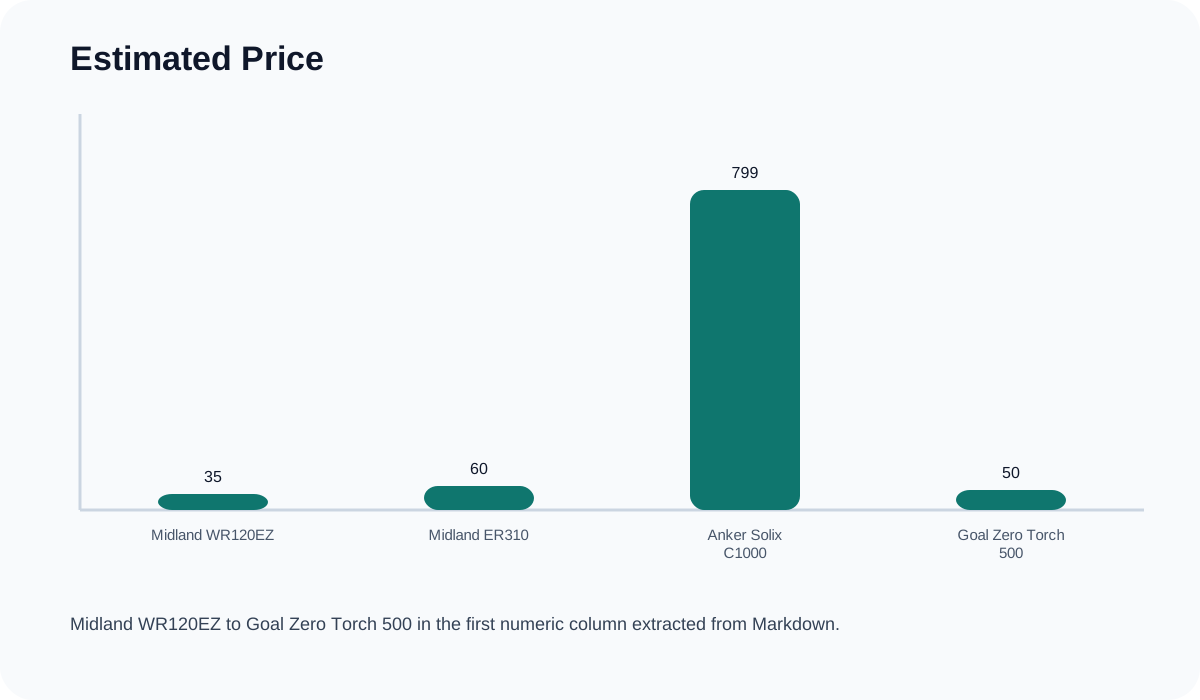
When equipping a tornado shelter, redundancy and battery stability are paramount. Below is a comparison of the top-rated electronics suited for localized emergency scenarios.
| Product Name | Estimated Price | Power Source | Key Feature |
|---|---|---|---|
| Midland WR120EZ | $35 | AC / AA-Battery Backup | SAME localized county alerts |
| Midland ER310 | $60 | Solar / Crank / Li-ion | 2600mAh internal battery bank |
| Anker Solix C1000 | $799 | Wall / Solar / Car | 1056Wh LiFePO4 capacity |
| Goal Zero Torch 500 | $50 | Solar / USB-C | Multi-tasking IPX4 lantern |
Power Generation and Charging Realities
A major pain point for users during natural disasters is overestimating emergency charging capabilities. Most high-end emergency electronics feature splash-resistant IPX4 ratings, but efficient charging post-disaster requires understanding the limitations of your equipment.
Note: Portable solar efficiency (estimated 15-20%) is heavily dependent on post-storm weather conditions. Hand cranking (<1%) should be reserved for strict emergency communications, not smartphone charging.
Analysis: Communication, Power, and Safety
1. Alert Systems and Communication
The gold standard for alerts remains NOAA weather radios equipped with SAME technology. Devices like the Midland WR120EZ allow users to program specific county codes, filtering out irrelevant alarms that often lead to alert fatigue. However, users frequently cite SAME programming as non-intuitive, requiring users to consult their manual prior to an active storm warning. Standard NOAA radios provide roughly 12 to 24 hours of active runtime on standard batteries.
2. High-Capacity Power Management
Gas generators present severe carbon monoxide risks and should never be used in enclosed tornado shelters. The safer, modern standard is a LiFePO4 (Lithium Iron Phosphate) portable power station. Units like the Anker Solix C1000 offer exceptional thermal stability in high-heat environments and a lifespan exceeding 10 years. With a 1056Wh capacity, these stations can keep critical electronics—like smartphones and radios—powered for over a week.
3. Overcoming Core Pain Points
Real-world emergency scenarios expose several common flaws in home preparedness:
- The Hand-Crank Myth: Hand-cranks are largely ineffective for power-hungry modern devices, operating more as a marketing gimmick for smartphones.
- Battery Degradation: Internal rechargeable batteries in disaster kits routinely fail if left in storage without maintenance. Batteries must be topped up every 3 to 6 months.
- Water Incursion: Tornadoes are frequently accompanied by severe flooding. While standard emergency gear claims IPX4 (splash-resistance), users must supplement their kit with IP67-rated dry bags to guarantee total submersion protection.
Final Verdict & Tornado Kit Checklist
To build a fail-proof electronics kit for tornado preparedness, prioritize UL-listed devices, LiFePO4 battery chemistry, and hardware capable of multi-source charging. Avoid reliance on manual hand-cranking for significant power generation.
Quarterly Maintenance Checklist
- Plug in all emergency power banks (Li-ion and LiFePO4) to ensure they are at 100% capacity.
- Test the NOAA weather radio SAME programming using the local test broadcast.
- Replace backup AA/AAA batteries in flashlights and primary alert radios.
- Inspect IP67 dry bags for tears and verify standard electronics are securely stored inside.