Best Emergency Electronics for a 72-Hour Bug-Out Bag
Equip your 72-hour bug-out bag with the best emergency electronics. We analyze battery capacities, IP ratings, and real charging methods for off-grid survival.
Executive Summary
For a 72-hour bug-out bag, survival depends on electronics that prioritize multi-modal charging (Solar, Crank, USB-C) and environmental resilience (IPX4 to IP67). Based on our analysis, the standard for emergency preparedness has shifted toward high-capacity internal lithium batteries (8000mAh+) and ultralight carbon-fiber power banks.
Standard emergency radios are no longer sufficient on their own. Reliable off-grid communication requires satellite messengers like the Garmin inReach series, which offer true IP67 submersible protection compared to the splash-proof (IPX4) ratings of most emergency radios. Furthermore, successful bag packing requires standardizing on USB-C to eliminate cable clutter and maximize high-speed Power Delivery (PD) charging.
Leading Emergency Electronics Compared
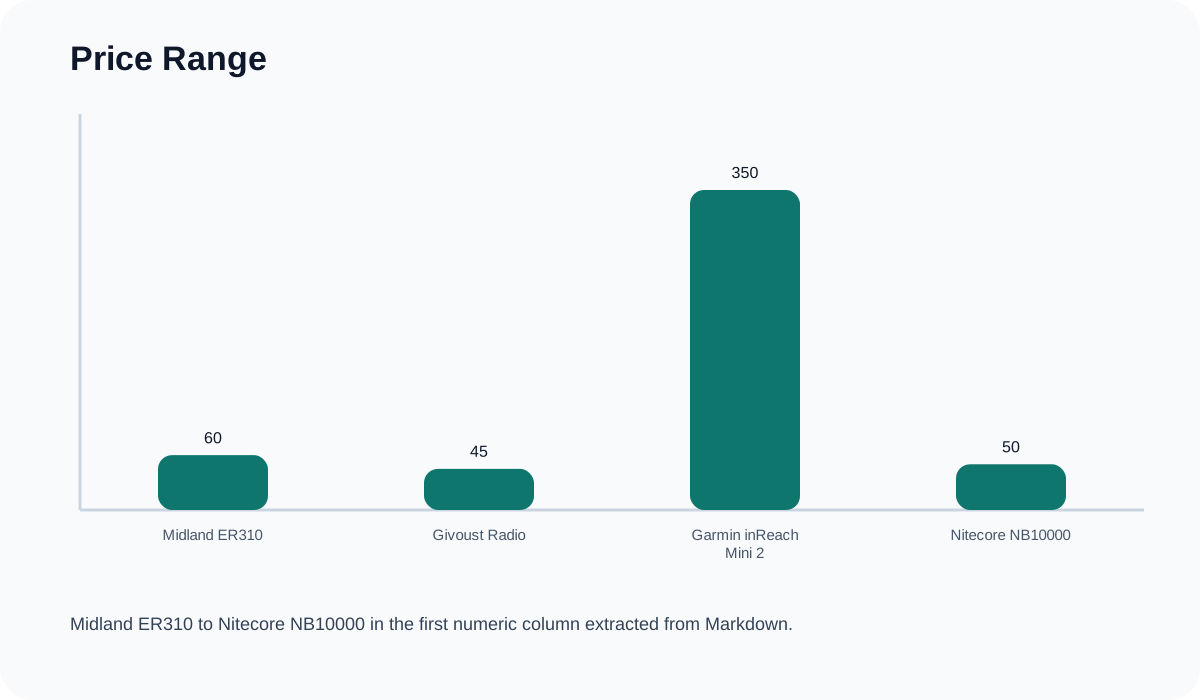
The following table outlines the top-tier emergency electronics, comparing their core functionalities, waterproof ratings, and battery runtimes.
| Product | Category | Price Range | Waterproof Rating | Primary Charge Method | Runtime & Capacity |
|---|---|---|---|---|---|
| Midland ER310 | Emergency Radio | 75 | No (IPX0/Unrated) | Solar/Crank/USB/AA | 2600mAh / 32 hrs radio |
| Givoust Radio | Emergency Radio | 55 | IPX3 (Splash) | Solar/Crank/USB | 8000mAh / 24+ hrs |
| Garmin inReach Mini 2 | Satellite Comm | 400 | IPX7 (Submersible) | USB-C | 14 Days (10m track) |
| Nitecore NB10000 | Power Bank | 65 | IPX5 (Rain resistant) | USB-C PD | 10000mAh / 5.3oz wt |
Power-to-Weight Efficiency Analysis
When packing a 72-hour bug-out bag, every ounce matters. The chart below measures which electronics provide the most energy storage (mAh) relative to their physical weight in ounces.
Note: The Nitecore NB10000 provides the highest efficiency due to its carbon fiber build, while devices like the Midland ER310 sacrifice efficiency for mechanical features like hand cranks.
Critical Analysis: What You Actually Need
1. The Battery Capacity Disparity
Most standard emergency radios, such as the Midland ER310, offer relatively low-capacity batteries around 2600mAh. Newer, more modern options like the Givoust provide up to 8000mAh. In a 72-hour window, that 8000mAh capacity is crucial not just for running the radio and flashlight, but for passing a meaningful charge to external devices like a smartphone or GPS unit.
2. The Waterproofing Gap
A major pain point for users is discovering that top-rated emergency gear cannot survive severe weather. Many popular weather radios are only rated at IPX3 or IPX4, meaning they are merely splash-proof. In a flood or hurricane bug-out scenario, these devices will fail. For actual waterproof protection, you must step up to specialized gear like the Garmin inReach Mini 2 (IPX7) or specialized power banks (e.g., Goal Zero Venture series).
3. The Realities of Manual and Solar Charging
Manufacturers frequently advertise hand cranks and tiny built-in solar panels as infinite power sources. The math tells a different story:
- Hand-cranking is physically demanding and provides a poor return on energy. On average, 1 minute of vigorous cranking yields only ~5 minutes of radio runtime.
- Built-in solar panels on power banks and radios are too small to provide a fast charge. To sustainably recharge off-grid, you need standalone folding solar panels rated between 10W and 25W (such as the BioLite SolarPanel 5+).
4. The Transition to USB-C
Micro-USB cables are fragile and slow. Modern survivalists report high frustration with legacy ports. Standardizing your bug-out bag around USB-C reduces the amount of cables you need to pack and ensures compatibility with high-speed Power Delivery (PD) chargers, getting your devices fully charged faster during brief periods of grid access.
Safety Considerations & User Pain Points
- Lithium Battery Swelling: Storing bug-out bags in vehicles subjects electronics to extreme heat. Standard lithium-ion batteries can swell, fail, or pose a fire risk in hot car trunks. Store electronics in climate-controlled areas or seek out LiFePO4 battery alternatives when vehicle storage is mandatory.
- SOS False Positives: Devices with exposed SOS buttons can be accidentally triggered inside a tightly packed rucksack, leading to false rescue calls. Opt for devices with covered or recessed emergency buttons.
- Hearing Protection: Emergency siren functions on devices like the Midland ER310 can reach volumes of 80dB. Users should be aware of the acoustic startle this can cause in an enclosed environment during testing.
Final Verdict
To build a highly reliable 72-hour electronics kit, bypass the standard low-capacity weather radios. Instead, combine an ultralight power bank (Nitecore NB10000) with a modern, high-capacity radio (Givoust 8000mAh) and a dedicated, fully waterproof satellite messenger (Garmin inReach Mini 2). Pair these with a standardized set of USB-C cables to ensure rapid charging and zero clutter.
72-Hour Electronics Checklist
- Primary Comms: Satellite messenger with IPX7 rating (e.g., Garmin inReach Mini 2)
- Information/Light: High-capacity emergency radio (8000mAh minimum)
- Backup Power: Carbon fiber or lightweight USB-C PD Power Bank (e.g., Nitecore NB10000)
- Charging Interface: 1 to 2 braided USB-C to USB-C cables
- (Optional) Off-grid Power: 10W–25W external folding solar panel