Best Emergency Recharge Options During a Power Outage
Discover the most reliable emergency recharge options for power outages. We analyze LiFePO4 power stations, real-world battery runtimes, and safety protocols.
Executive Summary
When preparing for grid failures, emergency power solutions have evolved dramatically from gas-reliant generators to clean, highly efficient LiFePO4 (Lithium Iron Phosphate) portable power stations. For short-term outages, smaller USB-C power banks remain sufficient. However, multi-day disruptions demand units with a capacity between 500Wh and 1000Wh to keep critical devices running.
The optimal emergency recharge setup relies on LiFePO4 battery chemistry (which offers a 10-year lifespan) paired with Pure Sine Wave inverters to protect sensitive electronics like CPAP machines and laptops. While budget dictates the entry point—prices range from 3,000—buyers must balance total capacity against excessive unit weight and the practical realities of solar recharge efficiency.
Battery Runtime Expectations
Understanding how far a power station will take you during an outage is critical. A standard 500Wh unit provides an excellent baseline for average emergency requirements. For discrete charges, a 500Wh unit typically provides 35 to 40 smartphone charges (12Wh) or 6 to 8 laptop charges (60Wh).
For continuous operation, refer to the estimated runtime chart below:
Leading Emergency Power Stations Compared
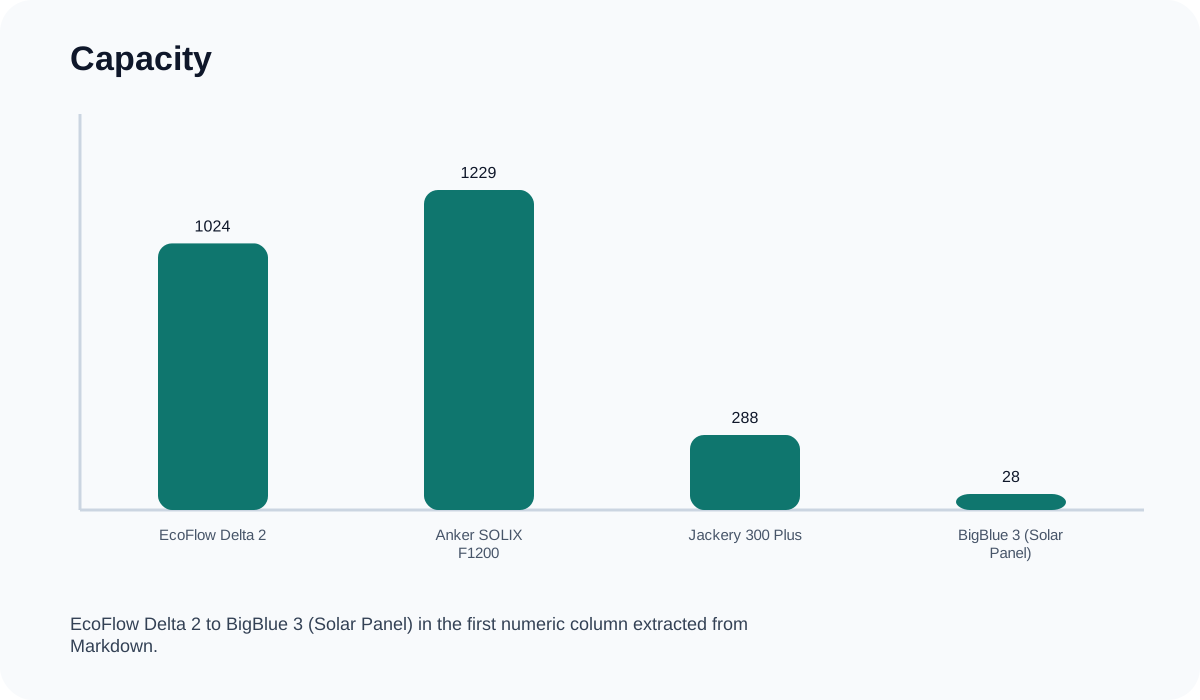
The market offers distinct tiers of emergency backup based on capacity and charging inputs. Below is a comparison of top models currently dominating the backup sector.
| Product | Capacity | Price Range | Charging Method | Waterproof |
|---|---|---|---|---|
| EcoFlow Delta 2 | 1024Wh | 999 | AC, Solar, Car, USB-C | No (IP20) |
| Anker SOLIX F1200 | 1229Wh | 1,200 | AC, Solar, Car | No |
| Jackery 300 Plus | 288Wh | 299 | AC, Solar, Car, USB-C | No (IP20) |
| BigBlue 3 (Solar Panel) | N/A (28W) | 80 | Solar Only | Yes (IPX4) |
Technology Shifts: Why LiFePO4 is the Standard
Traditional Lithium-ion batteries degrade quickly, often failing after 500 charge cycles. LiFePO4 (Lithium Iron Phosphate) battery chemistry is now the industry standard for emergency backup. These modern cells provide 3,000+ charge cycles, ensuring a 10-year reliable lifespan even with frequent use.
Equally important is the inclusion of Pure Sine Wave inverters. Lower-tier units utilize modified sine waves, creating micro-oscillations that can severely degrade the delicate circuit boards in CPAP machines, modern appliances, and laptops. A Pure Sine Wave inverter is a mandatory requirement for device safety.
Addressing Real-World Pain Points
Consumer testing reveals several critical factors that often blindside first-time buyers:
- Solar Recharging Realities: Solar panels are highly recommended for indefinite outages. However, real-world solar recharge times often take 30% to 50% longer than manufacturer claims. Atmospheric conditions, cloud cover, and suboptimal angles of incidence drastically reduce wattage capture.
- Phantom Drain: Many users report “phantom drain,” where a unit loses battery percentage while sitting idle on a shelf. Regular maintenance checks are required to ensure readiness.
- Moisture Vulnerability: Despite their rugged aesthetics, most high-capacity power stations completely lack significant IP (waterproof) ratings. Strategic placement or protective covers are strictly necessary to avoid moisture damage.
- Weight vs. Capacity: Units exceeding 1500Wh (like the Goal Zero Yeti 1500X or Bluetti AC200P) offer tremendous power but cross a weight threshold that makes them difficult to transport quickly during an evacuation.
Emergency Storage & Safety Checklist
Unlike traditional gas generators that pose extreme carbon monoxide risks, battery-powered stations are perfectly safe for indoor operation. Follow this checklist to maintain optimal safety and performance:
- Verify the BMS: Ensure your chosen unit features a comprehensive Battery Management System (BMS) with over-voltage, short-circuit, and thermal protection protocols.
- Check the Surge Rating: Differentiate between “Peak” and “Continuous” wattage. High-draw appliances like refrigerators require a massive initial surge to start the compressor before settling into a lower continuous draw.
- Follow Storage Rules: Store your emergency power station at 50% to 80% charge level. Check and top it off every 3 to 6 months to prevent catastrophic deep discharge damage.
Final Verdict
For most households facing intermittent storm outages, a 1000Wh LiFePO4 station like the EcoFlow Delta 2 or Anker SOLIX F1200 strikes the best balance between portability, price, and output. If your primary goal is keeping phones and a radio alive during short blackouts, smaller units like the Jackery 300 Plus offer an economical and highly portable alternative. Always pair your station with a compatible solar panel—and remember to discount the manufacturer’s solar speed claims by up to half to set realistic expectations.