Best Emergency Strobes for Roadside and Trail Visibility
Discover the best emergency LED strobes for roadside safety and trail visibility, featuring SAE J845 compliance and hybrid charging analysis.
Executive Summary
Modern emergency strobes have fundamentally shifted away from traditional incendiary flares toward reusable, highly durable LED systems. The current standard for premium strobes includes IP67 waterproofing, magnetic mounting options, and USB-C rechargeability. When evaluating emergency lighting, use-case dictates the required specifications: professional roadside kits rely on SAE J845 Class 1 brightness for high-speed highway safety, whereas trail-specific units prioritize lightweight design, multi-color modes, and 360-degree active illumination to maximize personal safety during low-light hiking or running.
Top Emergency Strobes Overview
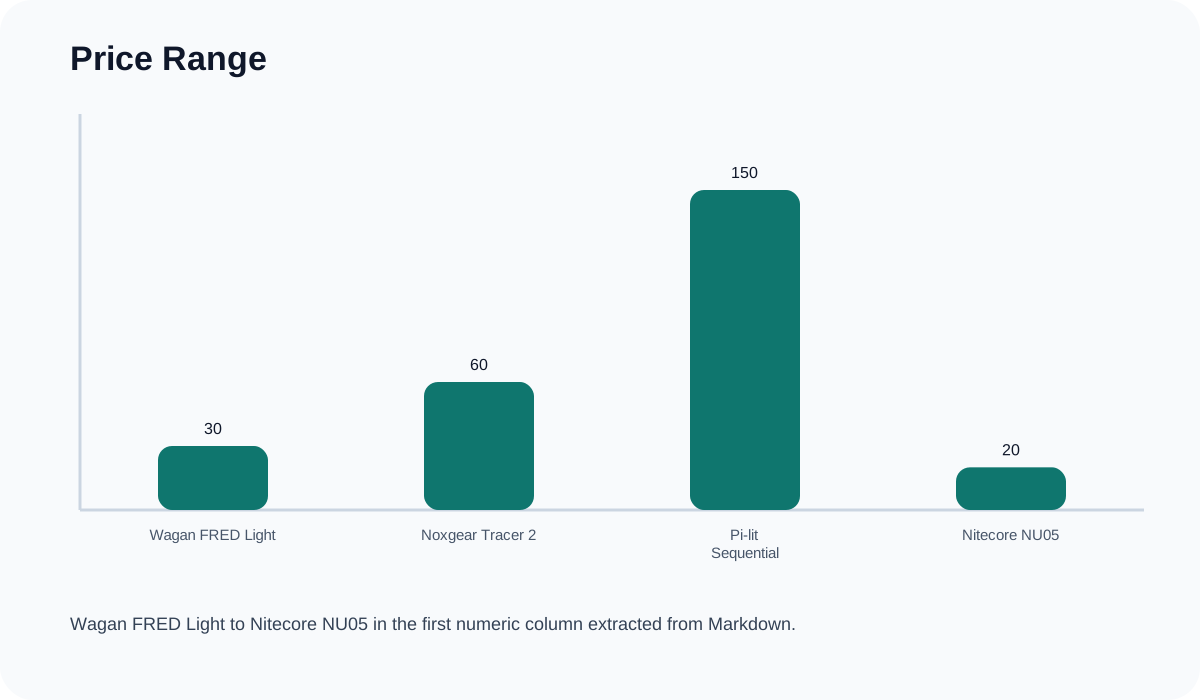
The table below outlines the core specifications for the leading emergency strobes categorized by their primary use case.
| Product | Price Range | Max Runtime | Waterproof Rating | Primary Use | Charging Method |
|---|---|---|---|---|---|
| Wagan FRED Light | 45 | Up to 38 Hours | IP67 | Roadside Emergency | AAA Batteries |
| Noxgear Tracer 2 | 70 | Up to 20 Hours | IP67 | Trail/Running | USB-C Rechargeable |
| Pi-lit Sequential | 250 | 20+ Hours | IP67 | Professional Roadside | Rechargeable Case |
| Nitecore NU05 | 30 | Up to 20 Hours | IP66 | Trail/Backpack | Micro-USB |
Battery Runtime Comparison
Extended battery life is a critical factor during power outages or prolonged emergency situations.
Roadside Safety: Standards and Usability
For roadside incidents, raw visibility dictates safety. The critical safety standard for roadside strobes is SAE J845 compliance. High-speed highway use requires Class 1 devices, which deliver the brightest output to alert fast-moving traffic from a distance. For close-range signaling or neighborhood use, Class 3 devices are typically sufficient.
While devices like the Pi-lit Sequential Flares (aimed at professionals) and the consumer-friendly Wagan FRED Light deliver excellent visibility, buyers must be aware of common user pain points:
- Complex User Interfaces: Many modern LED flares require users to cycle through 10 or more lighting modes to find the correct strobe pattern. During high-stress emergencies, a simple on/off or quick-select interface is far superior.
- Vehicle Damage: Magnetic bases are highly convenient for attaching strobes to a disabled vehicle’s roof or trunk, but unshielded magnets are notorious for scratching vehicle paint.
Trail Visibility: The Shift to Wearable Active Illumination
For runners, hikers, and backpackers, passive reflection (like traditional hi-vis vests) is being replaced by active “wearable strobes.” Systems like the Noxgear Tracer 2 and the ultra-compact Nitecore NU05 offer active LED illumination.
Active illumination significantly improves driver reaction times on dark rural roads because the light is emitted continuously or in strobe patterns rather than relying on an approaching vehicle’s headlights to strike reflective tape.
For trail use and extended power outages, hybrid charging is emerging as the gold standard. Devices that allow for USB-C rechargeability but also accept alkaline batteries as a backup provide peace of mind that a device will not fail during long-duration use.
Final Verdict
- Best for Consumer Roadside Emergencies: The Wagan FRED Light offers an impressive 38-hour runtime, IP67 waterproofing, and is highly cost-effective for keeping a multi-pack in the trunk.
- Best for Professional Highway Use: The Pi-lit Sequential Flares provide the synchronization and high-visibility output necessary for high-risk highway deployments, packaged in a streamlined rechargeable case.
- Best for Trail and Personal Visibility: The Noxgear Tracer 2 is the top choice for active, 360-degree wearable visibility that actively alerts drivers on rural roads long before passive reflectors would.
Emergency Strobe Buyer’s Checklist
- Verify SAE Ratings: If buying for highway roadside use, look for SAE J845 Class 1 compliance.
- Evaluate the Interface: Can you activate the primary emergency strobe in one or two button presses? Avoid models requiring 10+ mode cycles.
- Check the Magnet: If the strobe is magnetic, ensure it has a rubberized or coated base to protect your vehicle’s paint.
- Assess Power Options: Consider hybrid power options (USB-C rechargeable + alkaline backup) to ensure readiness over extended periods.
- Review Local Regulations: Note that in many jurisdictions, non-emergency personnel are restricted from displaying blue or green strobe lights on vehicles.