Best Emergency Weather Radios for Remote Campsites
Discover the best emergency weather radios for 2026 remote camping. We analyze battery capacities, charging realities, and signal performance for off-grid safety.
Executive Summary
For 2026 remote camping, the best emergency weather radios have evolved from basic receivers into high-capacity power hubs. The Midland ER310PRO leads the pack with an estimated 10,000mAh battery, sustaining multi-day off-grid use. While budget options exist, field data highlights a stark divide between professional-grade tools that prioritize signal sensitivity and lower-tier models that struggle with poor reception and flimsy crank mechanisms. Modern reliability is driven by USB-C fast charging and large lithium-ion cells, whereas integrated solar panels and hand cranks should be treated strictly as secondary, emergency-only power sources.
Battery Capacity vs. Weight
There is a direct correlation between device weight and survival duration. Models weighing over 15 ounces often provide up to four times the internal power storage of lighter models. This massive capacity is essential for remote campsites where constantly “re-cranking” a dead radio is physically demanding and inefficient.
(Note: X-axis represents Weight in ounces; Y-axis represents Battery Capacity in mAh. Data points respectively match the Midland ER310PRO, Givoust Emergency, Eton Odyssey, Sangean MMR-88, and FosPower A1.)
Head-to-Head Comparison
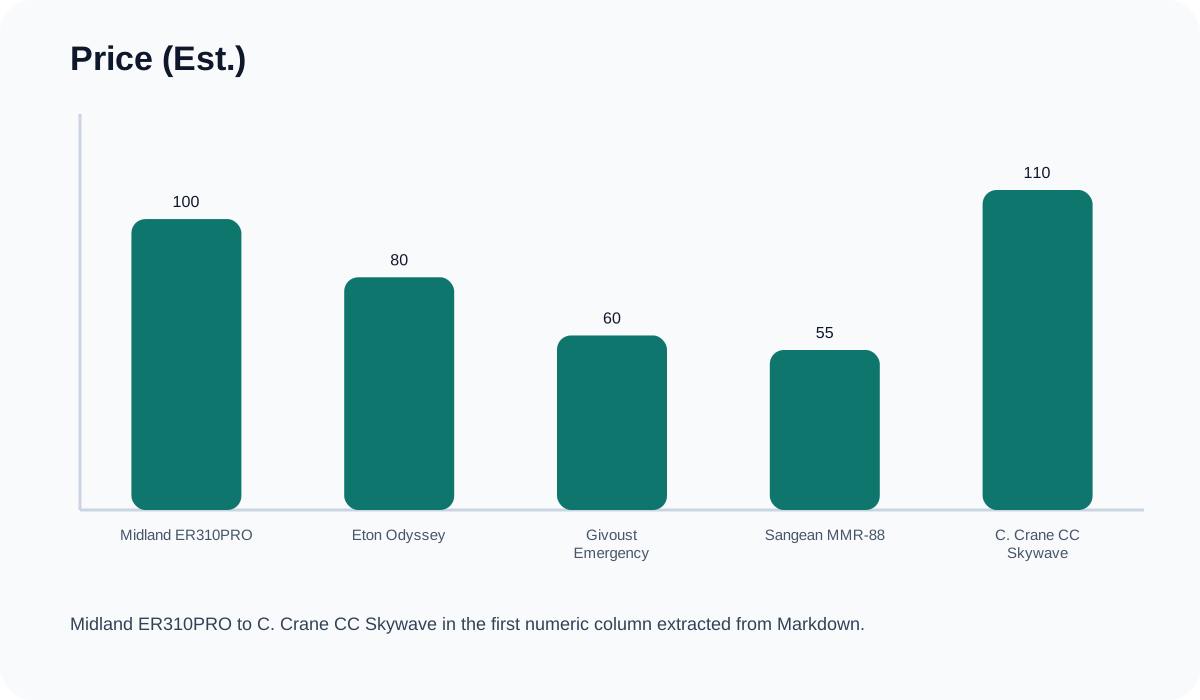
| Model | Price (Est.) | Battery Capacity | Waterproof Rating | Charging Methods |
|---|---|---|---|---|
| Midland ER310PRO | $100 | 10,000 mAh | IPX4 (Splash) | Solar, Crank, USB-C |
| Eton Odyssey | $80 | 2,000 mAh | IPX4 (Splash) | Solar, Crank, USB-C, AAA |
| Givoust Emergency | $60 | 8,000 mAh | Weather-Resistant | Solar, Crank, USB |
| Sangean MMR-88 | $55 | 850 mAh | Public Alert Certified | Solar, Crank, USB |
| C. Crane CC Skywave | $110 | 2x AA (Removable) | None | AA Batteries, AC Adapter |
The “Toy” vs. Tool Divide
User feedback from the 2026 market indicates a sharp quality gap. Budget brands (such as FosPower and RunningSnail) are frequently described as “toys” due to poor signal reception and fragile components. Professional-grade units from Midland and C. Crane justify their higher price points by prioritizing signal sensitivity—a critical feature when attempting to pick up NOAA alerts in deep, remote canyons.
Power Realities: Charging & Battery Runtimes
The standard for battery capacity has surged from 2,000mAh to 8,000–10,000mAh in premium models. This allows top-tier radios to double as viable emergency power banks for charging smartphones.
The Charging Reality Check:
- Primary Charging: USB-C charging or high-capacity AA/AAA batteries are critical for establishing an initial full charge before heading to remote sites.
- Secondary Charging: Solar panels integrated into these radios typically only provide a “trickle-charge,” which is highly inefficient in dense, deep-woods environments.
- Hand-Crank Limitations: A 1-minute continuous crank yields only about 10-15 minutes of radio use. Furthermore, hand cranks on budget models are notorious for snapping or stripping gears under the pressure required to generate power.
Real User Pain Points & Safety Considerations
When purchasing an emergency radio for off-grid survival, campers face several common hurdles:
- Misleading Waterproof Claims: Many “emergency” radios fail during heavy rain due to a lack of sealed gaskets. An IPX3 rating is often insufficient for severe mountain storms. An IPX4 rating provides better splash resistance, though utilizing fully waterproof dry-bags is highly recommended.
- Signal Obstruction: In dense forests or deep canyons, standard NOAA signals can be obstructed. Choosing a radio with a high-gain external antenna port is a crucial safety priority.
- Proprietary Batteries: Internal 18650 lithium cells that are soldered into the board—or require specific “button-top” replacements—frustrate users trying to make field repairs.
- Alert Complexity: “Specific Area Message Encoding” (SAME) alerts are incredibly valuable but notoriously difficult for casual users to program without reading the manual closely, often leading to annoying out-of-zone alarms or missed warnings.
- Light Pollution: SOS strobes are essential safety tools, but budget models often lack a “red light” mode to preserve night vision around the campsite.
Final Verdict
For remote campers in 2026, the Midland ER310PRO offers the best balance of robust power storage (10,000mAh), reliable USB-C charging, and adequate durability (IPX4). If you require absolute signal clarity where power can be managed exclusively via external batteries, the C. Crane CC Skywave SSB 2 remains the gold standard for reception.
Campsite Readiness Checklist
- Charge Before Leaving: Fully charge the radio via USB-C or wall outlet at home. Do not rely on solar or crank methods for your initial, primary charge.
- Maintenance Checks: Lithium batteries degrade if left at 0%. Charge your emergency radio every 3-6 months while in storage.
- Test SAME Alerts: Program and test your specific county codes (SAME) before venturing off-grid to prevent missing severe weather warnings.
- Pack Backup Batteries: If your model supports it (e.g., C. Crane or Eton Odyssey), always pack spare AA or AAA lithium batteries.
- Protect from Downpours: Despite advertised water resistance or IPX4 ratings, always pack your radio in a dry bag during extreme rainstorms.