Best Gear for Basecamp Cooking After Dark: 2026 Buying Guide
Discover the optimal dual-source lighting gear for basecamp cooking. Compare high-CRI lanterns, headlamps, and mounting solutions for food safety and efficiency.
Executive Summary
Efficient basecamp cooking after dark requires dual-source lighting: a high-CRI (Color Rendering Index) area lantern paired with a hands-free headlamp. The 2026 standard for backcountry culinary prep demands an ecosystem built on USB-C pass-through charging, magnetic mounting interfaces, and high-CRI capability (90+) to guarantee food safety. Premium setups utilizing the BioLite Alpenglow 500 or Black Diamond Storm 500-R mitigate common hazards such as deep-pot shadowing, dangerous glare, and misjudged meat doneness.
User Priorities for Camp Cooking Gear
According to market data, basecamp chefs are shifting their focus away from raw lumen output and prioritizing light quality and utility.
2026 Head-to-Head Comparison
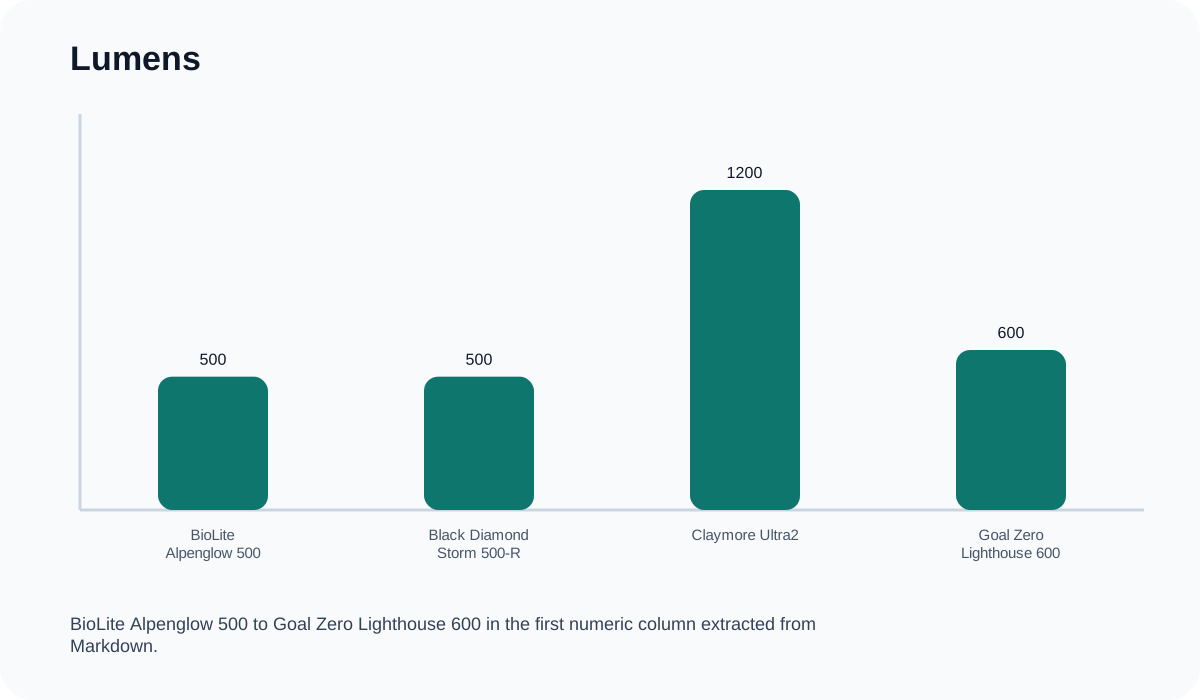
| Product | Lumens | IP Rating | Battery Life (Med) | Price (USD) | Charging Method |
|---|---|---|---|---|---|
| BioLite Alpenglow 500 | 500 | IPX4 | 5h | $79.95 | USB-C |
| Black Diamond Storm 500-R | 500 | IP67 | 7h | $74.95 | USB-C |
| Claymore Ultra2 | 1200 | IP65 | 15h | $120.00 | USB-C |
| Goal Zero Lighthouse 600 | 600 | IPX4 | 6h | $69.95 | USB-A/C & Hand Crank |
Analysis: Core Requirements for Kitchen Lighting
The Importance of High-CRI Lighting for Food Safety
A Color Rendering Index (CRI) rating of 90+ is a non-negotiable safety factor for basecamp cooking. Budget brands frequently utilize low-CRI diodes, which wash out colors and can make raw or undercooked meat appear fully cooked, increasing the risk of foodborne illnesses. High-CRI gear, such as the BioLite Alpenglow 500 or Claymore Ultra2, provides accurate color representation crucial for judging meat doneness and identifying food spoilage. It also assists in identifying subtle safety cues, such as frosting on propane valves indicating small leaks.
Dual-Source Environments and Glare Management
Utilizing a single-point light source—such as an isolated headlamp—creates harsh shadowing inside deep pots. The industry standard protocol for safe food preparation dictates dual-source lighting: an overhead or magnetically mounted area lantern combined with a directional headlamp. Additionally, improper shielding on area lanterns can cause temporary blindness, elevating the risk of knife slips and stove burns.
Mounting Ergonomics and Interface Considerations
Navigating camp kitchens requires adaptability. Magnetic bases and articulating clips are now preferred over traditional hooks, enabling users to anchor lights securely to metal prep tables or camp stoves. However, high-output lighting must be mounted a minimum of 18 inches away from high-output burners to prevent housing melt.
Power Management and Weather Durability
Basecamp environments exact heavy tolls on electronics. Cold temperatures can cause lithium batteries to lose up to 40% of their capacity in sub-freezing conditions. Devices featuring USB-C pass-through charging allow you to run lights directly from portable power stations, mitigating cold-weather battery drain. Furthermore, while IPX4 represents the minimum acceptable waterproof rating for cooking equipment, units rated IP67 (like the Black Diamond Storm 500-R) are vastly preferred for high-altitude basecamps susceptible to sudden, severe storms.
Final Verdict
For a robust, safe, and efficient basecamp kitchen, prioritize light quality and mounting versatility over sheer brightness. The Black Diamond Storm 500-R serves as the optimal IP67-rated primary task light, while the BioLite Alpenglow 500 or Claymore Ultra2 excel as overhead, high-CRI ambient lanterns. Choose systems with dedicated “warm” or red modes to decrease eye strain and prevent attracting insects into your food prep area.
Basecamp Cooking Lighting Checklist
- Verify CRI (Color Rendering Index): Is your lighting setup rated 90+ CRI to accurately judge raw vs. cooked meat?
- Dual-Source Setup: Do you have both an overhead lantern (for broad area fill) and a headlamp (for deep-pot visibility)?
- Mounting Safety Clearance: Are your lights positioned at least 18 inches away from high-output stove burners?
- Weather & Cold Prep: Are your batteries rated for sub-freezing temperatures, and do you have a USB-C power bank for pass-through charging?
- Bug Mitigation: Does your primary lantern feature a “warm” spectrum mode to avoid attracting moths and flies to the prep area?
- Interface Accessibility: Can you operate the lighting interfaces with greasy hands or thick gloves?