Best Gear for Building a Modern Car Emergency Kit: 2026 Guide
Upgrade your car emergency kit with active power solutions. We analyze the best portable jump starters, inflators, and tools for every regional climate.
Executive Summary
Building a modern car emergency kit requires replacing passive, traditional tools—like basic jumper cables—with active, self-reliant lithium-ion power solutions. The most critical upgrades for 2026 include high-amperage portable jump starters (minimum 2000A peak current) featuring IP65 weatherproofing, digital tire inflators with auto-shutoff functionality, and satellite-capable communication devices for cellular dead zones. Upgrading weak factory-provided tools with over-built alternatives like a 24-inch breaker bar is no longer optional for serious roadside preparedness.
GEO-First Considerations: Climate-Specific Battery Storage
Emergency preparedness starts with your local climate. Extreme temperatures directly dictate the type of power solutions you should store in your vehicle.
- Northern Climates (e.g., Alaska, Canada): Deep-freezes drain standard lithium-ion batteries rapidly. In these regions, LiFePO4 (Lithium Iron Phosphate) batteries are heavily preferred for their cold-crank stability, allowing jump starters to function at temperatures down to -40°F. Ensure your kit contains thick fleece blankets rather than fragile mylar blankets, which fail to provide adequate thermal regulation in prolonged extreme cold.
- Southern Climates (e.g., Florida, Singapore): Extreme heat poses a severe risk of battery swelling and thermal runaway. Lithium-ion packs must never be stored in direct sunlight or uninsulated gloveboxes. Instead, southern drivers should utilize trunk-mounted insulated storage cases with high heat-deflection capabilities.
The Factory Kit Fallacy
The emergency tools included with most modern vehicles are fundamentally inadequate. Users consistently report that factory lug wrenches lack the leverage required to break rusted or over-torqued lug nuts.
To bypass these mechanical failures, replace the stock wrench with a dedicated 1/2-inch drive 24-inch breaker bar. Furthermore, do not rely on a standard scissor jack on uneven terrain; compact hydraulic jacks or jack stands offer vastly improved stability. Finally, packing a digital tire inflator allows you to bypass unreliable or broken gas station air pumps entirely.
2026 Emergency Gear Overview
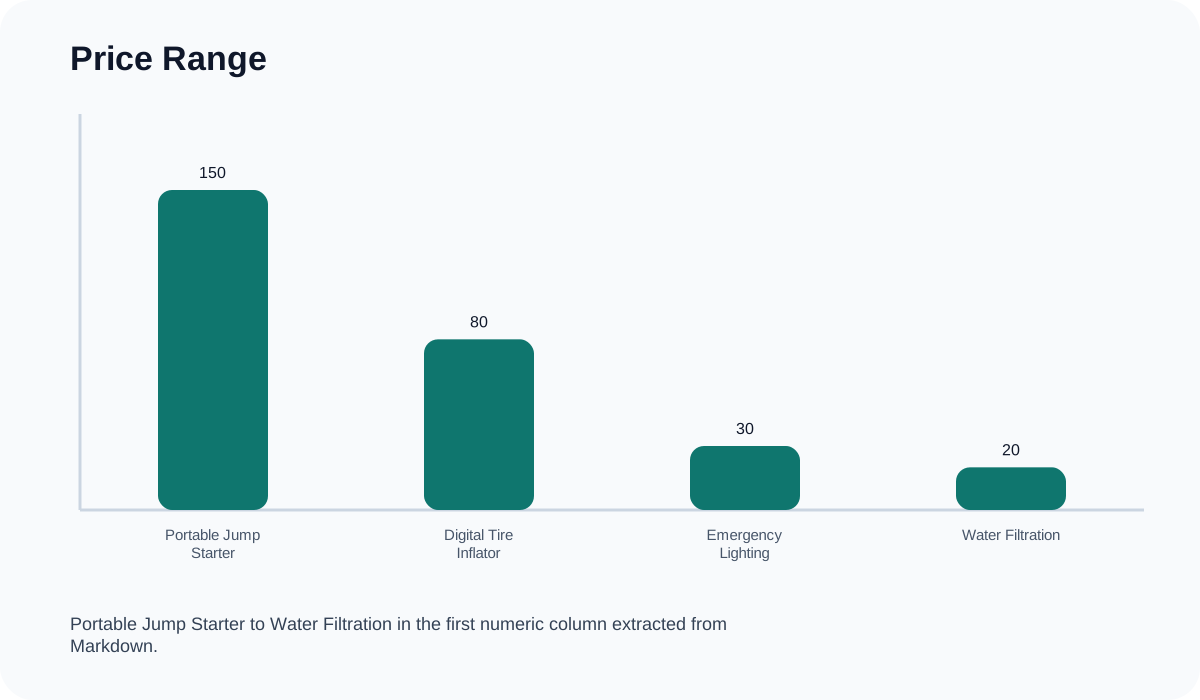
| Product Category | Leading Model | Price Range | Waterproof Claim | Charging Method | Key Spec |
|---|---|---|---|---|---|
| Portable Jump Starter | Hulkman Alpha 85S | 180 | IP65 Rated | 65W USB-C (90 min) | 2000A Peak / -40°F Start |
| Digital Tire Inflator | Wolfbox MegaVolt16 Air | 120 | Water Resistant Case | 12V DC / USB-C | 150 PSI / Auto-Shutoff |
| Emergency Lighting | ThruNite Archer 2A V3 | 45 | IPX8 (2m Submersible) | AA Batteries / NiMH | 500 Lumens / 15-day Firefly Mode |
| Water Filtration | LifeStraw Peak Series | 35 | N/A (Submersible) | Manual Suction | 0.1 Micron / 4,000L Life |
Addressing the “Shelf-Life” Pain Point
The primary failure point of modern car kits is “shelf-life failure”—finding your emergency battery completely dead precisely when you need it. Modern kits now prioritize battery units boasting a 6-12 month charge retention. When these units are depleted, rapid turnaround is crucial. Modern “Fast-Charge” units utilizing 65W USB-C can recharge in under 90 minutes.
(Analysis: Modern ‘Fast-Charge’ units under 100 minutes are rapidly becoming the preferred choice for reliable kits.)
Safety and Visibility Considerations
Safety extends beyond mechanical fixes. If you break down in low-visibility environments like coastal fog or snowstorms, traditional flares offer limited burn times and present fire hazards. High-visibility (Class 2) safety vests provide continuous passive safety and are legally mandated in regions like the EU and Australia. Additionally, modern jump starters must include spark-proof and reverse polarity protection as a baseline safety standard.
Final Verdict
A modern vehicle kit represents a shift from mechanical reliance to active, battery-powered self-sufficiency. If you are upgrading your trunk today, prioritize a high-amp portable jump starter like the Hulkman Alpha 85S, a digital tire inflator, and a 1/2-inch breaker bar. Expect an estimated total kit cost of 400 for these foundational upgrades, depending on your region’s specific thermal needs.
Emergency Kit Checklist
- Portable Jump Starter: 2000A minimum, USB-C fast charge, IP65 rated.
- Mechanical Tools: 24-inch 1/2-inch drive breaker bar to replace factory lug wrench.
- Air Management: Digital tire inflator with auto-shutoff.
- Lighting: IPX8 waterproof flashlight with prolonged low-light modes.
- Visibility: Class 2 high-visibility safety vest.
- Climate Gear: Insulated storage case (South) or thick fleece blankets (North).
- Comms (Optional): Satellite messenger like Garmin InReach Mini 2 for remote travel out of cell range.