Best High-Output USB-C Cables for Camp Electronics
Discover the most durable 100W to 240W USB-C cables for camp electronics, featuring Kevlar reinforcement, IP54 ratings, and E-Marker safety chips.
Executive Summary
Selecting high-output USB-C cables for camp electronics requires upgrading from standard consumer-grade cords to ruggedized versions supporting Power Delivery (PD) 3.1. In off-grid environments, maintaining power to portable stations and laptops is mission-critical. The most important features to prioritize are 100W to 240W power capacities, E-Marker smart chips for safe voltage negotiation, and environmentally resilient materials like Kevlar or Tetoron. While specialized cables prioritize durability and high wattage, users should be prepared for slower data transfer rates, typically capped at USB 2.0 speeds (480Mbps).
High-Output Rugged Cable Comparison
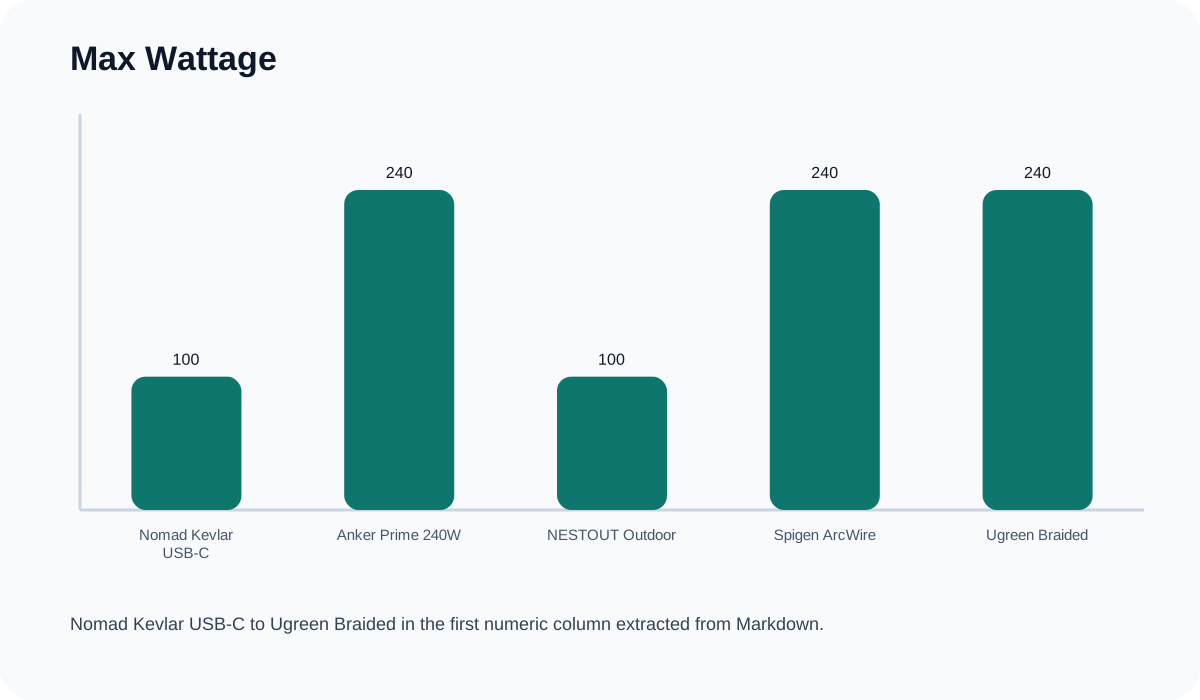
| Brand/Model | Max Wattage | Durability (Bends) | Best Use Case | MSRP (USD) |
|---|---|---|---|---|
| Nomad Kevlar USB-C | 100W | 100,000+ | Longevity/Warranty | $34.95 |
| Anker Prime 240W | 240W | 300,000+ | Ultra-Durability | $29.99 |
| NESTOUT Outdoor | 100W | 10,000 (IP54) | Wet/Grit Environments | $24.99 |
| Spigen ArcWire | 240W | 30,000+ | Safety/Certification | $27.99 |
| Ugreen Braided | 240W | 15,000+ | Budget High-Power | $14.99 |
Durability vs. Price Analysis
The following chart illustrates the relationship between a cable’s bend rating (in thousands) and its retail price. Higher bend ratings indicate superior resistance to physical fatigue, a key metric for rough campsite usage.
Key Considerations for Camp Electronics
Power Delivery and Safety (The E-Marker Chip)
PD 3.1 (240W) is currently the benchmark for future-proofing your charging setup, although PD 3.0 (100W) remains adequate for roughly 90% of camp power stations and high-capacity power banks. Crucially, any cable exceeding 60W/3A must contain an E-Marker chip. This chip negotiates safe charging rates between the power source and the device; using non-compliant cables with high-capacity lithium power stations creates a significant fire risk.
Environmental Resilience and Material Strength
Campsites introduce abrasion from rocks, dirt, and equipment friction. Cables with Kevlar-reinforced cores (such as Nomad) or high-denier braided ballistic nylon (like NESTOUT and Anker) are essential. Furthermore, standard silicone cables become brittle in sub-zero temperatures. For winter camping, seek out specialized materials like Tetoron, which maintains flexibility and performance in extreme cold, rated for -20°C to -40°C.
Water and Grit Protection
True waterproofing is practically non-existent in the standard USB-C specification due to the open-port design. However, outdoor-focused models have engineered workarounds. The NESTOUT series offers an IP54 splash resistance rating and utilizes physical connector caps to prevent grit from entering the port—addressing one of the most common failure points in the field.
The Data Speed Trade-off
A frequent pain point for outdoor creators (e.g., those needing to transfer 4K footage) is that high-wattage, ultra-durable cables frequently sacrifice data speed for power delivery. Many top-tier power cables, including the Anker Prime 240W, limit data transfer to USB 2.0 speeds (480Mbps).
Final Verdict
- For Maximum Durability: The Anker Prime 240W offers an unmatched 300,000+ bend rating at a highly competitive price point.
- For Wet and Dirty Environments: The NESTOUT Outdoor is the clear winner, offering rare IP54 splash resistance and physical port caps to keep out grit.
- For Premium Longevity: The Nomad Kevlar USB-C provides exceptional structural integrity with its Kevlar core.
Off-Grid Cable Buyer’s Checklist
- Check the Wattage: Ensure it supports at least 100W (PD 3.0) or 240W (PD 3.1) for power stations.
- Verify E-Marker Presence: Mandatory for safe operation above 60W/3A.
- Assess the Jacket Material: Look for Kevlar, Ballistic Nylon, or cold-resistant Tetoron.
- Plan for Port Protection: If IP ratings are absent, purchase separate port caps to keep out sand and water.
- Confirm Data Needs: If transferring large files, verify the cable supports USB 3.0+ speeds, as most high-output cables default to USB 2.0.