Best Lightweight Solar Chargers for Thru-Hikers
Discover the top lightweight solar chargers for thru-hikers in 2026, featuring efficiency ratios, waterproofing, and solutions to battery drain issues.
Executive Summary
For thru-hikers in mid-2026, the market has definitively shifted away from integrated solar power banks. The current gold standard is 20W to 30W modular solar panels. This shift is driven by a critical need for strict weight efficiency and superior heat management. By utilizing N-type TOPCon monocrystalline cells, modern panels have improved low-light conversion by 15%, making solar charging viable even in densely shaded environments like the Appalachian Trail’s “Green Tunnel.” Top-tier models prioritize bi-directional USB-C ports and intelligent auto-restart chips to solve the persistent issue of battery drain during temporary cloud cover.
Top Solar Chargers Compared (2026)
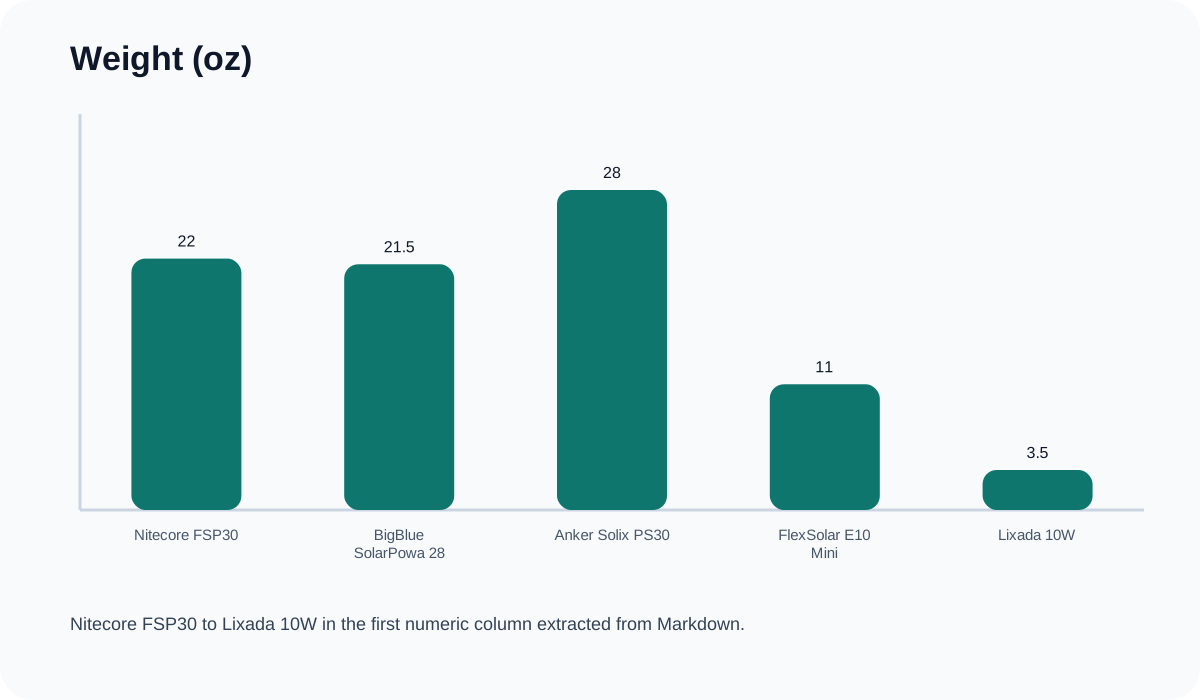
When evaluating solar chargers for 2,000+ mile treks, ounces equal pounds. The table below breaks down the leading panels by weight, wattage output, ingress protection (IP), and estimated price.
| Model | Weight (oz) | Wattage (W) | IP Rating | Price |
|---|---|---|---|---|
| Nitecore FSP30 | 22 | 30 | IPX5 | $120 |
| BigBlue SolarPowa 28 | 21.5 | 28 | IPX4 | $79 |
| Anker Solix PS30 | 28 | 30 | IP65 | $99 |
| FlexSolar E10 Mini | 11 | 10 | IP67 | $55 |
| Lixada 10W | 3.5 | 10 | N/A | $25 |
Efficiency Ratio: Weight vs. Power Output
For ultralight backpacking, the ultimate metric is the Efficiency Ratio—calculated as ounces of weight per rated watt of power generated. A lower ratio means you carry less dead weight for the power you receive.
Overcoming the “USB-C Handshake” Problem
The number one pain point reported by thru-hikers in 2026 is the “USB-C Handshake.” When temporary cloud cover reduces a solar panel’s output, smart devices (like modern smartphones or advanced power banks) may attempt to reverse the flow of power, effectively charging the solar panel and draining the connected device’s battery.
How hikers are fixing dead-charging:
- Auto-Restart Chips: Top models, such as the Nitecore FSP30, integrate auto-restart chips that intelligently detect when sunlight returns and reset the charging connection automatically.
- One-Way Cables: A growing standard for ultralight hikers is the use of “One-Way” USB-C cables. These are mechanically and electronically designed to prevent reverse power flow back into the panel, entirely eliminating the handshake drain.
Safety and Durability Standards
Durability and thermal management dictate whether a solar panel will survive a thru-hike.
- Heat Management: Overheating is a primary safety risk. In direct summer sun, a solar panel’s junction box can easily reach up to 150°F. If electronics are placed on or too near the junction box, they risk severe battery degradation or catastrophic failure. Connected devices must be kept shaded at all times.
- ETFE Coating: Polyethylene terephthalate (PET) coatings are obsolete for serious long-distance treks. Ethylene tetrafluoroethylene (ETFE) coatings have become the 2026 standard, offering vastly superior scratch resistance and UV longevity to prevent the solar cells from clouding and losing efficiency over time.
Final Verdict
- Best Overall: The Nitecore FSP30 (22oz, 30W) strikes the best balance of premium build quality, ETFE durability, auto-restart intelligence, and raw power output.
- Best Value: The BigBlue SolarPowa 28 (21.5oz, 28W) offers nearly identical efficiency metrics to the Nitecore but comes in at a highly accessible $79 price point.
- Best for Ultralight Purists: The Lixada 10W dominates the efficiency chart at an astonishing 3.5oz. It is the absolute best choice for hikers with minimal energy needs who refuse to carry extra weight, though it lacks high-end waterproofing.
Thru-Hiker Solar Checklist
Before hitting the trail, ensure your solar setup meets these modern criteria:
- Modular Setup: Use a separate panel and power bank (avoids heat damage to the battery by keeping it out of direct sun).
- ETFE Coating: Verified scratch and long-term UV resistance.
- Auto-Restart / One-Way Cable: Guaranteed prevention against reverse “handshake” battery drain.
- Sub-1.0 Efficiency Ratio: Aim to carry less than 1 ounce per rated watt of output.