Best Outdoor Safety Gear That Pairs Naturally with Arc Ignition Tools
Discover the top USB-C outdoor safety gear—from IP67 headlamps to 10,000 mAh power banks—that perfectly complements your arc lighter for a unified, fuel-free kit.
Executive Summary
The shift toward USB-rechargeable outdoor ecosystems has made arc ignition tools natural companions for modern back-country safety gear. By unifying your kit around a shared charging infrastructure, you eliminate the need for butane and disposable alkaline batteries. The most effective safety gear to pair with arc lighters includes high-density power banks (like the 10,000 mAh Nitecore NB10000 Gen4) and IP67-rated headlamps (such as the BioLite Range 400). Together, they form a closed-loop energy system ideal for rugged, off-grid environments.
Unified Power Ecosystems: Portability vs. Safety Value
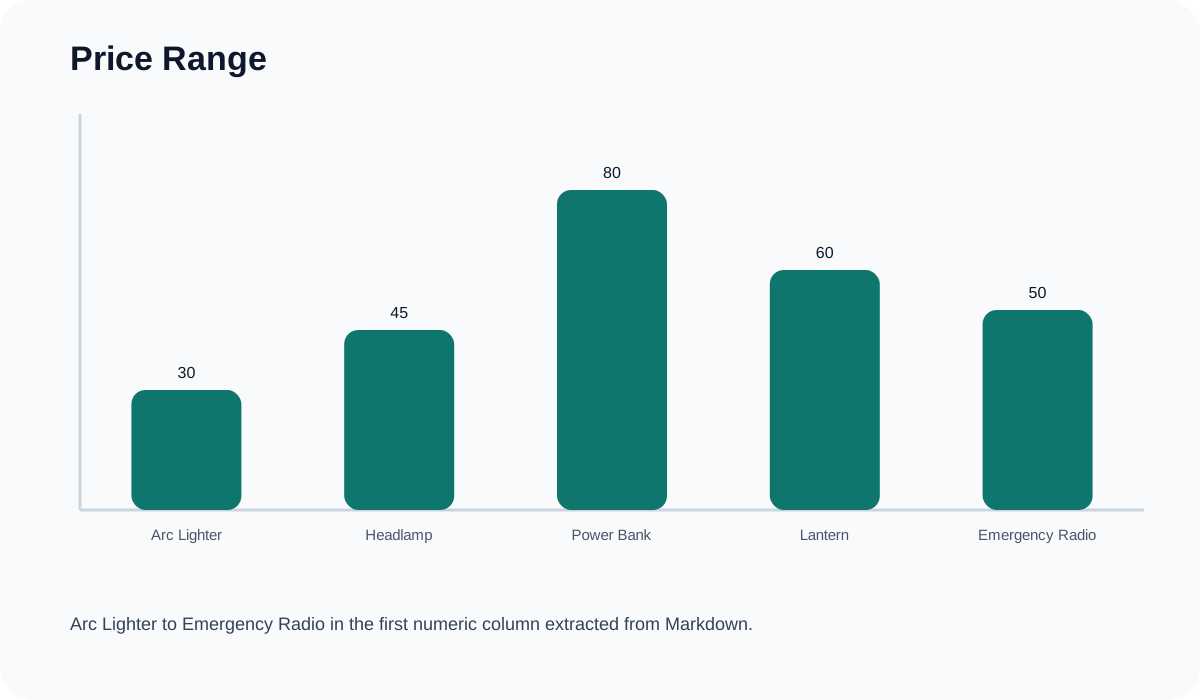
When transitioning to a fully rechargeable setup, physical weight and essential safety utility are the primary metrics to consider. The chart below illustrates how leading electronic safety tools compare in portability versus their critical life-saving value.
Top Safety Gear Pairings (2026 Market Analysis)
To build a reliable closed-loop ecosystem, companion devices must match the ruggedized nature of premium arc lighters, typically meeting IP67 standards (capable of being submerged for up to 30 minutes).
| Product Category | Leading Model | Price Range | Waterproof Rating | Battery Runtime/Capacity | Charging Method |
|---|---|---|---|---|---|
| Arc Lighter | Dark Energy Plasma | 50 | IPX7 | 300+ Lights | USB-C |
| Headlamp | BioLite Range 400 | 60 | IP67 | 200h (Low) / 2.5h (High) | USB-C / Fast Charge |
| Power Bank | Nitecore NB10000 | 90 | IPX5 | 10,000 mAh | USB-C (PD) |
| Lantern | Goal Zero Lighthouse | 75 | Weatherproof | 180h (Low) / 5,200 mAh | USB / Solar / Crank |
| Emergency Radio | Midland ER310 | 70 | Splashproof | 2,600 mAh / 32h | USB / Solar / Crank |
Addressing the “Tinder Gap” & Real User Pain Points
While integrating arc lighters with digital safety gear streamlines pack weight, field data highlights several unique challenges users must manage:
- The “Tinder Gap” (Limited Heat Spread): Arc lighters produce intense but highly localized point-source heat. Users report difficulty igniting bulky or damp firewood directly. Solution: Pair arc tools naturally with hemp-based waxed tinder or “ParaTinder” lanyards, which catch rapidly exactly where the arc makes contact.
- Cold Sensitivity: Lithium-ion batteries in headlamps, power banks, and arc lighters lose significant capacity in sub-freezing temperatures. Proactive thermal management—such as storing essential ignition devices inside pockets close to body heat—is critical.
- Hardware Vulnerabilities: The rubber charging port covers on budget-tier safety gear are prone to tearing, which compromises their waterproof claims. Investing in premium gear with internal port sealing ensures your ecosystem survives wet conditions.
- Auditory Irritation: Some users note that the high-pitched frequency emitted by arc lighters can be disruptive in quiet wilderness settings, though this is a minor tradeoff for windproof reliability.
Safety Considerations & Travel Regulations
Lithium-ion safety remains paramount when combining multiple battery-powered devices in a single pack.
- Thermal Runaway Risks: Avoid uncertified, budget power banks. When subjected to stress, extreme cold, or physical damage, inferior cells can fail or ignite. Stick to vetted brands optimized for the outdoors.
- TSA Travel Compliance: Federal regulations require arc lighters to feature a physical safety latch or protective case to prevent accidental activation during travel. This safety feature is heavily integrated into top-tier survival electronics.
- Accidental Discharge: Ensure your arc lighter utilizes a dual-action switch or a physical lid lock to avoid deploying and draining battery power inside your pocket.
Final Verdict
A unified, USB-rechargeable safety kit is highly efficient. By pairing a premium, windproof arc lighter with a high-capacity power bank and a rugged IP67 headlamp, users can create a robust outdoor power ecosystem that eliminates fuel evaporation and minimizes disposable waste. However, because this system relies entirely on electricity, redundancy is key.
Backcountry Ecosystem Checklist
- Standardize Cables: Verify all primary devices (Headlamp, Lighter, Power Bank) utilize standard USB-C charging interfaces.
- Check Clearances: Confirm waterproof ratings—aim for IP67 for critical ignition and hands-free lighting.
- Prepare Fuel: Pack specialized point-source tinder (waxed hemp or ParaTinder) designed for the precise nodes of an arc lighter.
- Plan a Backup: Include one chemical or fuel-based backup (e.g., a standard Bic lighter or ferro rod) in case of total electrical failure or extreme sub-zero temperatures.