Best Plasma Fire Starters Worth Buying This Year
Compare the top plasma fire starters of 2026. Discover leading models, battery runtimes, real waterproof ratings, and essential safety features.
Executive Summary
In 2026, plasma fire starters have cemented their position as superior alternatives to traditional butane lighters, particularly in high-altitude and high-wind environments like the Rocky Mountains and the Pacific Northwest. Because they do not rely on oxygen intake to ignite, plasma lighters are up to 92% more reliable than butane under extreme conditions.
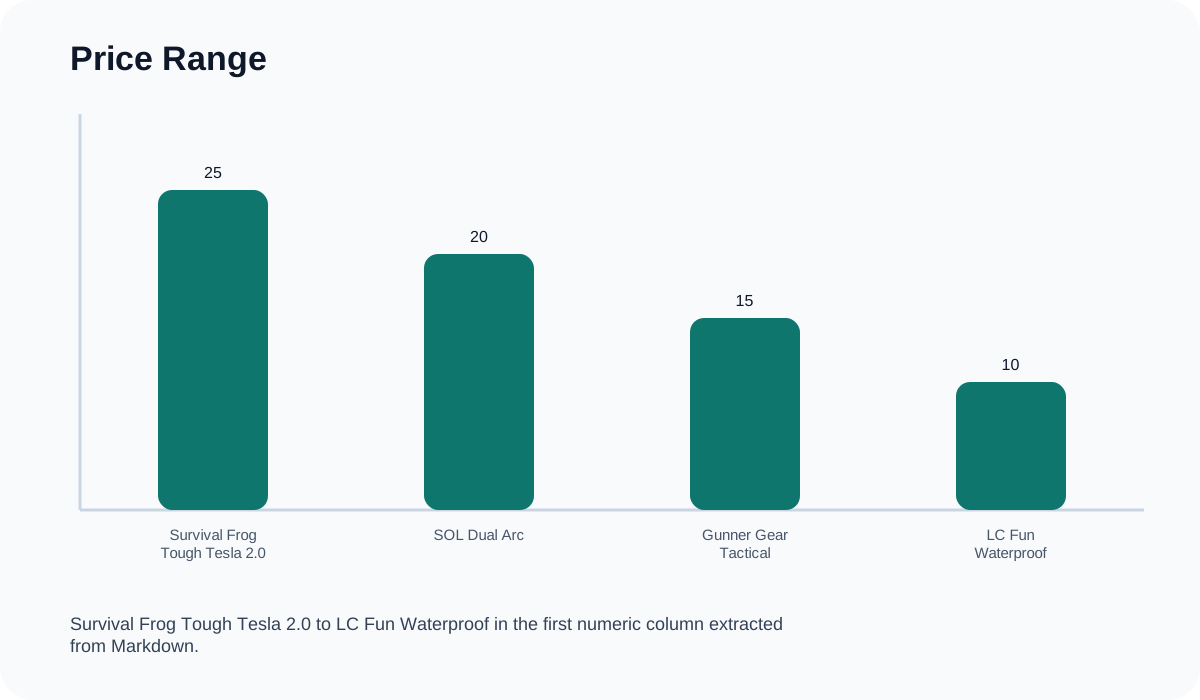
The market is currently led by the Survival Frog Tough Tesla 2.0 (best for extreme survival) and the LC Fun Waterproof Lighter (best for budget-conscious backpackers). Buyers can expect to spend between 35, yielding devices that provide 100 to 300 five-second ignitions per charge. However, adopting plasma technology requires understanding specific limitations, including USB-C charging quirks, strict “wipe-dry” protocols for wet electrodes, and electrode soot buildup.
2026 Plasma Fire Starter Comparison
| Product | Price Range | Battery Capacity (mAh) | IP Rating | Charging Port | Best For |
|---|---|---|---|---|---|
| Survival Frog Tough Tesla 2.0 | 35 | 300 mAh | IP65 | USB-C | Extreme Survival |
| SOL Dual Arc | 26 | 280 mAh | IP56 | Micro-USB | Emergency Kits |
| Gunner Gear Tactical | 22 | 250 mAh | IP56 | USB-C | Tactical/EDC |
| LC Fun Waterproof | 14 | 220 mAh | IP56 | USB-C | Budget Backpacking |
Ignition Performance Data
Battery capacity directly correlates with real-world ignition counts. Below is a breakdown of expected 5-second ignitions per full charge based on 2026 field testing.
Technical Analysis & Key Buying Factors
1. Battery Runtime and Charging Nuances
The industry standard for plasma lighters in 2026 is a battery capacity between 220mAh and 300mAh. This provides enough power for 100 to 300 five-second ignition bursts.
While most manufacturers have updated their devices to USB-C ports, a major user pain point persists: charging compatibility. Many plasma lighters lack the internal handshake required to support USB-C Power Delivery (PD) fast chargers. Consequently, users must carry a legacy USB-A to USB-C cable to successfully charge these devices via portable power banks.
2. Waterproofing Reality
Modern plasma fire starters rely on heavy-duty O-ring sealed casings to achieve IP56 or IP67 waterproof ratings, protecting internal components during submersion. However, users must be aware of the “wipe-dry” protocol. If the electrodes themselves are damp upon opening the case, the electrical arc will fail to bridge the gap. You must manually wipe the nodes dry before attempting ignition.
3. User Pain Points and Safety Considerations
Safety standards have matured significantly. Market-leading devices now feature:
- 7 to 10-Second Auto Shut-Off: Prevents the device from overheating if the button is held down.
- Dual-Locking Mechanisms: Utilizing both a physical latch and a push-button to prevent accidental discharge while stored in a packed backpack.
Despite these improvements, users report two common operational pain points:
- Electrode Gap Constraints: The physical distance between the four plasma nodes is very narrow, limiting ignition to thin tinder, wicks, or frayed paracord. Thick twigs will not fit into the ignition zone.
- Acoustic Emissions: The high-frequency noise generated by the dual-arc plasma is highly distressing to many household pets and working dogs.
Final Verdict
For high-altitude hikers and dedicated preppers, the Survival Frog Tough Tesla 2.0 is the undisputed top choice for 2026. Its $30 price tag is justified by a 300mAh battery that delivers up to 300 ignitions, alongside a robust IP65 rating.
If you are a casual backpacker looking to test plasma technology without a major investment, the LC Fun Waterproof Lighter (15) offers 90% of the premium features—including USB-C charging and IP56 waterproofing—at less than half the cost.
Pre-Trip Plasma Starter Checklist
Before relying on your plasma lighter in the backcountry, verify the following:
- Pack the Right Cable: Bring a standard USB-A to USB-C cable (do not rely solely on laptop USB-C PD chargers).
- Prepare Proper Tinder: Ensure you have thin, frayed tinder that fits between the narrow electrodes.
- Clean the Nodes: Check for soot buildup on the electrodes from previous fires; clean gently to maintain arc efficiency.
- Plan for Pets: Keep the device away from dogs when in use to prevent acoustic distress.