Best Portable Charging Packs for Fishing and Shore Cooking Trips
Compare the best portable charging packs and LiFePO4 power stations for fishing and shore cooking. See runtimes, IP67 ratings, and capacity limits.
Executive Summary
Powering outdoor excursions in 2026 requires a bifurcated strategy. There is no single device that perfectly serves both the extreme wet environment of a fishing kayak and the high-wattage demands of a shore-side induction cooker.
For fishing communication and GPS safety, users require ultra-portable IP67-rated power banks that can survive water immersion. For shore cooking, users need high-output (1500W+) LiFePO4 power stations. A standard 1000Wh station will power a 1500W induction cooker for under 45 minutes of continuous high-heat use. Because most large-capacity stations max out at an IP20 rating, they require specialized weather covers when deployed near marine environments.
Estimated Device Runtime on a 1000Wh Station
When calculating how much power you need, account for the “Inverter Tax.” DC-to-AC conversion results in a 15% to 20% power loss, meaning a 1000Wh station yields roughly 800Wh to 850Wh of usable power.
Note: Induction burner time is an estimated 36 minutes (0.6 hours). Portable fridge runtime depends heavily on ambient temperature and compressor duty cycles.
Top Portable Power Packs for 2026
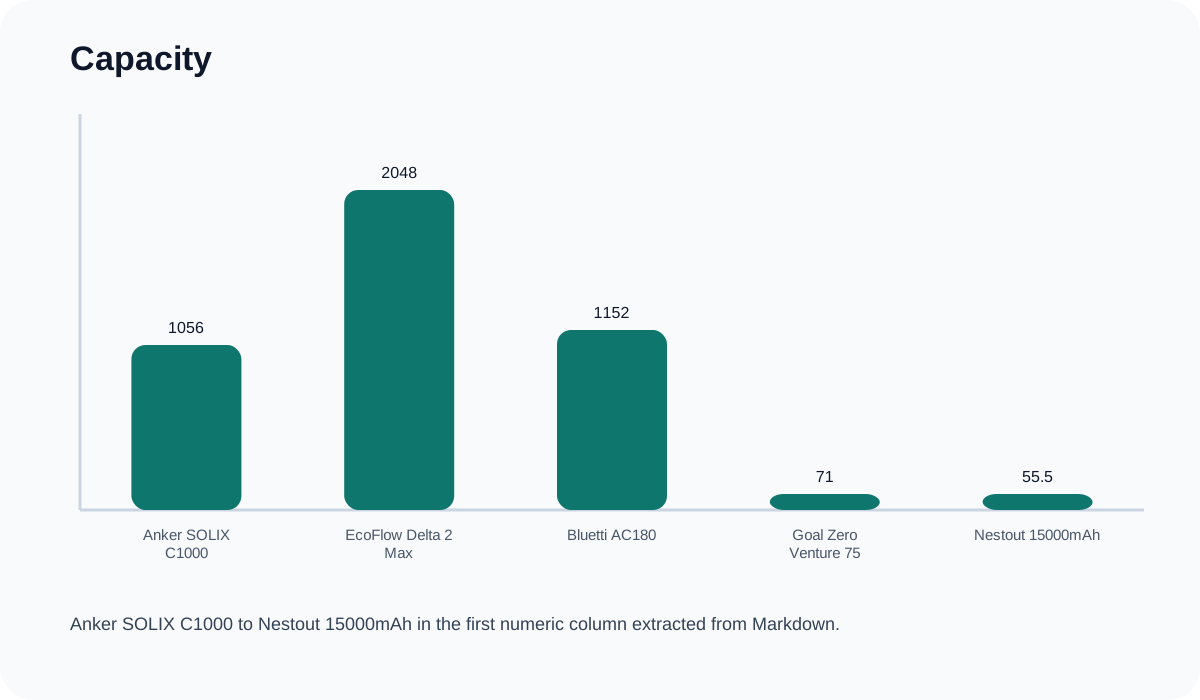
The following table compares the top models based on independent cycle testing, output capacity, and marine-environment readiness.
| Product | Capacity | Max Output | Waterproof Rating | Price Range | Best Use |
|---|---|---|---|---|---|
| Anker SOLIX C1000 | 1056Wh | 1800W | IP20 (No submersion) | 700 | Best Value Shore Cooking |
| EcoFlow Delta 2 Max | 2048Wh | 2400W | Splash-resistant ports | 1,700 | High-Heat Electric Grilling |
| Bluetti AC180 | 1152Wh | 1800W | None (Requires cover) | 850 | Long-Cycle Life (3500+ cycles) |
| Goal Zero Venture 75 | 71Wh | 60W (USB-C) | IP67 (Fully Waterproof) | 130 | Kayak Fishing / GPS Safety |
| Nestout 15000mAh | 55.5Wh | 20W (USB-C) | IP67 (Ruggedized) | 70 | Compact Wet-Condition Fishing |
Analysis: Shore Cooking Power Requirements
Shore cooking demands substantially more energy than charging personal electronics.
- Capacity vs. Draw: An induction cooker typically requires between 1500W and 1800W. If you intend to boil water, sear fish, and maintain a simmer, a 1000Wh power station is the absolute minimum requirement, offering roughly 35 to 45 minutes of active cooking time.
- Battery Chemistry: Look exclusively for LiFePO4 (Lithium Iron Phosphate) models. They have superseded older NMC (Nickel Manganese Cobalt) batteries for outdoor use. LiFePO4 units offer over 3,000 charge cycles and exhibit superior thermal stability when operating in direct sunlight.
- Portability Limits: Weight scales aggressively with capacity. Units exceeding 2000Wh (like the EcoFlow Delta 2 Max) typically weigh upwards of 40 lbs, limiting how far you can realistically carry them down a shoreline.
Analysis: Fishing and Wet-Weather Electronics
Larger power stations are not marine-grade. Models like the Anker SOLIX C1000 and Bluetti AC180 carry an IP20 rating, meaning they offer zero protection against water ingress. They must be operated under weather-resistant covers or port shields.
For on-the-water fishing gear (charging GPS, fish finders, and emergency radios), prioritize dedicated power banks with a true IP67 rating. Devices like the Goal Zero Venture 75 and Nestout Outdoor Battery can survive submersion up to 1 meter and are sealed against corrosive salt mist. Their ruggedized, drop-tested enclosures are vital for turbulent boat decks.
Final Verdict
- For Shore Cooking: The Anker SOLIX C1000 provides the best balance of 1800W output for induction cooking at a reasonable price point, provided you keep it dry.
- For High-Volume Camp Kitchens: The EcoFlow Delta 2 Max is necessary if you intend to run a fridge alongside an electric grill, though its weight requires vehicle proximity.
- For Kayaks and Wading: Buy the Goal Zero Venture 75. Its IP67 rating ensures your emergency communication lines remain open even if you capsize.
Pre-Purchase Checklist
Before buying a power station for your next trip, verify the following:
- Calculate the Inverter Tax: Multiply the stated Wh capacity by 0.85 to find your realistic AC power.
- Verify Surge vs. Running Watts: Ensure the unit’s continuous AC output is higher than your cooking appliance’s wattage (at least 1500W for induction).
- Buy a Weather Cover: If you are buying a 1000Wh+ station for coastal use, budget an extra 50 for a weather-resistant port cover.
- Prepare for Slow Solar: Solar recharging in overcast coastal conditions is significantly slower than manufacturer estimates; do not rely on solar for quick cooking-battery turnarounds.