Best Portable Power Stations Under 300Wh for Weekend Camps
Compare top 2026 sub-300Wh power stations. Discover real-world runtimes, LiFePO4 battery benefits, and vital waterproofing facts for weekend camping.
Executive Summary
As of mid-2026, the optimal sub-300Wh portable power station for a weekend camp utilizes LiFePO4 (Lithium Iron Phosphate) battery chemistry, provides approximately 288Wh of capacity, and achieves a 0-100% AC charge in under 60 minutes.
Leading models in this class—such as the EcoFlow River 3, Bluetti Elite 30 V2, and Anker Solix C300—range in price from 299. A standard 288Wh unit will effectively run a 40W 12V car fridge for 5 to 7 hours, or charge a standard 15Wh smartphone 15 to 18 times, making them ideal for 1-to-2-night off-grid excursions. However, buyers must be aware that devices in this price tier generally lack official IP waterproofing ratings and require physical protection from rain.
2026 Top Models: Specifications & Pricing
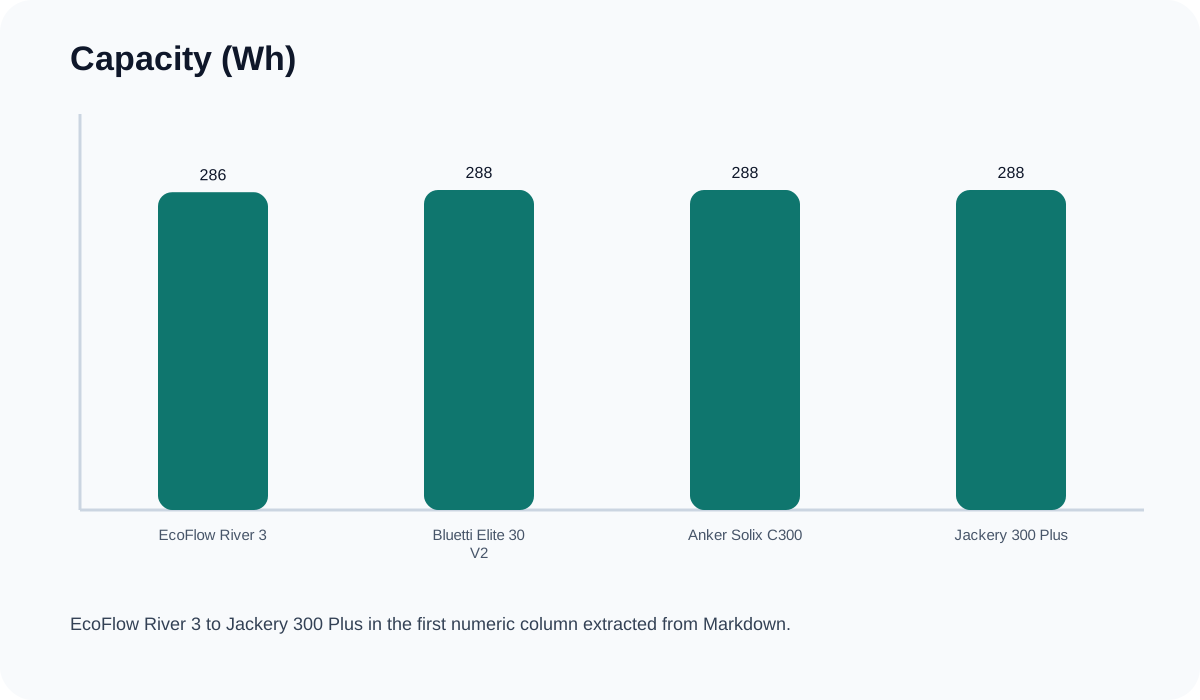
The following table compares the leading entry-level power stations based on standardized manufacturer and laboratory specifications.
| Brand & Model | Capacity (Wh) | AC Output (W) | AC Charge Time | Weight (lbs) | Est. Price (USD) |
|---|---|---|---|---|---|
| EcoFlow River 3 | 286 | 600 | 60 min | 7.7 | 229 |
| Bluetti Elite 30 V2 | 288 | 600 | 70 min | 10.1 | 249 |
| Anker Solix C300 | 288 | 300 | 58 min | 9.0 | 259 |
| Jackery 300 Plus | 288 | 300 | 120 min | 8.3 | 299 |
Energy Density Comparison
When packing for a weekend camp, weight is a critical factor. The chart below illustrates the energy density of these units, measured in Watt-hours (Wh) provided per pound of physical weight.
Key Buying Factors & Analysis
1. Battery Chemistry & Lifespan
The most significant shift in 2026 is the complete industry transition to LiFePO4 chemistry for sub-300Wh units, replacing older NMC (Nickel Manganese Cobalt) batteries. LiFePO4 batteries deliver a lifespan of over 3,000 charge cycles. For the average camper, this translates to 7 to 10 years of regular weekend use before the battery degrades to 80% of its original capacity.
2. Charging Performance
Modern fast-charging technologies have eliminated the need for overnight prep. The EcoFlow River 3 and Anker Solix C300 can reach an 80% charge in under 45 minutes, a stark contrast to the 3-4 hour cycles common in previous generations. Jackery remains an outlier in this category, requiring roughly 120 minutes for a full AC charge.
3. The Waterproofing Reality
Despite marketing materials depicting these units in rugged outdoor environments, most budget-friendly units under $300 possess no official IP rating. Water resistance is strictly limited to basic rubber port covers. Heavy rain exposure remains a primary cause of hardware failure. Campers must use dedicated rain bags or keep the units secured inside tents or vehicles.
4. Real-World User Pain Points
Based on aggregate field data, users frequently encounter two distinct issues in this capacity class:
- Phantom Drain: Units can lose 5% to 10% of their charge overnight if the AC inverter is left powered on without an active load.
- Fan Noise: When utilizing the AC inverter at loads exceeding 100W, internal cooling fans engage. This noise can be intrusive in a quiet tent environment.
Safety Considerations
Safety is paramount when operating high-density batteries in variable-temperature camping environments. Current sub-300Wh models integrate three core safety pillars:
- Thermal Stability: LiFePO4 chemistry is inherently resistant to thermal runaway, making it mandatory for safe operation inside hot vehicles or tents.
- Advanced BMS: Integrated Battery Management Systems provide automated high-temperature cutoffs, short-circuit protection, and over-voltage regulation.
- Pure Sine Wave Inverters: This is a non-negotiable feature for medical users. Pure sine wave output ensures that sensitive electronics, particularly CPAP machines and laptops, are not damaged by jagged electrical waveforms.
Final Verdict
For most weekend campers, the EcoFlow River 3 offers the highest value, blending top-tier energy density (37.1 Wh/lb), 600W output, and rapid 60-minute charging at an entry-level price. Campers prioritizing durable builds and similar 600W output should consider the Bluetti Elite 30 V2, though it carries a heavier footprint.
Weekend Camp Power Checklist
- [ ] Manage Phantom Drain: Always power off the AC and DC buttons on the power station faceplate before going to sleep.
- [ ] Calculate Your Fridge Load: Ensure your 12V fridge draws 40W or less to guarantee it will run through a 7-hour overnight window on a 288Wh battery.
- [ ] Bring a Dry Bag: Never leave your sub-300Wh power station exposed on a picnic table. Store it in a waterproof bag or inside your vehicle during inclement weather.
- [ ] Position Away From Bedding: To mitigate fan noise when running high-draw AC appliances, position the unit as far from your sleeping area as cable length permits.