Best Power Banks with Pass-Through Charging for Basecamp Use
Discover the best power banks with pass-through charging for basecamps. Compare Nitecore, Goal Zero, and Anker based on thermal throttling and efficiency.
Executive Summary
For basecamp setups, pass-through charging is a mission-critical feature that allows solar panels to recharge a central battery while it simultaneously powers essential electronics like satellite communicators and laptops. Based on 2026 testing data, users must account for universal thermal throttling, which reduces charging speeds by 20% to 30% to maintain safe internal temperatures below 45°C to 50°C.
While the Nitecore NB20000 Gen 3 dominates the ultralight market in weight efficiency and essential weather resistance (IPX5), the Goal Zero Sherpa 100AC remains the permanent basecamp standard due to its dedicated 8mm solar port. Consumers should also expect a reality check on capacity: real-world dischargeable power is typically 60% to 70% of the rated capacity due to inevitable DC-to-DC conversion losses.
Leading Pass-Through Power Banks Compared
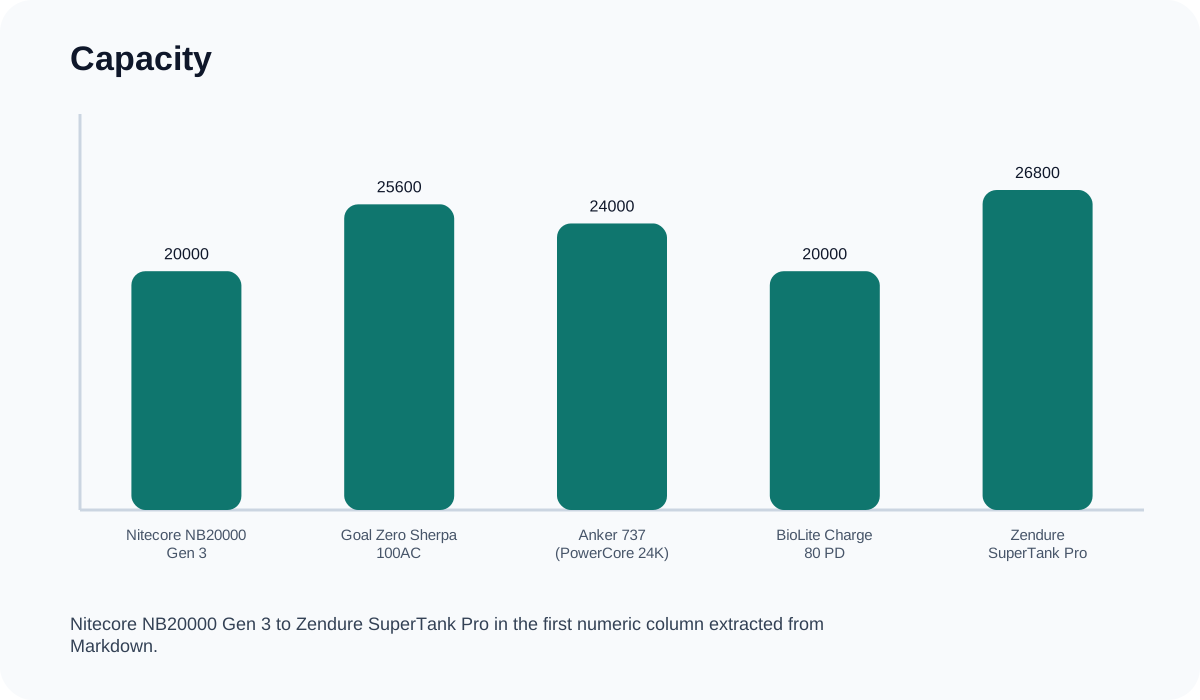
| Model | Capacity | Price | IP Rating | Key Feature |
|---|---|---|---|---|
| Nitecore NB20000 Gen 3 | 20,000mAh | $110 | IPX5 | Ultralight (291g) |
| Goal Zero Sherpa 100AC | 25,600mAh | $299 | None | 100W AC Outlet |
| Anker 737 (PowerCore 24K) | 24,000mAh | $150 | None | 140W Smart Display |
| BioLite Charge 80 PD | 20,000mAh | $100 | None | Rugged/Drop-tested |
| Zendure SuperTank Pro | 26,800mAh | $170 | None | 4x USB-C Ports |
Weight Efficiency Analysis
For remote expedition loads, the ratio of power capacity to physical weight is critical. The chart below illustrates the stark differences in milliamp-hours per gram (mAh/g).
Technical Analysis & User Pain Points
Thermal Throttling is Universal
Simultaneous charging and discharging generates significant heat. To prevent internal battery temperatures from exceeding the 45°C to 50°C safety threshold, almost all leading power banks (including the Anker 737 and Zendure SuperTank) experience a 20% to 30% reduction in charging speed during pass-through operation. This throttling is a necessary safety mechanism to prevent battery degradation, but it extends solar recharge times.
The “Basecamp Standard” Solar Input
Consumer-grade banks rely on USB-C PD protocols, which can result in volatile solar handshakes during intermittent cloud cover. For permanent or heavy-duty basecamps, Goal Zero is the preferred choice. Models like the Goal Zero Sherpa 100AC feature a dedicated 8mm solar input port that allows for a more stable 22V input, preventing frustrating reset loops when solar intensity fluctuates.
Efficiency Reality Check
Manufacturers heavily market raw cell capacity, but real-world dischargeable capacity typically ranges from 60% to 70% of the rated mAh. This loss is caused by DC-to-DC conversion when stepping voltage up or down for devices. As a tested rule of thumb: a 20,000mAh bank will realistically provide approximately 13,500mAh to your end device.
The Waterproofing Disconnect
Despite being marketed for outdoor use, premium power banks are largely vulnerable to moisture. High-end units like the Sherpa 100AC, Anker 737, and Zendure SuperTank Pro carry no official IP rating. Basecamp operators requiring certified water protection must look to specialized units like the Goal Zero Venture 75 (IP67) or the carbon-fiber Nitecore NB series (IPX5).
Final Verdict
- Best for Ultralight/Mobile Basecamps: Nitecore NB20000 Gen 3 (Highest mAh/g, IPX5 protection).
- Best for Stable Solar Integration: Goal Zero Sherpa 100AC (8mm port, 22V stability).
- Best for Fast Diagnostics: Anker 737 PowerCore 24K (Smart display, rapid 140W max output—though subject to standard thermal throttling in pass-through).
Basecamp Pass-Through Checklist
- Account for 30% capacity loss: Assume a 20,000mAh bank yields ~13,500mAh of actual device charge.
- Plan for heat: Keep the power bank in the shade during pass-through charging to minimize the 20-30% thermal throttling.
- Check your connections: Use 8mm adapters (where supported) over standard USB-C for more stable solar inputs.
- Verify weather protection: Do not leave unrated banks (like the Sherpa 100AC or Anker 737) exposed to dew or rain.