Best Rechargeable Beacons for Emergency Night Signaling
Compare the best rechargeable beacons for emergency night signaling, featuring up to 36-hour runtimes, USCG compliance, and rugged IP67 waterproof designs.
Executive Summary
The shift from traditional pyrotechnic flares to rechargeable LED beacons has fundamentally upgraded emergency night signaling. Today’s best rechargeable beacons offer between 10 and 36 hours of continuous illumination, zero fire hazard, and up to 16 specialized flash patterns (including SOS Morse Code). While high-end marine units like the Sirius Signal C-1002 dominate for U.S. Coast Guard (USCG) compliance and submersion readiness, roadside kits from SpeedTech and Marcala provide highly practical, IP67-rated visibility for vehicular emergencies. However, buyers must carefully evaluate charging port durability and magnet strength, as these remain the most common points of failure in high-stress field conditions.
Top Models: Specification Comparison
The table below outlines the top-performing rechargeable beacons across roadside and marine categories based on current 2026 market data.
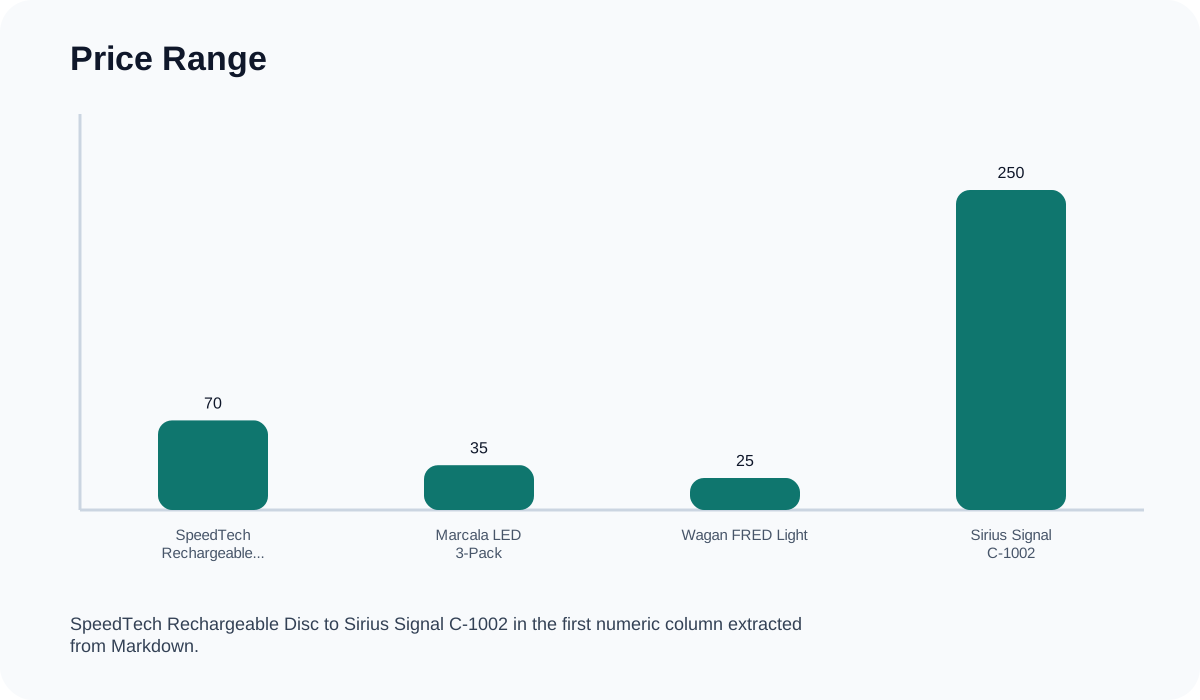
| Product | Price Range | Waterproof Rating | Max Runtime | Charging Method |
|---|---|---|---|---|
| SpeedTech Rechargeable Disc | 90 (6-pack) | IP67 | Up to 30 Hours | USB Charging Case |
| Marcala LED 3-Pack | 50 (3-pack) | IP67 | Up to 36 Hours | USB-C |
| Wagan FRED Light | 40 (Single) | Weatherproof | Up to 10 Hours | Micro-USB |
| Sirius Signal C-1002 | 300 (Single) | Submersible | 6+ Hours | Rechargeable CR123A Opt. |
Runtime Analysis
When abandoning pyrotechnics (which typically burn out in 15 to 30 minutes), battery longevity is the primary tactical advantage. The chart below illustrates maximum runtimes under optimal emergency flash conditions.
Performance Analysis: Roadside vs. Marine Environments
Evolving Visual Standards and USCG Compliance
For marine environments, safety standards are rapidly evolving. The USCG now accepts electronic Visual Distress Signaling Devices (eVDSD). Advanced beacons, notably the Sirius Signal C-1002, utilize alternating red/orange and cyan colors. This dual-color alternating pattern is significantly more detectable against urban shore-light backgrounds than traditional white strobes. Roadside flares remain mostly red/orange, but the adoption of 9 to 16 flash patterns ensures high visibility on dark highways.
Waterproofing Realities
Waterproofing claims require careful reading. Professional marine-grade beacons (like the ACR Firefly PRO and Sirius Signal) meet stringent USCG standards for prolonged submersion. Conversely, consumer roadside discs typically offer IP67 ratings. An IP67 rating ensures the beacon can withstand heavy rain and temporary puddles, but it is not engineered for prolonged underwater operation.
Battery Architecture: Lithium-Ion vs. CR123A
While rechargeable lithium-ion batteries (charged via modern USB-C interfaces) are preferred for fleet drivers and frequent users, they require top-off charging to prevent deep depletion. For true “emergency-only” kits stowed for years at a time, platforms supporting replaceable CR123A or AA lithium batteries remain superior. These primary cells boast a 5-10 year shelf life with zero maintenance, a crucial factor if the beacon sits in a trunk for a decade.
Real-World Pain Points
Field tests and user reports highlight three recurring hardware vulnerabilities in consumer-tier beacons:
- Magnet Failure in High Winds: Many disc-style flares feature backing magnets designed to attach to vehicle panels. In high wind speeds, weaker magnets struggle to maintain purchase on vertical surfaces, causing beacons to detach.
- Compromised Port Seals: The rubber gaskets covering USB ports are notoriously fragile. If a cover tears off, the IP67 waterproof rating drops to zero, inviting immediate failure in rain.
- Vague Charging Indicators: In high-stress deployments, users report frustration with vague LED charging statuses, making it difficult to gauge true battery reserve levels before an emergency.
Final Verdict
For marine and professional waterborne signaling, the Sirius Signal C-1002 is the definitive choice due to its USCG-compliant cyan/red-orange alternating pattern and true submersion rating.
For roadside vehicular emergencies, the Marcala LED 3-Pack offers the best balance of price (50), modern USB-C charging, and an impressive 36-hour maximum runtime. The SpeedTech Rechargeable Disc multi-pack remains a strong secondary option for professional fleet usage due to its dedicated charging case.
Emergency Beacon Pre-Deployment Checklist
- Verify the Port Seal: Inspect the rubber USB cover. Ensure it sits flush and is free from micro-tears.
- Test Magnetic Adhesion: Place the beacon on a vertical metal surface. Tug it lightly to ensure it will survive high winds.
- Confirm Charge Level: If using built-in Li-ion batteries, plug them in every 6 months to prevent capacity loss.
- Understand Flash Patterns: Cycle through the modes before an emergency to ensure you can rapidly locate the SOS or high-visibility strobe setting.