Best Rechargeable Fire Starters for Hunters
Discover the top rechargeable fire starters for hunting. We analyze IPX7 waterproof ratings, battery runtimes (100-300 ignitions), and cold-weather performance.
Executive Summary
For modern hunters, rechargeable dual-arc lighters offer a fuel-free, windproof alternative to traditional butane lighters, especially at high altitudes. Our analysis of top-tier models reveals that the best hunting fire starters feature an IPX7 waterproof rating, a locking clasp, and battery runtimes ranging from 100 to 300 ignitions per charge.
The Survival Frog Tough Tesla Lighter 2.0 leads in maximum battery life (an estimated 300 ignitions), while the LcFun Explore offers the best budget-friendly USB-C option. Buyers must, however, account for the narrow electrode gap—which requires thinner tinder—and manage cold-weather battery degradation by keeping the unit in an inside pocket.
Top Rechargeable Fire Starters Compared
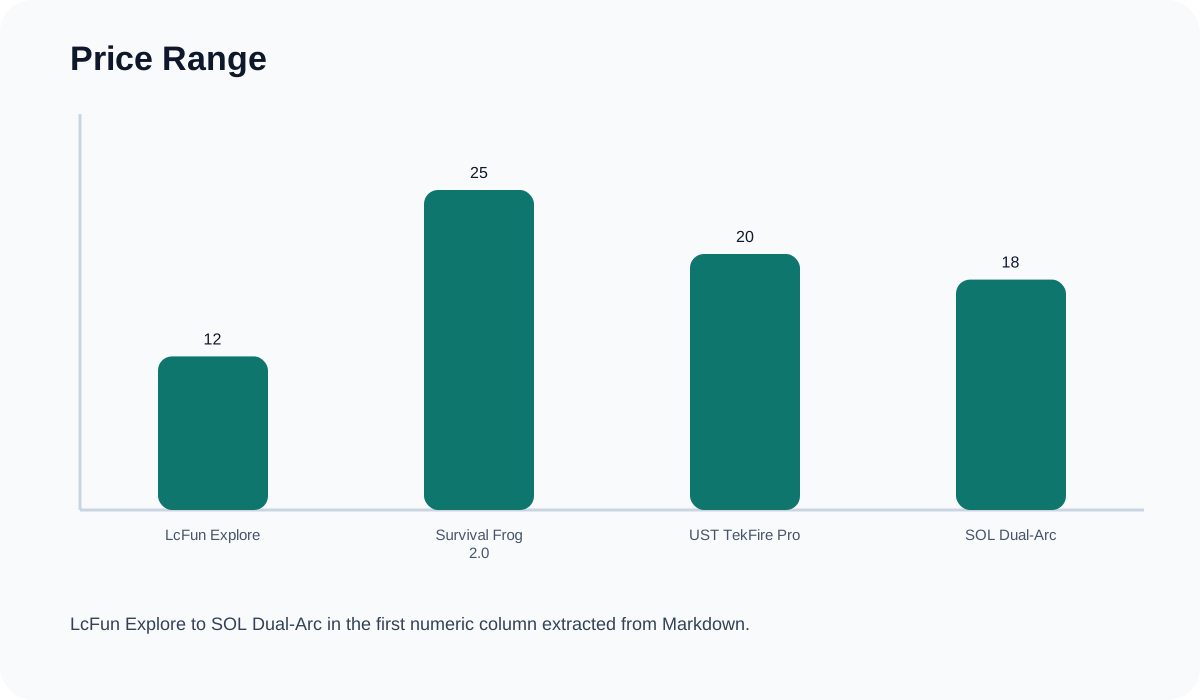
| Model | Price Range | Waterproof Rating | Charging | Key Feature |
|---|---|---|---|---|
| LcFun Explore | 15 | IPX7 | USB-C | Budget-friendly, ultra-lightweight |
| Survival Frog 2.0 | 30 | IPX7 | Micro-USB | Built-in emergency whistle & paracord |
| UST TekFire Pro | 25 | Water-Resistant | Micro-USB | High-impact plastic housing |
| SOL Dual-Arc | 22 | IPX7 | USB-C | Includes 100ft of tinder cord |
Battery Runtime and Ignition Capacity
Battery endurance is critical in the backcountry. Modern units require roughly 2 hours for a full charge, transitioning increasingly from Micro-USB to USB-C ports. The chart below details the average ignitions per full charge across leading models.
Performance Analysis and Real-World Pain Points
Waterproofing and Safety
Top-tier units like the LcFun and Survival Frog 2.0 utilize IPX7-rated housings combined with a physical locking clasp. This protects the charging port from moisture and serves a vital safety function: preventing accidental ignition inside a gear bag. Additionally, standard safety features include a 10-second auto-shutoff mechanism to prevent overheating and conserve battery life.
Environmental Limitations: Cold Weather and Tinder Size
While dual-arc plasma lighters excel in high winds and altitudes where standard butane fails, real-world user data highlights three specific limitations hunters must navigate:
- Narrow Electrode Gap: The space between the plasma nodes is relatively small, making it difficult to ignite thick twigs or branches directly. Hunters must prepare fine, fibrous tinder for successful ignition.
- Lack of Radiant Heat: Unlike an open flame, plasma arcs do not produce ambient radiant heat, requiring precise, direct contact with the tinder.
- Sub-Freezing Temperatures: Lithium-ion batteries can experience reduced capacity in extreme cold. However, this is effectively managed by keeping the lighter in a warm, internal clothing pocket prior to use.
Final Verdict
For rugged backcountry hunting, the Survival Frog Tough Tesla Lighter 2.0 provides the highest reliability with 300 ignitions per charge, despite utilizing an older Micro-USB standard. Hunters seeking faster, more modern charging should opt for the LcFun Explore or the SOL Dual-Arc, both of which feature USB-C inputs and stringent IPX7 waterproofing.
Buyer’s Checklist for Arc Lighters
- Waterproof Rating: Ensure the device is rated IPX7 (fully submersible) rather than just “water-resistant.”
- Locking Mechanism: A physical latch is mandatory to prevent accidental activation in your hunting pack.
- Charging Port: Prefer USB-C for faster 2-hour charging cycles and better universal cable compatibility.
- Tinder Preparation: Carry specialized fine tinder (like the SOL’s included tinder cord) to accommodate the narrow arc gap.
- Cold Weather Strategy: Plan to carry the device close to your body heat during sub-freezing hunts to preserve battery life.