Best Rechargeable Hand Warmers for Winter Survival Packs
Compare the top rechargeable hand warmers for winter survival. We analyze 10,000mAh power banks, IPX4 ratings, and heat runtimes for off-grid safety.
Executive Summary
Rechargeable hand warmers have matured from basic comfort gadgets into critical winter survival tools. Modern devices offer dual functionality, providing between 3 to 15 hours of active heat while serving as emergency power banks for communication or GPS units. For cold-weather survival packs, a standard high-capacity 10,000mAh unit will yield approximately 15 hours on low heat (100°F), dropping to around 6 hours on high settings (130°F+).
Our analysis indicates that brands like Ocoopa and Celestron currently lead the survival market by prioritizing ruggedized features and high-capacity lithium-ion batteries. Survivalists must balance total heat hours against weight, prioritize IPX4 water resistance to withstand snow and sleet, and account for slow recharge times (up to 8 hours) when planning off-grid power logistics.
Top Models Compared
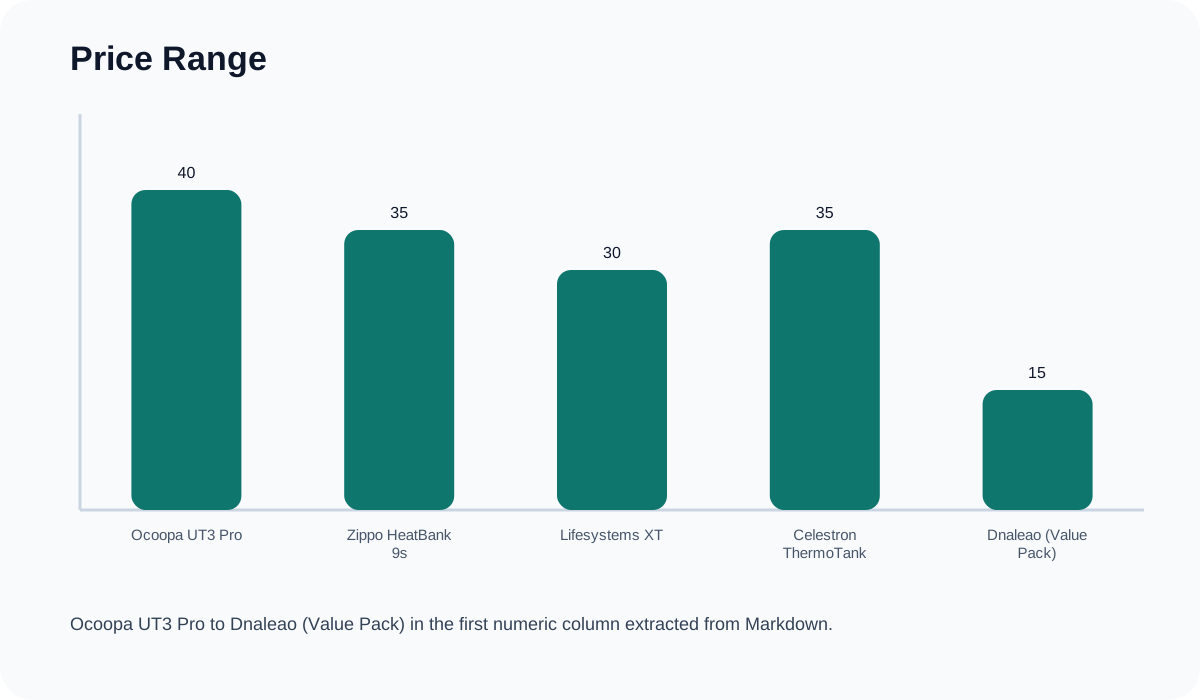
| Product | Price Range | Battery Capacity (mAh) | Max Runtime | Waterproof Rating | Charging Interface |
|---|---|---|---|---|---|
| Ocoopa UT3 Pro | 50 | 10000 | 15 Hours | IPX4 (Splash) | USB-C |
| Zippo HeatBank 9s | 45 | 5200 | 9 Hours | None | USB-C |
| Lifesystems XT | 40 | 5200 | 6 Hours | IPX4 (Splash) | USB-C |
| Celestron ThermoTank | 50 | 5000 | 6 Hours | Weatherproof | Micro-USB |
| Dnaleao (Value Pack) | 25 | 5000 (x2) | 7.5 Hours | None | USB-C |
Performance Analysis
Battery Capacity vs. Runtime Efficiency
The primary operational trade-off in rechargeable hand warmers is between maximum heat intensity and sustained battery life. Pushing a 10,000mAh device to its maximum temperature output—often exceeding 130°F—reduces an otherwise robust 15-hour runtime to just over 6 hours.
Durability and Winter Readiness
Standard electronics are notorious for failing in sub-zero environments, making ruggedization a necessity for survival gear. Manufacturers like Celestron address this with their Elements series, incorporating silicone bumpers designed to endure impacts on ice or rock.
However, strict limitations remain regarding moisture protection. The current high-end benchmark is an IPX4 rating (splash-proof). While this guards against wet snow and sleet, the units are not fully submersible. Furthermore, users should anticipate performance degradation in extreme cold. Sub-zero temperatures accelerate lithium-ion discharge, meaning a 10,000mAh battery will yield an estimated 15-20% less effective power when exposed directly to freezing ambient air.
Safety Protocols and Recharge Constraints
Safety is a paramount concern for lithium-ion power banks operating in close proximity to the skin. Real-world hazard reports highlight that budget, unbranded models carry risks of thermal runaway and second-degree low-temperature burns resulting from unregulated, sustained skin contact. Devices from reputable makers like Ocoopa feature internal overcharge and short-circuit protections to mitigate these fire and burn risks.
The most significant limitation in a true survival scenario is the recharge cycle. A fully depleted high-capacity unit can take up to 8 hours to restore. Although modern high-end warmers universally adopt USB-C to optimize input/output speed, surviving off-grid requires a reliable external power source (such as a high-wattage portable solar array) to keep these tools functional.
Final Verdict
For most winter survival packs, the Ocoopa UT3 Pro offers the most reliable balance of high-capacity output (10,000mAh), IPX4 water resistance, and modern USB-C charging. For kits that anticipate heavy physical trauma, the Celestron Elements ThermoTank supplies superior drop protection via heavy-duty bumpers, though users must accept its lower 5,000mAh capacity and older Micro-USB interface.
Winter Survival Pack Integration Checklist
To safely incorporate a rechargeable hand warmer into your winter emergency kit, verify the following:
- Moisture Storage: Pack a waterproof dry bag. IPX4 protects against snow, but not river submersions or heavy downpours.
- Power Synergy: Ensure your portable solar panel or emergency generator can sustain an 8-hour draw to recharge high-capacity units.
- Regulated Contact Layers: Avoid placing active warmers directly against the skin on high settings (130°F+) to prevent low-temperature burns. Keep them in insulated pockets.
- Cable Standardization: Stock spare, cold-rated USB-C cables to ensure compatibility across your survival electronics ecosystem.