Best Rechargeable Lantern Systems for Off-Grid Camps
Discover the most reliable rechargeable lantern systems for off-grid camps. Compare 2026 models based on battery runtime, charging redundancy, and safety specs.
Executive Summary
Advanced off-grid lantern systems in 2026 have evolved from simple light sources into high-density lithium-ion power hubs. For extended wilderness stays, the most reliable systems prioritize hybrid charging inputs (USB-C, integrated solar, and hand cranks) and double as secondary power banks. Models with 5,000mAh to 14,000mAh capacities not only provide up to 320 hours of low-light illumination but can effectively recharge smartphones, headlamps, and navigational tools. When selecting a lantern for true off-grid use, a minimum IPX4 waterproof rating, durable physical housing, and a built-in Battery Management System (BMS) are non-negotiable requirements.
Top Rechargeable Lanterns Compared
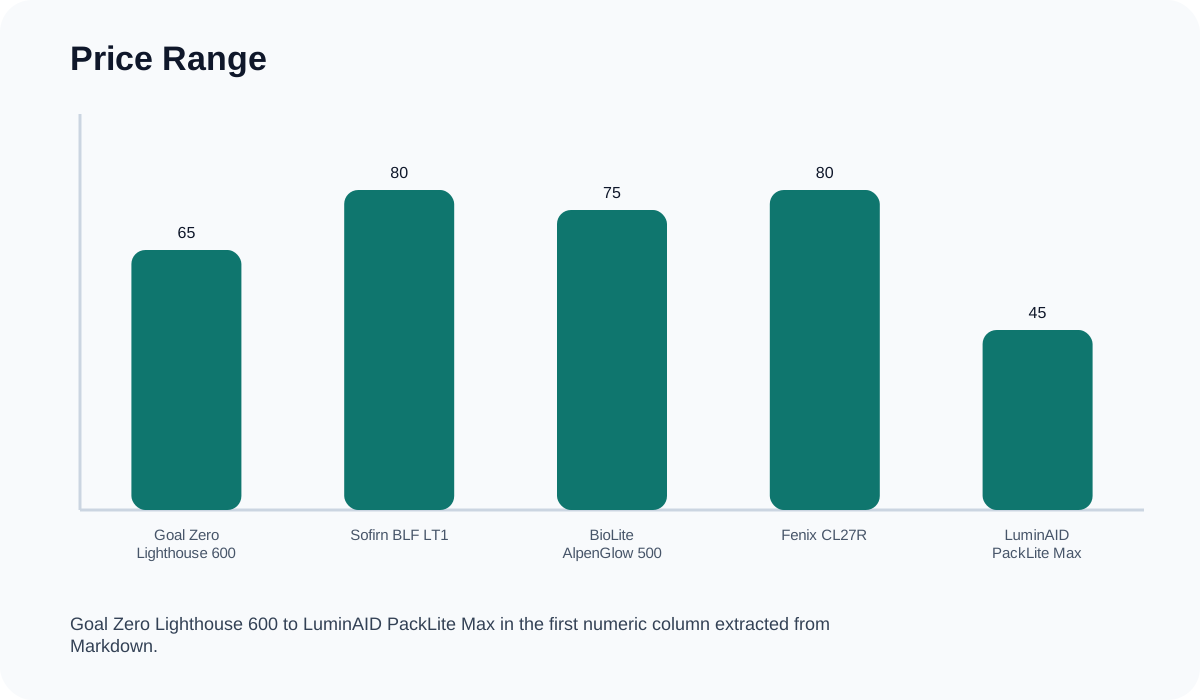
The following table outlines the leading 2026 models, highlighting their capacity, pricing, and critical survival specifications.
| Product | Price Range | Waterproof Rating | Max Runtime (Low) | Charging Method(s) |
|---|---|---|---|---|
| Goal Zero Lighthouse 600 | 75 | IPX4 | 320 hrs | USB-A (Built-in) / Hand Crank / Solar |
| Sofirn BLF LT1 | 95 | IPX8 | 300+ hrs | USB-C |
| BioLite AlpenGlow 500 | 85 | IPX4 | 200 hrs | USB-C / Solar |
| Fenix CL27R | 90 | IP66 | 285 hrs | USB-C |
| LuminAID PackLite Max | 55 | IP67 | 50 hrs | Integrated Solar / Micro-USB |
Capacity vs. Runtime Efficiency
The relationship between battery size and power management efficiency dictates a lantern’s viability in the field. Below is a comparative look at raw battery capacity versus maximum runtime on low-light settings.
Key Buying Factors: Power, UI, and Durability
Hybrid Charging Redundancy
In power-scarce environments, single points of failure present significant risks. The Goal Zero Lighthouse 600 excels in this category by combining USB-A, solar compatibility, and a hand crank. Alternatively, user data notes a significant pain point with collapsible, solar-only systems (like older integrated solar models) that can require 15+ hours of direct sunlight to reach full charge. Always prioritize dual-input models with USB-C infrastructure, which is far less prone to physical failure than legacy Micro-USB ports.
Durability vs. User Experience (UX)
While the enthusiast-grade Sofirn BLF LT1 boasts an incredible 14,000mAh capacity and an IPX8 waterproof rating, its multi-level “Anduril” user interface is frequently cited by users as too complex for emergency scenarios without a manual. Conversely, consumer-friendly models like the BioLite AlpenGlow feature intuitive interfaces (including shake-to-change modes) but offer lower waterproof resistance (IPX4) compared to the rugged Fenix CL27R (IP66).
Safety and Maintenance Protocols
High-density lithium-ion batteries require strict environmental management, especially when utilized in extreme off-grid settings.
- Temperature Thresholds: Never charge lithium cells below 0°C (32°F). Charging freezing batteries causes irreversible lithium plating, drastically increasing fire risk.
- Thermal Management: High-lumen models producing over 1,000 lumens can generate surface temperatures exceeding 50°C (122°F). Stable placement and adequate heat sinking are vital to prevent tent fabric damage or burns.
- Storage Drain: “Smart” lanterns with standby features suffer from parasitic drain. A stored lantern can lose a critical percentage of its capacity over 3 to 6 months. Physical lockouts or routine top-ups are essential.
Final Verdict
For basecamp longevity and raw battery capacity, the Sofirn BLF LT1 (14,000mAh, IPX8) remains the undisputed leader for users comfortable with complex interfaces. For users prioritizing charging redundancy and ease of use in emergencies, the Goal Zero Lighthouse 600 provides the best mix of fail-safes with its hand crank and 320-hour runtime.
Off-Grid Lantern Pre-Trip Checklist
- Verify Capacity: Ensure the lantern holds a full charge for 24 hours prior to departure to test for parasitic drain.
- Inspect Ports: Check that USB-C/USB-A ports are clear of debris and rubber seals are intact to maintain IPX ratings.
- Pack Redundant Cables: Bring multiple, braided USB-C cables to utilize the lantern’s power bank functionality.
- Review Operating Temps: Confirm the forecasted temperatures at your camp stay above 0°C (32°F) if you plan on solar or auxiliary charging.