Best Rugged Charging Accessories for Adventure Motorcycling
Equip your adventure motorcycle with the best rugged charging accessories. Discover vibration-safe mounts, IP68 power banks, and battery drain prevention.
Executive Summary
Modern adventure (ADV) motorcycling requires a robust, multi-layered charging ecosystem capable of surviving extreme vibration, moisture, fine dust, and direct sunlight. The top-performing setup for 2026 integrates wireless induction mounts (such as the Quad Lock Waterproof Wireless Charging Head or Peak Design Mobile Motorcycle Mount) to prevent dust ingress in device ports, paired with a dedicated power distribution module like the Denali PowerHub2 to protect the motorcycle’s battery from parasitic drain. For off-bike backcountry power, IP68-submersible power banks like the Nitecore NPB4 provide the necessary resilience.
Hardware failure in this category is predictable: optical image stabilization (OIS) damage from vibration and device thermal throttling are the two leading issues, making vibration dampeners and smart charging circuits mandatory upgrades for any off-road rider.
Top Adventure Charging Solutions
The following products represent the most reliable charging hardware for ADV motorcycles, categorized by their primary function in a complete power ecosystem.
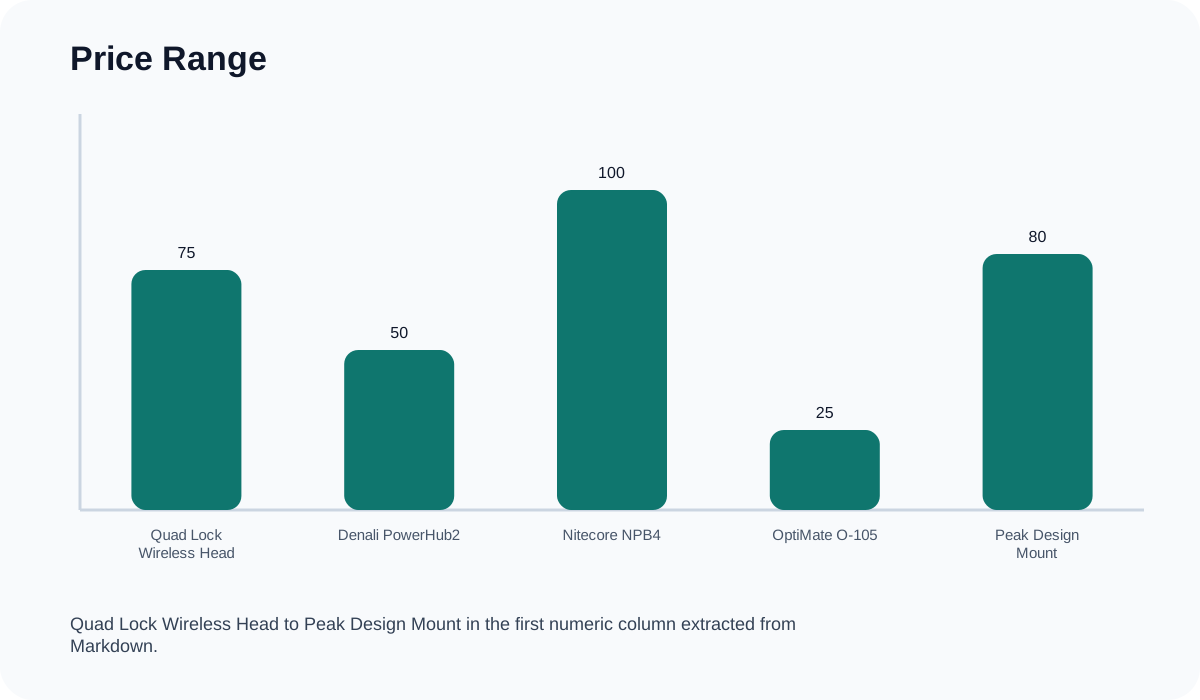
| Product | Type | Price Range | Rugged Feature | Charging Method |
|---|---|---|---|---|
| Quad Lock Wireless Head | Wireless Mount | 100 | IP67 Waterproofing | 15W Qi Wireless |
| Denali PowerHub2 | Distro Block | 70 | Water-resistant Housing | Switched 12V Power |
| Nitecore NPB4 | Power Bank | 130 | IP68 Submersible | USB-C PD 60W |
| OptiMate O-105 | SAE Adapter | 35 | Acid-proof Cable | 3300mA USB-A |
| Peak Design Mount | Vibration Mount | 120 | Magnetic/Mechanical Lock | USB-C (External) |
Leading Causes of Accessory Failure
Based on reported issues in user communities, physical mounting stress and environmental extremes cause the vast majority of charging failures on ADV bikes.
Key Considerations for ADV Charging Ecosystems
1. Defeating High-Frequency Vibration
Vibration is the primary hardware killer for mounted devices (accounting for 42% of community-reported issues). Modern smartphones feature delicate Optical Image Stabilization (OIS) mechanics that can be permanently destroyed within minutes when riding high-vibration single-cylinder motorcycles (thumpers). A dedicated vibration dampener—such as those integrated into the SP Connect Anti-Vibration Module, Quad Lock, or Peak Design ecosystems—is strictly required to isolate the device from engine resonance.
2. Managing Thermal Throttling in Sunlight
The second most frequent issue (28%) is thermal overload. Regardless of a charger’s maximum rated wattage (e.g., 15W Qi or 60W USB-C), exposing a charging smartphone to direct sunlight in high ambient temperatures will induce thermal throttling. In these scenarios, devices often reduce charging speeds to near-zero to prevent lithium-ion battery degradation, leading to a net battery drain if the screen is running GPS navigation.
3. Dust Ingress vs. IP Ratings
While IP67 and IP68 ratings are standard for quality adventure gear, mechanical seals and rubber flaps covering traditional USB ports frequently fail due to fine dust ingress over long trips. This mechanical vulnerability makes sealed, wireless induction heads a more reliable long-term solution for cockpit power delivery compared to exposed USB-C or USB-A cables.
4. Preventing Parasitic Battery Drain
Motorcycle batteries are significantly smaller than automotive batteries, typically ranging from 6 to 12 Amp-hours (Ah). “Always-on” USB buck converters can exhibit a parasitic drain that will completely deplete a small motorcycle battery in 3 to 5 days of inactivity. To prevent stranding, riders must route power through ignition-switched circuits. Smart distribution blocks like the Denali PowerHub2 or Innovv PowerHub automatically cut accessory power when the motorcycle is turned off.
Final Verdict
For a complete, fail-safe ADV charging ecosystem:
- Cockpit Delivery: Utilize the Quad Lock Waterproof Wireless Charging Head to bypass physical cable failures and dust ingress, ensuring a vibration dampener is attached.
- Power Distribution: Route all accessories through a Denali PowerHub2 to protect the motorcycle’s 6-12Ah battery from parasitic drain.
- Off-Bike Reserve: Carry a Nitecore NPB4 or Nestout Rugged Power Bank for resilient, IP68-rated camp charging.
ADV Charging Checklist
- Is your device protected from vibration? Ensure your mount includes an anti-vibration module to protect camera OIS.
- Is your charging circuit switched? Verify that your USB outlets or wireless chargers lose power when the ignition is turned off to prevent battery death.
- Are you relying on physical ports? Consider transitioning to wireless charging for the cockpit to eliminate failure points caused by water and dust entering exposed USB ports.
- Do you have off-bike backup? Pack an IP68-rated power bank for emergency communication power if the motorcycle’s stator fails.