Best Short USB-C Cables for Minimalist Outdoor Kits
Discover the top short USB-C cables for minimalist outdoor kits. Compare 240W Power Delivery, FPC designs, and weatherproofing features for your everyday carry.
Executive Summary
The ideal short USB-C cable for a minimalist outdoor kit is under 6 inches in length, utilizes Flat Printed Circuit (FPC) construction, and supports 240W Power Delivery (PD 3.1). The outdoor gear market is shifting away from rigid, braided cables toward highly flexible, ultra-compact designs that eliminate tangling in small pouches. While true waterproof certification during active charging does not exist, leading brands protect against corrosion using weather-sealed housings and silicone caps. Safety and durability are paramount; top-tier cables include E-Marker chips to safely negotiate power levels above 60W (3A) and feature flexible joints to prevent strain on device ports.
Product Comparison: Top Short USB-C Cables
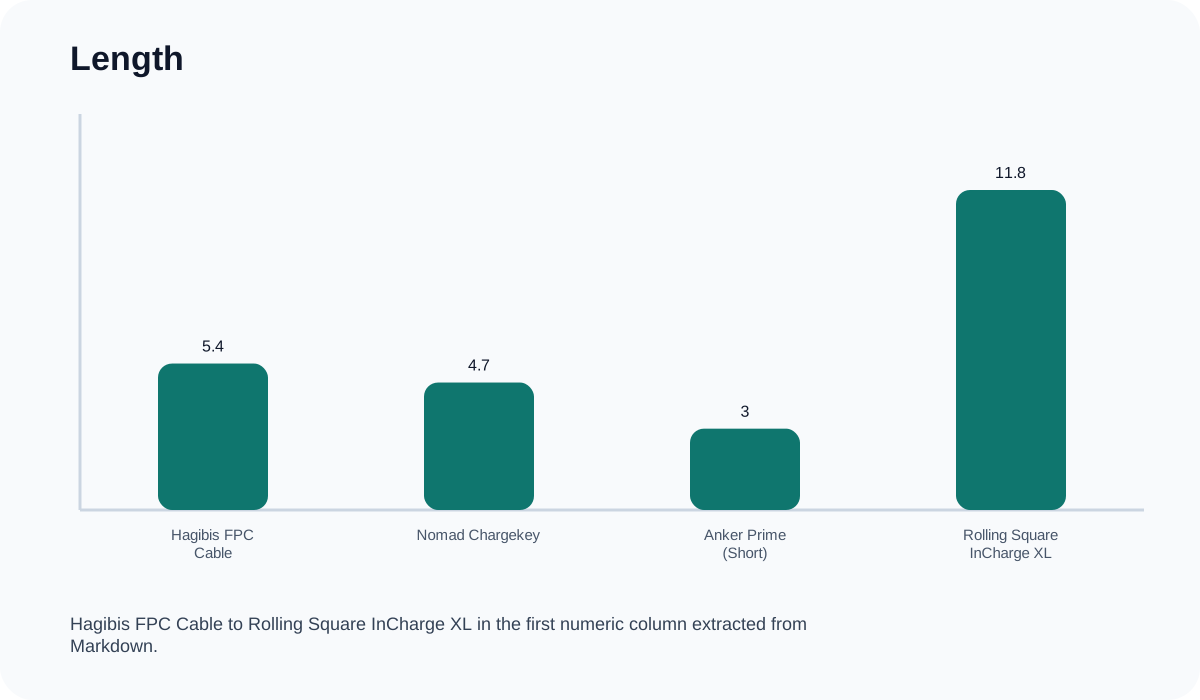
When evaluating ultra-short cables, the primary tradeoffs involve maximum wattage output, price, and specific durability features. Below is a comparison of the leading market options for minimalist setups.
| Product | Length | Max Power | Durability Feature | MSRP (USD) |
|---|---|---|---|---|
| Hagibis FPC Cable | 5.4 in (13.7cm) | 240W / 40Gbps | Flat Flexible Circuit (FPC) | $15.99 |
| Nomad Chargekey | 4.7 in (12cm) | 60W | Zinc cable housings / Magnetic | $25.00 |
| Anker Prime (Short) | 3.0 ft | 240W | 300,000+ bend rating | $29.99 |
| Rolling Square InCharge XL | 11.8 in (30cm) | 100W | 6-in-1 Multi-connector / Metal caps | $39.00 |
Value vs. Performance Analysis
The chart below illustrates the relationship between the retail price of leading short cables and their maximum wattage capacities.
Key Buying Considerations for Outdoor Kits
The Reality of Waterproof Claims
No USB-C cable is officially “waterproof” while actively charging a device. Manufacturers instead focus on weatherproofing the cable when not in use. This is achieved via silicone caps or sealed zinc-alloy housings (like those on the Nomad Chargekey) to prevent connector corrosion in humid or rainy environments. Exposing an active, unsealed connection to moisture remains a severe hardware risk.
Form Factor: FPC vs. Braided Cables
Flat Printed Circuit (FPC) cables are replacing traditional braided cables in minimalist kits. FPC designs—such as the 5.4-inch Hagibis model—can fold completely flat, resisting tangles and occupying minimal volume in a tech pouch.
Conversely, user pain points reveal that extremely rigid, traditional “rugged” cables can actively strain the charging ports of lightweight electronics. This physical tension can lead to expensive hardware failures on the trail. Soft-touch silicone jackets and highly flexible joints are now the preferred standard to protect delicate device inputs.
Power Delivery and Safety (E-Marker Chips)
Power Delivery (PD) 3.1 supporting up to 240W is becoming the standard for “future-proof” outdoor cables. This high wattage allows a single 4-inch cable to charge both a low-draw smartphone and a high-performance laptop from a capable power bank.
However, safety is a critical concern. Any charging setup exceeding 60W (3A) requires a cable equipped with an integrated E-Marker chip. Uncertified cables lacking this chip fail to properly negotiate safe power levels, creating significant overheating or fire risks when paired with high-capacity outdoor power banks.
Final Verdict
For the ultimate minimalist outdoor kit, the Hagibis FPC Cable provides the best balance of performance and space efficiency. At just 5.4 inches and $15.99, it offers an exceptional 240W power limit and an ultra-packable flat design. For users who prioritize physical port protection from the elements over maximum wattage, the Nomad Chargekey offers excellent magnetic zinc-alloy housing, albeit capped at 60W.
Minimalist Cable Checklist
Before adding a short cable to your outdoor pack, verify the following:
- Length: Is it under 6 inches to minimize tangling and weight?
- Flexibility: Does it use FPC or soft-touch silicone to prevent device port strain?
- Wattage: Does it support at least 60W (or up to 240W for laptop charging)?
- Safety: Does it include an E-Marker chip for high-wattage power banks?
- Weathering: Does it feature metal housings or silicone caps to prevent port corrosion?