Best Small Fans and Ventilation Gadgets for Hot-Weather Tents
Discover the top portable tent fans for 2026, comparing battery runtimes, IPX4 waterproof ratings, hybrid power systems, and critical safety features.
Executive Summary
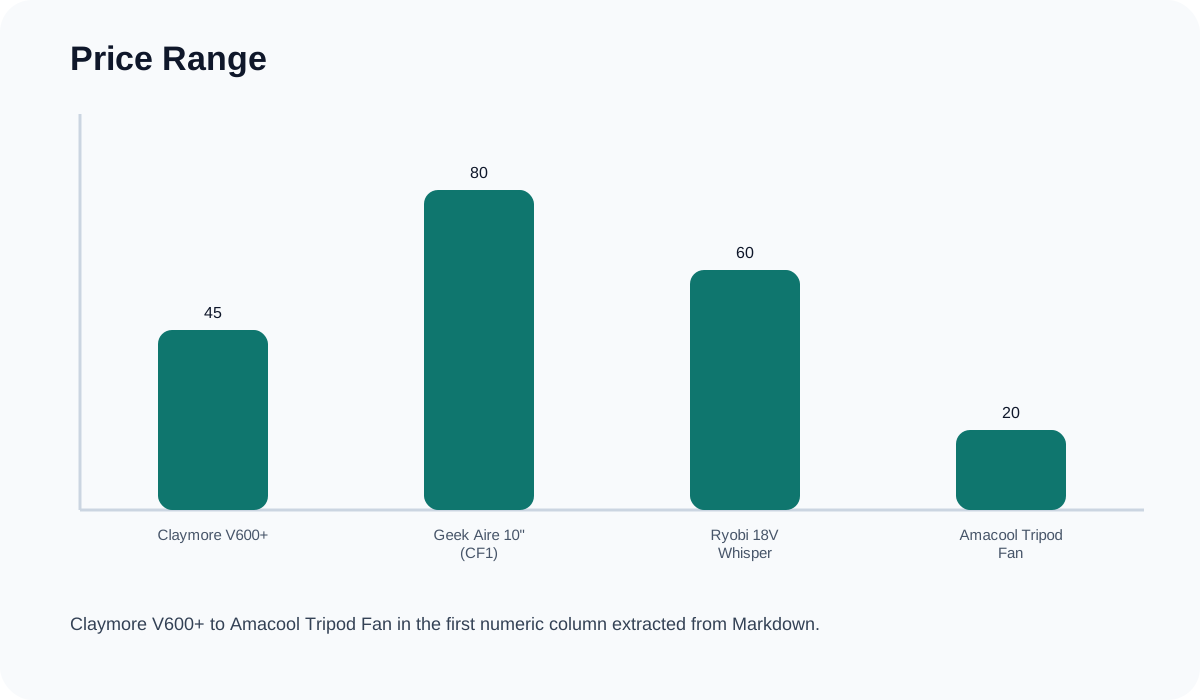
For the 2026 camping season, the portable tent fan market is defined by high-capacity lithium batteries (reaching up to 40,000mAh) and brushless DC motors designed for whisper-quiet operation. Prices range from 120 premium units providing hybrid AC/DC power and ruggedized builds. While battery capacity has significantly increased—allowing for up to 100 hours of runtime on low settings—users must weigh practical considerations like IPX4 splash resistance, LED light pollution during sleep, and safe operating temperatures in tents that can easily exceed 130°F.
Top Tent Fans: Performance and Specifications
| Product | Price Range | Battery Life (High) | IP Rating | Charging Method | Best For |
|---|---|---|---|---|---|
| Claymore V600+ | 60 | 7-12 Hours | None (Dust Resistant) | USB-C | Ultralight/Backpacking |
| Geek Aire 10” (CF1) | 110 | 4-6 Hours | IPX4 | AC Adapter/Rechargeable | Car Camping/Max Airflow |
| Ryobi 18V Whisper | ~$60 (Tool Only) | 5-8 Hours (4Ah Battery) | None | 18V Battery / AC Hybrid | Users with Ryobi Power Tools |
| Amacool Tripod Fan | 30 | 4-5 Hours | None | USB-C | Small Tents/Baby Strollers |
Battery Performance and Runtime Analysis
The integration of high-capacity batteries is the primary driver of tent fan performance in 2026. The Kitwlemen 40000mAh model leads the capacity metrics, capable of delivering over 100 hours of continuous runtime on its lowest setting while doubling as a heavy-duty power bank for other camping electronics.
Conversely, high-velocity models like the Geek Aire 10” consume power rapidly on maximum settings to move larger volumes of air. The chart below illustrates the runtime drop-off based on speed settings for this high-output model.
The Hybrid Power Shift
A notable trend is the move toward hybrid power compatibility. Heavy-duty options such as the Ryobi 18V One+ Hybrid Whisper Series and the Geek Aire CF1 offer dual-power modes. Users can plug these fans into an AC outlet at powered campsites or rely on their respective DC batteries (like Ryobi’s 18V tool battery) when off-grid, significantly increasing their versatility.
Durability, Acoustics, and Real-World Pain Points
Noise Levels
For tent camping, acoustics frequently outweigh raw airflow. Brushless motors and specialized blade designs—such as those found in Ryobi’s “Whisper Series”—are highly sought after. Sleep-critical environments require minimal decibel output, making these whisper-quiet models worth the premium price tag over standard bladed fans.
Airflow Distribution and Build Flaws
Real-world users report several consistent mechanical and design pain points:
- Narrow Airflow Cones: Many compact fans only project air in a tight 2-foot path, failing to ventilate the entire volume of a hot tent.
- Fragile Hardware: Hanging hooks on budget models (typically in the 25 range) frequently snap under the unit’s own weight during transit or adjustment.
- Light Pollution: Integrated LED indicators and displays often lack a dimming feature, causing unwanted brightness while sleeping.
- Recharge Times: High-capacity units (20,000mAh to 40,000mAh) can take upwards of 12 hours to fully recharge unless paired with a fast-charge PD (Power Delivery) adapter.
Water Resistance Variability
Official IP ratings are rare in the compact tent fan category. While the premium Geek Aire series offers a verified IPX4 splash resistance—making it suitable for high-humidity or rain-blown conditions inside a tent—popular compact models like the Claymore V600+ and Amacool Tripod Fan lack official water-ingress protection. This poses a risk if left near open tent vents during sudden showers.
Safety Considerations for Hot-Weather Camping
Operating electronics in high-temperature environments requires specific safety checks. Summer tents placed in direct sunlight can easily trap heat, creating hazardous conditions for lithium-ion batteries.
- Thermal Runaway Risks: Internal tent temperatures can exceed 130°F during peak afternoon sun. Leaving high-capacity Li-ion fans inside a sealed, baking tent pushes batteries past safe thermal operating limits.
- Overcharge Protection: Ensure the fan features a verified Battery Management System (BMS). This prevents fire risks, particularly when charging the fan directly from unregulated high-wattage portable power stations.
- Finger Safety: For ground-level placement in tents with children or pets, verify that the fan features narrow grille spacing to prevent accidental injury.
Final Verdict
For backpackers and ultralight campers, the Claymore V600+ remains the optimal balance of weight, aesthetic, and performance (60). Car campers or those with large family tents should invest in hybrid models like the Geek Aire 10” CF1 (110) for maximum airflow and IPX4 durability, provided they have the cargo space. Budget buyers needing focused, localized cooling should look toward the versatile Amacool Tripod Fan.
Pre-Purchase Checklist
- Verify Battery Capacity: Do you need a 40,000mAh unit for multi-day off-grid trips, or will a standard 10,000mAh suffice?
- Check Charge Compatibility: Does the fan support fast-charging (USB-C PD) to avoid 12-hour recharge times?
- Assess LED Features: Can the battery indicator lights be dimmed or turned off for sleeping?
- Evaluate IP Rating: Will the fan be exposed to open windows or heavy condensation (requires IPX4 or higher)?
- Confirm BMS Safety: Does the manufacturer explicitly list overcharge and thermal protection mechanisms?