Best Small Power Stations for Cabin Backup Lighting
Compare top 250Wh-300Wh power stations for cabin lighting. Features runtime charts, LiFePO4 safety metrics, and real user pain points like phantom drain.
Executive Summary
For cabin backup lighting, portable power stations in the 250Wh to 300Wh capacity range offer the best balance of weight, affordability, and runtime. The ideal configuration combines LiFePO4 (Lithium Iron Phosphate) battery chemistry for thermal safety with an output capacity that can sustain typical 5W to 10W LED lighting setups for 20 to 40 hours.
Leading sub-$300 models like the EcoFlow River 2 and Bluetti EB3A deliver AC charging speeds of approximately one hour. However, prospective buyers must account for two major operational constraints: nearly all models lack water resistance, and “vampire drain” from leaving the internal inverter powered on can deplete a small battery overnight even without active electrical loads.
Lighting Runtime Analysis (250Wh - 300Wh Category)
A common misconception is that a 256Wh battery will run a 10W bulb for exactly 25.6 hours. In reality, AC inverters experience efficiency losses of roughly 15% to 20% during operation. After accounting for an 85% operating efficiency baseline, a standard 256Wh cabin setup yields the following estimated runtimes:
Market Comparison: Leading Small Power Stations
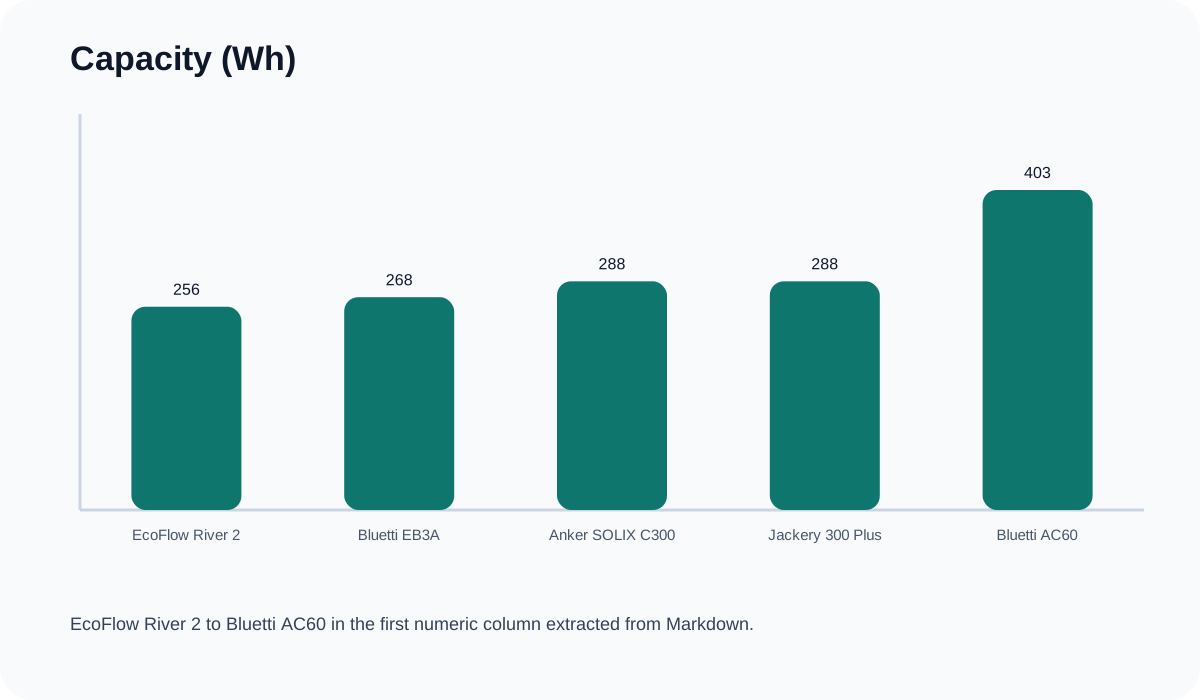
We evaluated the five leading small-scale power stations suitable for cabin backup setups, comparing base capacity against AC charge times, physical footprint, and element protection.
| Product | Capacity (Wh) | Price (MSRP) | AC Charge Time | Weight | IP Rating |
|---|---|---|---|---|---|
| EcoFlow River 2 | 256Wh | $219 | 60 min | 7.7 lbs | None |
| Bluetti EB3A | 268Wh | $249 | 70 min | 10.1 lbs | None |
| Anker SOLIX C300 | 288Wh | $299 | 68 min | 9.0 lbs | None |
| Jackery 300 Plus | 288Wh | $279 | 120 min | 8.2 lbs | None |
| Bluetti AC60 | 403Wh | $599 | 90 min | 20.1 lbs | IP65 |
Safety and Battery Chemistry Standards
LiFePO4 (Lithium Iron Phosphate) has become the mandatory standard for safety-conscious cabin owners. Unlike older NCM (Nickel Cobalt Manganese) cells, LiFePO4 batteries deliver:
- Higher Thermal Stability: LiFePO4 cells resist thermal runaway up to 300°C, compared to just 150°C for NCM batteries, drastically reducing indoor fire risks.
- Extended Lifespan: Modern small power stations using LiFePO4 boast over 3,000 charge lifecycles, enabling a practical lifespan of roughly 10 years even with frequent usage.
Real User Pain Points
While capacity and price are easily compared, field usage reveals two primary concerns for cabin owners:
- Vampire Drain (Phantom Power): When the unit’s AC inverter is toggled to the “ON” position, it consumes 5W to 10W of power simply to remain active. Over an 8-hour night, this can consume up to 80Wh (roughly 30% of a small 256Wh unit’s total capacity), even if the attached lights are switched off.
- Acoustic Disruption: Fast AC charging and active inverters require internal cooling fans. Users frequently cite continuous fan noise as a major annoyance when units are stationed near beds or sitting areas in small cabins.
- Lack of Weatherproofing: Standard units from EcoFlow, Anker, and Jackery have no IP ratings. They must be kept strictly indoors. For off-grid damp environments, the Bluetti AC60 is the rare exception, offering an IP65 rating for protection against rain and dust, albeit at more than double the price ($599) and weight (20.1 lbs).
Final Verdict
For standard, indoor-only cabin backup lighting, the EcoFlow River 2 is the optimal choice. At just 7.7 lbs and $219 MSRP, it offers the fastest AC charging time (60 minutes) and leverages highly stable LiFePO4 chemistry. If your cabin experiences damp conditions or the unit will be exposed to the elements, step up to the Bluetti AC60 for guaranteed IP65 weather resistance.
Cabin Power Station FAQ
How long will a small power station run my cabin lights?
A standard 250Wh to 300Wh power station will run a highly efficient 5W LED bulb for roughly 40 hours, or a 10W LED bulb for approximately 21 hours.
Can I leave my power station on overnight?
Yes, but you must physically turn off the AC inverter button on the unit itself when the lights are off. Otherwise, vampire drain will consume 5-10W per hour, draining up to a third of your battery by morning.
Are portable power stations safe for indoor cabin use?
Yes. Current generation power stations use LiFePO4 battery chemistry, which resists thermal runaway up to 300°C and does not emit toxic fumes, making them perfectly safe for indoor enclosed spaces.