Best Solar Charger Setups for Kayak Camping Electronics
Discover the most efficient modular solar charger setups for kayak camping. Learn why a 28W panel and IP67 battery buffer protect against saltwater and heat.
Executive Summary
The most effective solar charging setup for kayak camping requires a modular approach: pairing a high-wattage folding solar panel (21W or greater) with an independent, fully waterproof (IP67 or IP68) buffer battery. Integrated solar power banks (all-in-one units) fail in this application, as they lack sufficient surface area and require an estimated 40 to 50 hours of direct sunlight to charge fully.
Experts and field testers strongly recommend the “buffer method.” By routing solar power into an intermediate battery bank rather than directly into sensitive electronics like smartphones or GPS devices, paddlers mitigate dangerous voltage fluctuations caused by tree canopies, river bends, and intermittent shading.
The Real-World Efficiency of Kayak Solar Setup
Deck-mounting a solar panel perfectly flat on a kayak hatch causes an estimated 30% to 50% decrease in solar harvesting efficiency compared to an optimal 45-degree angle. Consequently, paddlers need at least a 28W panel to reliably recharge a 10,000mAh power bank within a single day on the water.
Overcoming Marine Environment Pain Points
To build a reliable kayak camping rig, you must engineer around two major threats: hardware corrosion and thermal stress.
The Saltwater Threat
Saltwater corrosion is the primary cause of hardware failure in USB ports. While IPX4 (splash-resistant) ratings are common on folding panels, they are not impervious to marine environments. IPX4 panels require meticulous cleaning after use and dedicated port covers. The buffer battery itself, which sits closer to splashing water or bilges, must carry an IP67 (submersible) or IP68 rating to survive standard kayaking conditions.
The Thermal Runaway Risk
Direct sunlight generates extreme heat on the deck of a kayak. Real-world testing reveals that lithium batteries stored inside clear, waterproof map cases can rapidly reach critical temperatures exceeding 113°F (45°C). Exposing lithium cells to these temperatures risks permanent battery capacity loss and potentially catastrophic thermal runaway.
Solution: Always utilize the buffer method. Keep your IP67 buffer battery (like the Nitecore NB10000 Gen 3) tucked out of direct sunlight or shaded beneath the panel itself, running a cable from the panel to the protected battery.
Comparison: Top-Rated Solar Setup Components
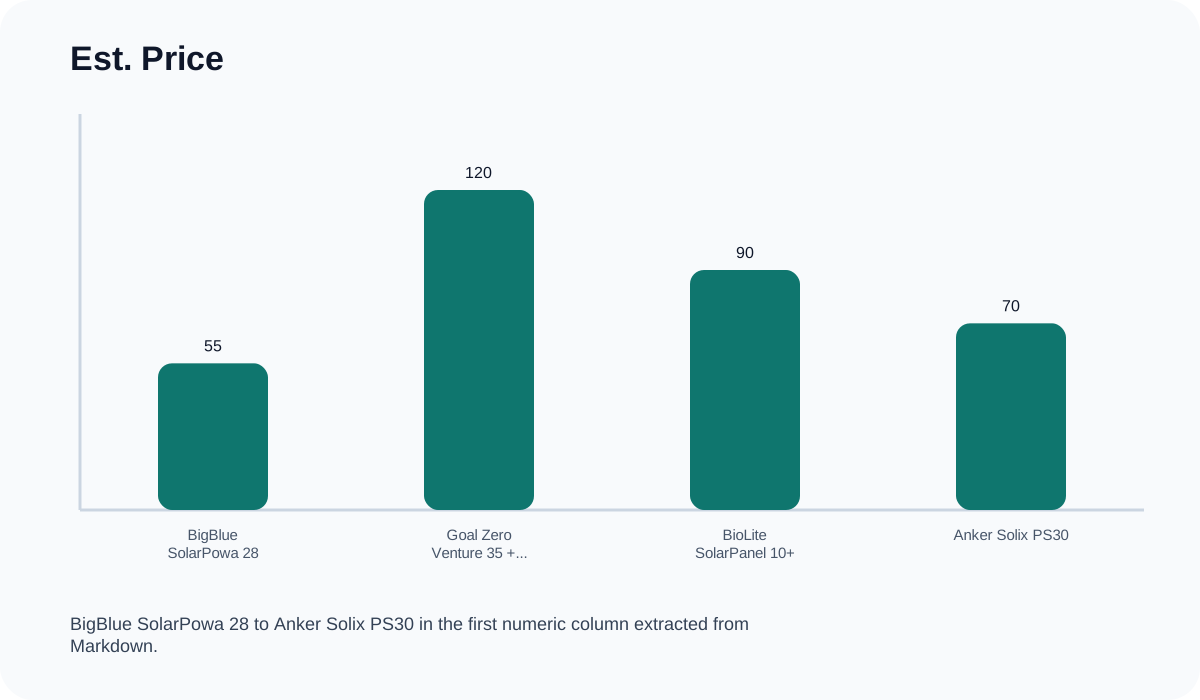
Below is a comparison of field-tested solar panels and setups suitable for marine conditions. Note that pricing is estimated based on current market averages.
| Product Setup | Est. Price | IP Rating | Peak Wattage | Weight | Best For |
|---|---|---|---|---|---|
| BigBlue SolarPowa 28 | 75 | IPX4 (Splash) | 28W | 22.6 oz | Efficiency & Value |
| Goal Zero Venture 35 + Nomad 10 | 160 | IP67 (Submersible) | 10W | 28.0 oz | Rugged Durability |
| BioLite SolarPanel 10+ | 110 | IPX4 (Splash) | 10W | 19.4 oz | Precision Angling (Kickstand) |
| Anker Solix PS30 | 90 | IP65 (Jets) | 30W | 35.2 oz | Fast PD Charging |
Final Verdict
For most kayak campers, the BigBlue SolarPowa 28 paired with an independent IP67-rated power bank offers the best combination of yield and value. Its 28W output compensates for the 30-50% efficiency loss experienced when flat-mounting on a kayak deck.
For those navigating rough surf or severe saltwater conditions where submersion is a frequent risk, the Goal Zero Venture 35 + Nomad 10 provides essential IP67 ruggedness, though its lower 10W output means you will require optimal angling to generate meaningful power.
Kayak Solar Setup Checklist & FAQ
- Should I buy an integrated solar power bank? No. Modular setups outperform them. Integrated units typically require 40-50 hours of direct sun to charge their internal cells.
- How large of a panel do I need? Aim for 21W to 30W. Because you will likely mount the panel flat on your rear hatch, you lose 30-50% efficiency. A 28W panel ensures you can still charge a 10,000mAh bank in a single day.
- Why is my power bank shutting down? Heat and voltage drops. Batteries in clear map cases can exceed 113°F (45°C) and fail. Additionally, intermittent shade from river bends interrupts charging. Look for panels with an “auto-restart” controller feature to resume charging when the sun returns.
- How do I protect my USB ports? Ensure your buffer battery is IP67/IP68 rated. If using an IPX4 panel, routinely clean the ports to prevent saltwater corrosion.