Best Solar Power Banks for Hikers Who Carry Arc Lighters
Discover the best solar power banks for hikers with arc lighters. Compare top IP67 models, battery runtimes, and learn vital safety and heat management tips.
Executive Summary
For hikers utilizing arc lighters, the most effective solar power banks prioritize high-efficiency battery capacity and ruggedized IP67 protection over the promise of rapid solar charging. Leading 2026 models like the Blavor PN-W12 and Hiluckey HI-S225P provide enough energy to recharge a standard arc lighter over 50 times. However, buyers must understand a critical limitation: integrated solar panels are strictly for emergency top-offs. A full recharge via direct sunlight requires 72+ hours. Hikers should prioritize banks with secure port covers, manage heat risks effectively, and treat the solar feature as a backup rather than a primary charging method.
Top Solar Power Banks: 2026 Comparison
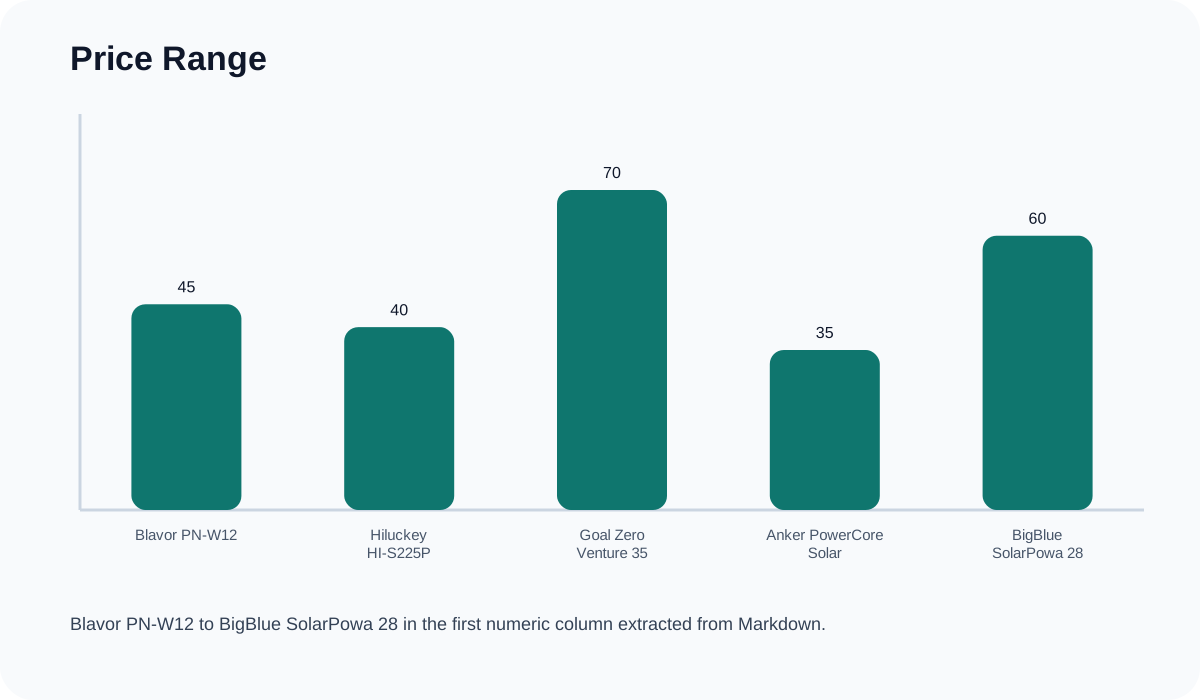
| Product | Capacity | Price Range | Waterproof Rating | Best For |
|---|---|---|---|---|
| Blavor PN-W12 | 20,000mAh | 60 | IP67 | All-around Ruggedness |
| Hiluckey HI-S225P | 25,000mAh | 55 | IP65 | High Capacity / Value |
| Goal Zero Venture 35 | 9,600mAh | 100 | IP67 | Extreme Durability |
| Anker PowerCore Solar | 10,000mAh | 50 | IP64 | Reliable Brand / Lightweight |
| BigBlue SolarPowa 28 | Foldable Panel* | 85 | IPX4 | Actual Solar Efficiency |
Note: The BigBlue SolarPowa 28 is a dedicated foldable solar panel rather than an integrated battery bank. The Anker model correlates to the Solix PS30 line.
Battery Runtime: Recharging an Arc Lighter
Arc lighters are exceptionally low-draw devices, typically requiring only 200mAh to 300mAh per full charge. Because a standard 20,000mAh power bank yields an estimated 14,000mAh of actual usable output (due to voltage conversion and efficiency loss), a single fully charged power bank can sustain an arc lighter for months on the trail.
Crucial User Pain Points and Limitations
The Solar Charging Reality
Many users report frustration with misleading solar capabilities on portable banks. Integrated solar panels are physically too small to provide rapid charging. A full 0-100% recharge using only the built-in solar panel typically requires 3 to 5 days (72+ hours) of direct, uninterrupted sunlight. These panels should only be relied upon for 1% to 2% emergency top-offs to power up a depleted arc lighter or send a satellite message. Wall recharging the bank itself can also take 5-10 hours if not paired with a high-speed Power Delivery (PD) wall adapter.
Weight Management for Backpackers
Power banks offering 20,000mAh or more frequently exceed 15 to 20 oz. For ultralight thru-hikers, carrying a heavy battery just to charge a lighter is inefficient. A 10,000mAh unit like the Goal Zero Venture 35 or Anker PowerCore Solar provides a better weight-to-power ratio unless you are also charging a smartphone and GPS daily.
Safety Considerations in the Field
- Thermal Runaway and Overheating: Lithium-ion batteries can reach dangerous temperatures (exceeding 80°C / 176°F) if left in direct sunlight without airflow. If you must use solar, the safest method is using a separate folding panel (like the BigBlue) while keeping the power bank securely in the shade.
- Port Integrity: IP67 and IP65 waterproof ratings ensure protection against rain and dust—but only if the USB port covers are fully sealed. Charging a device while the bank or cables are wet voids this protection and creates a short-circuit risk.
- Arc Safety in Humid Environments: Arc lighters generate high-frequency electrical arcs. Never charge or operate an arc lighter near flammable gases or in highly humid environments where moisture can bridge electrical components.
Final Verdict
For hikers needing reliable power for arc lighters and essential electronics, the Blavor PN-W12 hits the optimal balance of capacity (20,000mAh), rugged IP67 waterproofing, and reasonable pricing (60). If extreme durability and lower weight are paramount, the Goal Zero Venture 35 is an excellent alternative, offering more than enough capacity for a low-draw arc lighter without the burden of excessive weight.
Hiker’s Pre-Trip Checklist
- Charge Before You Go: Always pre-charge your power bank via a wall outlet. Do not rely on the solar panel to build your base charge.
- Verify Port Seals: Double-check that rubberized USB covers are free of debris and pressed firmly into place to maintain IP65/IP67 ratings.
- Air Travel Compliance: Ensure your power bank complies with the standard TSA limit of 100Wh (approximately 27,000mAh at 3.7V). All integrated battery models on our top list meet this requirement.
- Pack Short Cables: Bring a dedicated, short USB cable for your arc lighter to minimize tangling and improve charging efficiency.