Best Survival Gear for Shoulder-Season Camping (2026 Guide)
Optimize your autumn and spring camping with the best shoulder-season survival gear. Compare cold-weather power, IP67 waterproofing, and LiFePO4 solutions.
Executive Summary
Shoulder-season camping requires a specific approach to survival gear, pivoting entirely on two factors: moisture resistance and cold-weather battery stability. As temperatures drop toward freezing, standard lithium-ion batteries lose 25% to 40% of their runtime and often trigger software lockouts that prevent charging at 32°F (0°C). Consequently, survival tech in 2026 prioritizes LiFePO4 (Lithium Iron Phosphate) battery chemistry, IP67-rated waterproofing for sleet and humidity, and alternative charging solutions.
This guide breaks down the market’s leading shoulder-season survival equipment across power, communication, and lighting, quantifying performance drop-offs so you can build a resilient, weather-ready kit.
Temperature vs. Battery Efficiency
The most critical vulnerability in shoulder-season gear is lithium-ion temperature sensitivity. The chart below illustrates the quantified performance drop as ambient temperatures approach freezing.
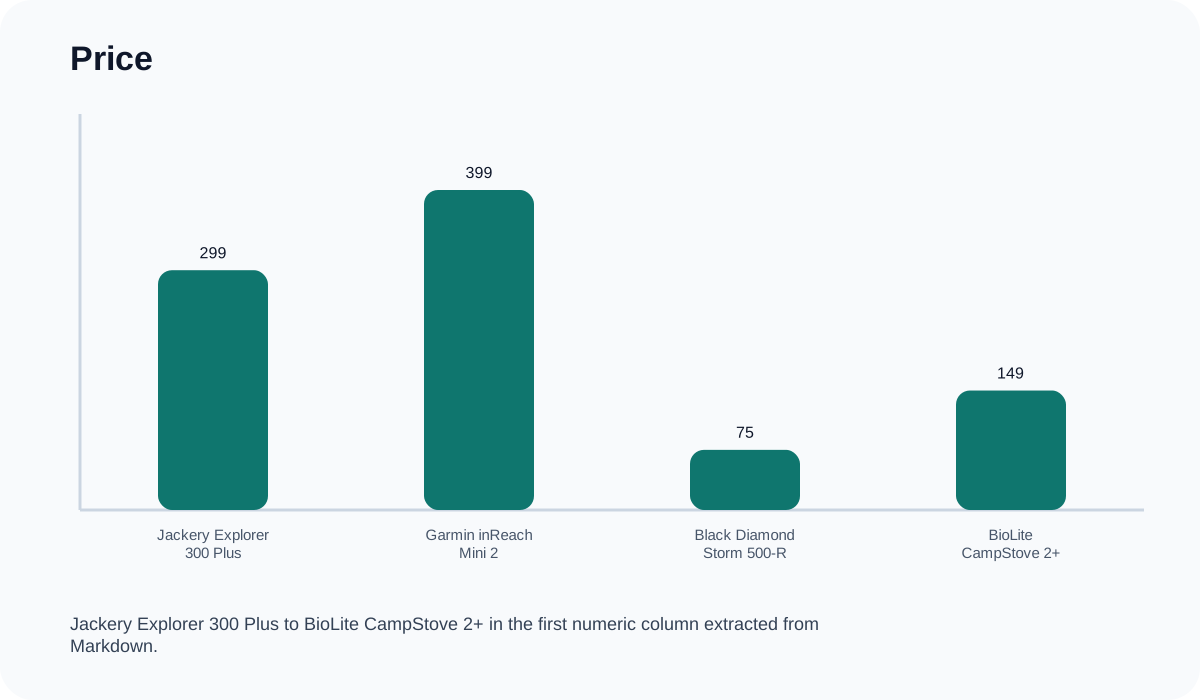
Top Survival Tech Comparison
Selecting the right survival gear for autumn and spring requires balancing power density, IP ratings, and charging versatility.
| Product | Category | Price | IP Rating | Battery Capacity / Life | Charging Method |
|---|---|---|---|---|---|
| Jackery Explorer 300 Plus | Power Station | $299 | N/A | 288Wh | AC / Solar / USB-C |
| Garmin inReach Mini 2 | Satellite GPS | $399 | IPX7 | 4-14 Days | USB-C |
| Black Diamond Storm 500-R | Lighting | $75 | IP67 | 7-350 Hours | Micro-USB |
| BioLite CampStove 2+ | Heat/Power | $149 | N/A | 3200mAh | Wood-Thermal |
Note: Anker Solix C1000 is also a leading competitor in the power station category utilizing highly stable LiFePO4 chemistry, though designed for larger basecamps rather than ultralight backpacking.
Category Analysis: Beating the Elements
1. Portable Power & Heating
Standard lithium power banks are ill-equipped for frost. Once the temperature drops to 32°F (0°C), built-in safety systems in many devices will halt incoming charge to prevent battery damage.
The Solution: Shift to LiFePO4 batteries and thermal-electric generators. The Jackery Explorer 300 Plus (288Wh) is a prime example of utilizing stable chemistry for cold-weather reliability. For off-grid environments where low-angle autumn sun limits solar efficiency, the BioLite CampStove 2+ offers a vital redundancy. By burning twigs and utilizing a thermal-electric generator, it replenishes its internal 3200mAh battery while providing heat, bypassing solar limitations entirely.
2. Navigation and SOS
Satellite messengers are non-negotiable for remote shoulder-season trips, but they face dual threats from cold and terrain.
The Garmin inReach Mini 2 boasts a robust IPX7 rating (submersible up to 1 meter), effectively shrugging off high-humidity, sleet, and freezing rain. However, the device famously displays a “Too Cold to Charge” warning at 32°F (0°C), even when tethered to an external battery.
- Buyer Beware: Garmin users note that “moderate tree cover”—common in lower elevation shoulder-season setups—can reduce the battery life by up to 3.5x as the device struggles to connect to satellites. Always pair GPS hardware with the offline Garmin Explore App to minimize active tracking intervals.
3. Lighting Systems
Splash-resistance (IPX4) is no longer sufficient for serious shoulder-season camping. IP67 is the new baseline, meaning the device is fully dust-proof and survives water immersion up to 1 meter.
The Black Diamond Storm 500-R delivers 500 lumens and easily survives torrential autumn downpours thanks to its IP67 rating. Its battery life scales from 7 hours on high to an estimated 350 hours on low.
- User Pain Point: The primary drawback of the Storm 500-R is its reliance on Micro-USB. In a market standardizing on USB-C, carrying a legacy Micro-USB cable creates minor but notable friction for minimalist packers.
Final Verdict
If you are upgrading your kit for shoulder-season conditions, prioritize IP67/IPX7 waterproof ratings and cold-tolerant LiFePO4 power supplies. The Garmin inReach Mini 2 remains the premier survival tool for communication, but it must be kept inside your sleeping bag or jacket pocket to prevent its 32°F charging lockout. Pair it with the Jackery Explorer 300 Plus for basecamp power, or the BioLite CampStove 2+ for thermal-powered backpacking.
Shoulder-Season Survival Gear Checklist
- Check Battery Chemistry: Ensure basecamp power stations use LiFePO4 rather than standard lithium-ion.
- Verify IP Ratings: Upgrade all electronics to IP67 (submersible) to handle sleet, snow, and persistent rain.
- Manage GPS Positioning: Ensure a clear view of the sky to prevent satellite search drain, which can cut battery life by 3.5x.
- Insulate Electronics: Keep the Garmin inReach Mini 2 and headlamps close to body heat to bypass the 32°F charging lockout.
- Consolidate Cables: Check for legacy ports. Bring a dedicated Micro-USB if using the Black Diamond Storm 500-R.