Best Tactical Flashlights for Use with Fire-Starting Kits
Discover the top tactical flashlights for fire-starting kits, featuring high-lumen heat ignition, integrated dual-arc plasma, and IP68 weatherproofing.
Executive Summary
Modern tactical flashlights act as a high-utility redundancy in outdoor survival kits. They provide critical illumination while serving as a secondary—and sometimes primary—fire-starting tool. Our analysis shows two distinct pathways for tactical fire starting: high-intensity photon heat (achievable via 2,000+ lumen lights) and integrated dual-arc plasma technology built directly into the flashlight chassis.
For sheer durability and brightness, traditional tactical brands like Fenix and Nitecore dominate with rugged IP68 ratings. Conversely, hybrid models like the Survival Frog Tough Tesla 2.0 offer specialized, windproof IPX7 plasma ignition. Buyers must balance output capability against vital safety mechanisms like proximity sensors, as well as the frustrating reality of thermal step-down behavior during extended use.
Top Tactical & Hybrid Flashlights Comparison
The following table outlines the leading tactical flashlights and hybrid plasma lights optimized for survival kits.
| Product | Max Lumens | Price Range | Waterproof Rating | Fire-Starting Method |
|---|---|---|---|---|
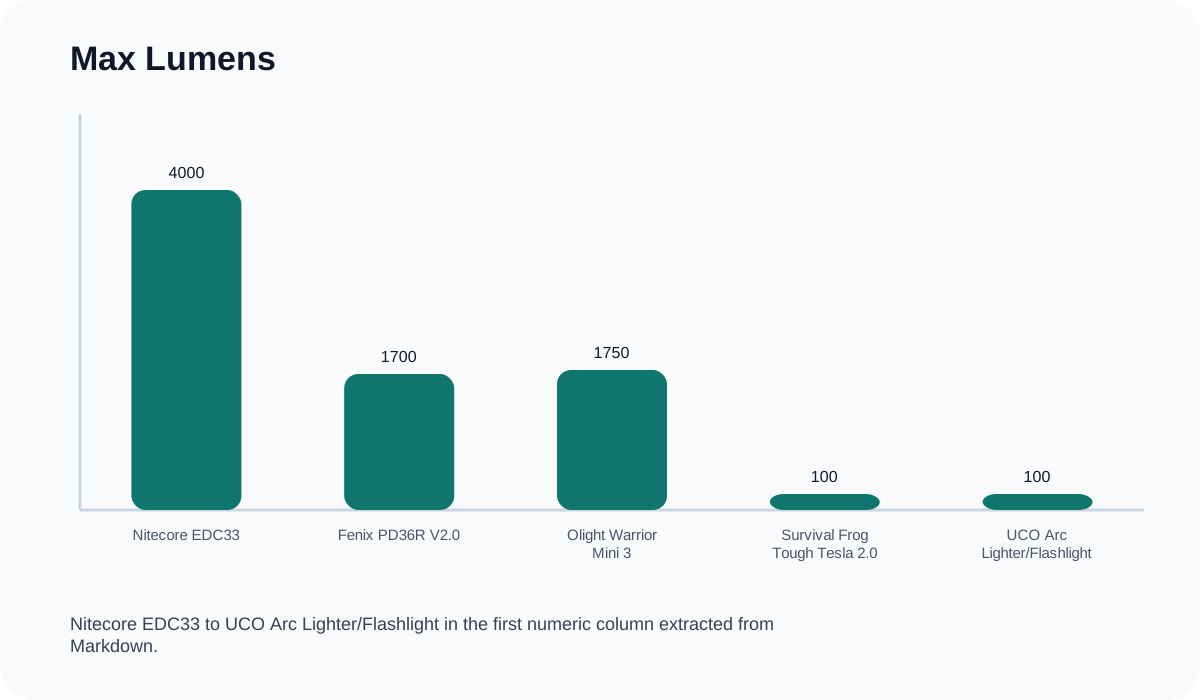
| Nitecore EDC33 | 4,000 | 75 | IP68 (2m Submersion) | High-Intensity Heat |
| Fenix PD36R V2.0 | 1,700 | 130 | IP68 (2m Submersion) | High-Intensity Heat |
| Olight Warrior Mini 3 | 1,750 | 95 | IPX8 (2m Submersion) | High-Intensity Heat |
| Survival Frog Tough Tesla 2.0 | 100 | 35 | IPX7 (Splashproof) | Integrated Dual Arc |
| UCO Arc Lighter/Flashlight | 100 | 30 | IPX7 (Splashproof) | Integrated Plasma Arc |
Performance Analysis: Heat Output vs. Sustained Utility
When evaluating a tactical flashlight’s fire-starting capability, peak lumen output is critical. However, heat generation is temporary.
Ignition Mechanics: Photon Absorption vs. Plasma Arc
High-lumen tactical lights boasting 2,000+ lumens can reliably ignite dark, dry tinder—such as charred cloth or black paper—within seconds. This is achieved through rapid photon absorption and extreme focal heat concentration. The Nitecore EDC33 (4,000 lumens) excels in this capacity.
By contrast, dual-arc plasma hybrids solve the ignition problem without relying on lens heat. Operating on high-voltage plasma, models like the Survival Frog Tough Tesla 2.0 ignore wet and windy conditions where standard butane lighters fail. While their light output is significantly lower (~100 lumens), their IPX7 weather resistance guarantees consistent fire-starting capabilities in severe weather.
Safety Considerations: Mitigating “Pocket Fires”
A major pain point in the tactical lighting sector is the risk of accidental activation. When carried in a gear bag or pocket, a high-lumen light turning on accidentally can quickly melt nylon, ruin equipment, or cause severe burns.
- Required Safeguards: For fire-capable lights, mechanical lockouts and active proximity sensors (which step down lumen output when the lens is blocked) are mandatory features.
- Thermal Step-Down: Users consistently note frustration with “thermal step-down”—an unavoidable safety mechanism where lights drop from maximum output (e.g., 3,000+ lumens) to a safer baseline (around 800 lumens) within 30 to 60 seconds to prevent internal component damage.
Charging and Readiness in the Field
Readiness requires reliable charging architecture. The industry has largely shifted toward standard USB-C for universal compatibility within diverse survival loadouts. However, Olight continues to utilize proprietary magnetic charging systems. While this limits cross-compatibility with standard USB-C cables, it provides superior physical water sealing, contributing to the Warrior Mini 3’s IPX8 rating.
Final Verdict
- Best for Raw Output & Heat Ignition: Nitecore EDC33. The 4,000-lumen turbo burst provides the highest thermal potential for tinder ignition, paired with dependable IP68 durability.
- Best Dedicated Hybrid: Survival Frog Tough Tesla 2.0. For users who want guaranteed fire-starting in high winds combined with basic task lighting, this dual-arc hybrid is the most economical and weather-resistant choice.
Tactical Fire-Starting Checklist & FAQ
- Can a standard LED flashlight start a fire? Only specific high-lumen tactical lights (typically 2,000+ lumens) can concentrate enough heat to cause combustion. It requires dark, dry tinder (like charred cloth) and direct proximity to the lens.
- What is thermal step-down? A built-in firmware feature that reduces a flashlight’s output from “Turbo” mode down to standard operating levels (e.g., dropping to 800 lumens in 30-60 seconds). This prevents the device’s battery and LED from overheating.
- Why is a proximity sensor important? A proximity sensor dims the light if it detects an obstruction right in front of the lens. This prevents accidental “pocket fires” and gear melting.
- Are proprietary batteries a liability? Yes and no. Proprietary systems (like Olight’s magnetic charger) can improve waterproof ratings (IPX8), but they restrict your ability to swap in standard 18650 or 21700 cells during a prolonged grid-down scenario.