Best Trail Electronics for Solo Hikers Who Prefer Rechargeable Gear
Discover the ultimate USB-C rechargeable trail electronics for solo hikers. Compare leading power banks, satellite messengers, and headlamps for backcountry safety.
Executive Summary
Modern solo hiking kits are rapidly transitioning to fully rechargeable, USB-C standardized ecosystems. This shift allows solo hikers to carry a single cable to manage their power bank, headlamp, and satellite messenger, simultaneously minimizing weight and maximizing reliability. Based on 2026 research, the optimal solo hiker electronics kit includes the Garmin inReach Messenger, the Nitecore NB10000 Gen4 power bank, and the Black Diamond Spot 400-R headlamp.
While hardware weight-to-power ratios have largely peaked, cold-weather efficiency remains the primary limitation of lithium-ion gear. Users report up to a 50% capacity loss in sub-freezing temperatures, making thermal management as critical as the hardware itself.
Core Components Comparison
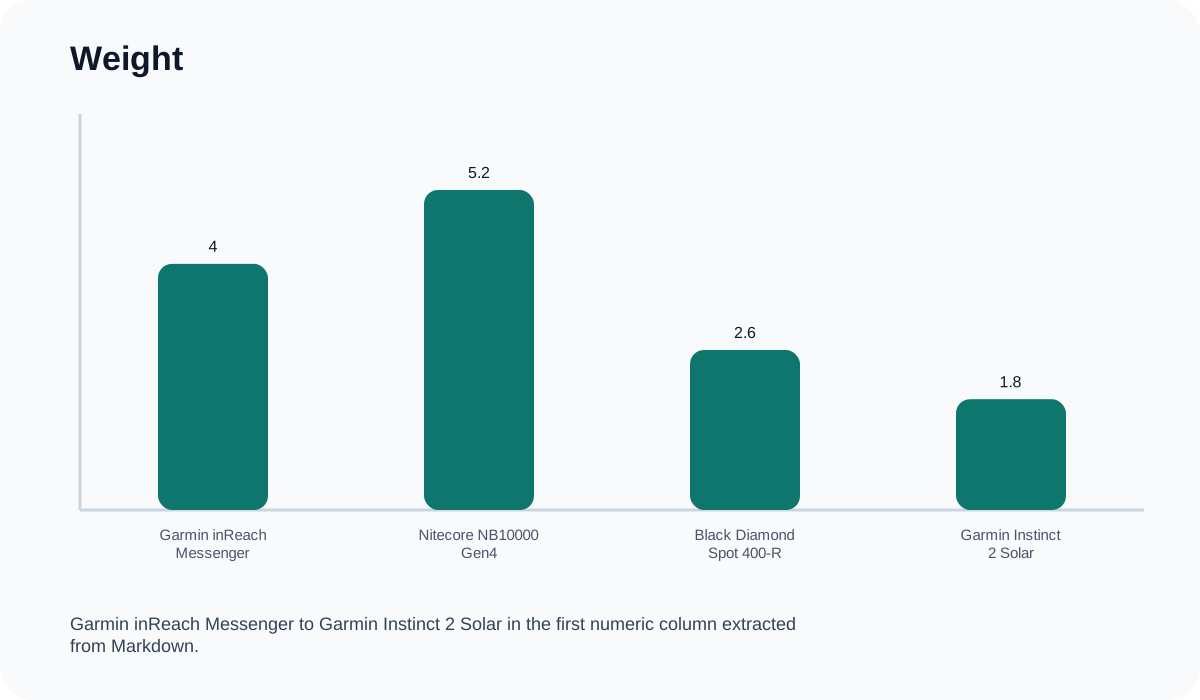
The following table outlines the leading rechargeable electronics tailored for solo backcountry travel, optimizing for weight, ingress protection (IP rating), and runtime.
| Product | Category | Weight | IP Rating | Runtime | Price |
|---|---|---|---|---|---|
| Garmin inReach Messenger | Satellite Safety | 4.0 oz | IPX7 | 28 Days | $299 |
| Nitecore NB10000 Gen4 | Power Bank | 5.2 oz | IPX5 | 2-3 Phone Charges | $84 |
| Black Diamond Spot 400-R | Headlamp | 2.6 oz | IP67 | 4h (High) / 200h (Low) | $75 |
| Garmin Instinct 2 Solar | GPS Watch | 1.8 oz | 10 ATM | Infinite (Solar) | $350 |
Analysis of the Rechargeable Ecosystem
Power Delivery: Nitecore NB10000 Gen4
The Nitecore NB10000 Gen4 is currently the industry leader for ultralight power banks. Offering 10,000mAh of capacity at just 5.2 ounces, it sets the standard for weight-to-efficiency. It features an IPX5 water resistance rating and a newer “knock-to-wake” feature. However, hikers should note that exposure to cold weather causes an immediate 13-15% voltage drop.
Solo Safety: Garmin inReach Messenger
For solo hikers, two-way satellite communication is prioritized over one-way Personal Locator Beacons (PLBs). The Garmin inReach Messenger (along with the Plus variant) provides multi-week battery life (up to 28 days) and allows for detailed status updates. Crucially, two-way devices confirm that emergency messages have been received, providing vital psychological relief in survival scenarios.
Illumination: Black Diamond Spot 400-R
The shift toward integrated lithium-ion batteries in headlamps yields superior water sealing compared to older hybrid models. The Black Diamond Spot 400-R achieves an impressive IP67 rating, meaning it can survive full immersion. The tradeoff is the inability to swap in AAA batteries in an emergency, reinforcing the need for a reliable USB-C power bank system.
Overcoming Environmental Hurdles
The Cold Weather Capacity Drop
Lithium-ion and lithium-polymer batteries suffer severe performance degradation in freezing conditions. Solo hikers must store critical electronic gear in internal pockets against body heat to mitigate this loss.
Managing Quiescent Draw
A major user pain point in modern trail electronics is “quiescent draw”—the idle battery drain that occurs while a device is seemingly powered off. To prevent arriving at camp with a dead headlamp or communicator, hikers must manually engage electronic button locks or slightly unscrew battery caps (where applicable) before storing gear in their packs.
Final Verdict
The most resilient setup for a solo hiker relies entirely on a unified USB-C system. Carrying the Nitecore NB10000 Gen4 as a central hub for a Garmin inReach Messenger and a Black Diamond Spot 400-R minimizes pack weight while offering reliable communication and illumination. The key to maintaining this system is disciplined thermal management—keeping batteries warm—and active prevention of idle drain.
Solo Hiker Electronics Checklist & FAQ
- Why is USB-C the “gold standard”? It allows a solo hiker to carry a single cable to charge all primary devices (headlamp, satellite messenger, power bank), cutting down on redundant cord weight and clutter.
- Should I choose an integrated or hybrid headlamp? Integrated rechargeable headlamps (like the Spot 400-R) offer better waterproofing (IP67) because they lack battery bay doors. Choose integrated if durability and weatherproofing are your top priorities.
- How do I stop my devices from dying in my pack? Always activate physical or digital “button locks” to prevent accidental activation and reduce quiescent draw.
- How do I protect my power bank in the winter? Store your Nitecore (or similar power bank) and Garmin inside a pocket close to your base layer during the day, and inside your sleeping bag at night.