Best Trail Safety Gadgets for Women Hiking Alone
An evidence-based guide to the best safety gadgets for solo female hikers, analyzing satellite SOS devices, personal alarms, battery efficiency, and subscription costs.
Executive Summary
For solo female hikers in 2026, personal safety requires a multi-layered hardware approach. The most effective safety stack combines a satellite-based SOS communicator for environmental and medical emergencies with a high-decibel audible alarm for personal threat deterrence.
Our analysis reveals that the Garmin inReach Messenger currently leads the market for remote safety due to its 28-day battery life and smartphone reverse-charging capabilities. However, users face significant subscription fatigue—notably an $8/month inactive “Enabled” fee introduced by Garmin. For personal deterrents, devices like She’s Birdie deliver the necessary 130-140dB siren but suffer from inadequate waterproof ratings for alpine environments.
Top Trail Safety Gadgets Compared
The following table compares the leading communication and deterrent devices based on current market data, ingress protection (waterproofing), and power metrics.
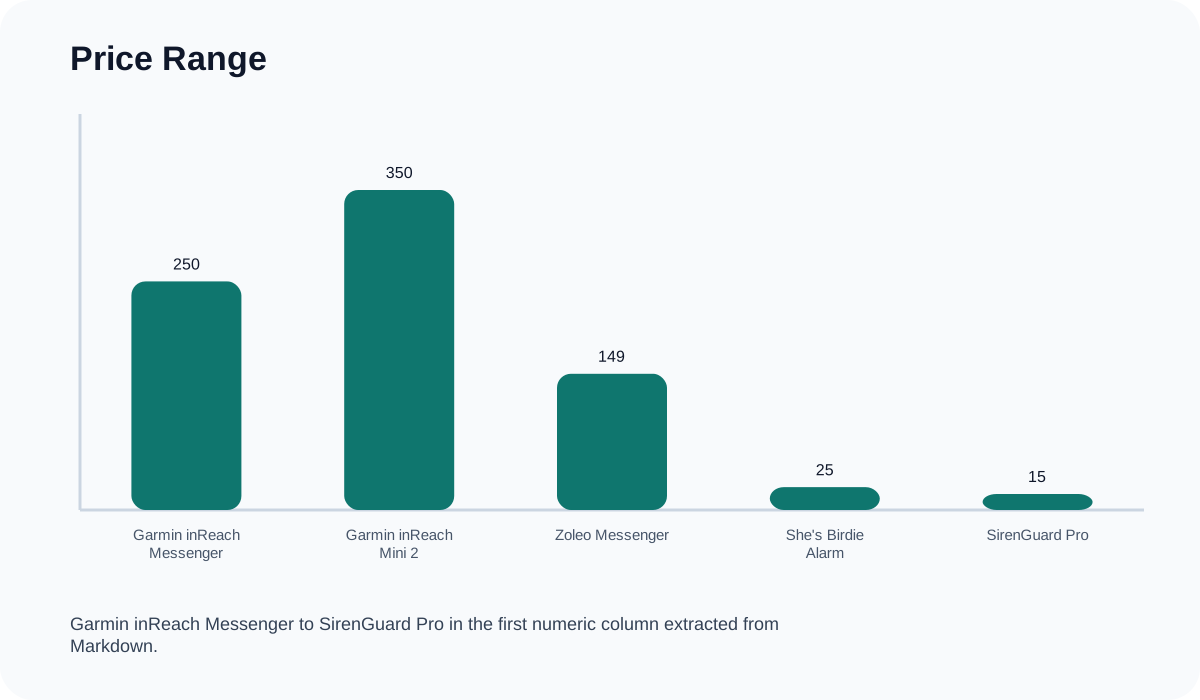
| Product | Price Range | Waterproof Rating | Battery Life | Charging | Primary Use |
|---|---|---|---|---|---|
| Garmin inReach Messenger | 300 | IPX7 | Up to 28 days | USB-C (Reverse Charging) | Long-term Battery & Power Backup |
| Garmin inReach Mini 2 | 400 | IPX7 | Up to 14 days (10-min tracking) | USB-C | Emergency SOS & Navigation |
| Zoleo Messenger | 199 | IP68 | 200+ Hours (8.3 days) | Micro-USB | Seamless Messaging/Check-ins |
| She’s Birdie Alarm | 30 | Splash Resistant | 40 Mins (Continuous Siren) | Replaceable CR2032 | Personal Deterrent (130dB) |
| SirenGuard Pro | 25 | Unrated | 1 Year (Standby) | USB Rechargeable | Night Hiking Deterrent (140dB) |
Analysis: Satellite Messengers (Environmental Safety)
Satellite communicators are essential for deep backcountry travel where cellular service fails. The market is currently defined by a tradeoff between hardware cost, battery efficiency, and subscription plans.
Battery Efficiency and Power Backup
The Garmin inReach Messenger has surpassed the popular inReach Mini 2 in sheer battery efficiency. It offers up to 28 days of runtime compared to the Mini 2’s 14 days. More importantly for solo hikers, the Messenger includes a reverse-charging feature, allowing users to draw power from the device to revive a dead smartphone—a critical redundancy given how reliant modern satellite devices are on smartphone apps for complex messaging.
Below is an analysis of battery efficiency relative to the weight penalty (Hours of battery per ounce of gear weight).
The Subscription Pain Point
Subscription fatigue is the primary complaint among users. Following Garmin’s 2024/2025 plan shifts, users are now subjected to an 149 - $199), despite its older micro-USB charging standard and heavier weight.
Analysis: Personal Safety Alarms (Threat Deterrence)
While satellite devices handle environmental emergencies, personal safety alarms act as the “first-line” deterrent against human or animal threats on the trail.
Decibel Output vs. Durability
Devices like She’s Birdie and the SirenGuard Pro deliver intense audio deterrence, rated at 130dB and 140dB respectively. The She’s Birdie model can sustain a continuous siren for 40 minutes using a replaceable CR2032 battery.
However, field data highlights a severe limitation: lack of standardized waterproofing. Unlike satellite messengers that strictly adhere to IPX7 or IP68 ratings (capable of surviving full submersion), lower-cost alarms frequently lack certified ingress protection. She’s Birdie is only rated as “Splash Resistant,” and others are entirely unrated. Users report these devices failing after exposure to heavy rain, making them an unreliable single point of failure in alpine environments.
Final Verdict
For the modern solo female hiker, no single device covers all threat vectors.
- Best for Remote Safety & Battery Management: Garmin inReach Messenger. The 28-day battery life and smartphone reverse-charging make it the superior choice for deep backcountry navigation, provided the buyer is comfortable with the ongoing subscription fees.
- Best Budget Communicator: Zoleo Messenger. At under $200, it offers premium IP68 waterproofing and reliable check-ins, ideal for those who hike frequently but want to minimize upfront hardware costs.
- Best Front-Country Deterrent: She’s Birdie. Excellent for popular, populated trails where an immediate 130dB deterrent is needed, but buyers must store it carefully during heavy rain due to low water resistance.
Solo Hiker Safety Checklist
Ensure your trail safety stack includes the following layers before heading out alone:
- Redundant Communication: Carry an IPX7/IP68 satellite messenger for zero-cell zones.
- Immediate Deterrent: Clip a 130dB+ personal alarm to an easily accessible shoulder strap (protect from heavy rain).
- Power Management: Ensure all primary devices utilize the same charging standard (preferably USB-C) or pack a device with reverse-charging capabilities.
- Subscription Verification: Confirm your satellite SOS subscription is active and out of “Enabled/Standby” mode before hitting the trailhead.