Best Wall-to-Car-to-Solar Charging Workflow for Outdoor Electronics
Optimize your off-grid power with a three-tier charging strategy using AC wall prep, 12V car transit maintenance, and MPPT solar sustainability.
Executive Summary
The optimal power strategy for outdoor electronics relies on a tiered, three-phase workflow: high-speed AC wall charging for pre-trip preparation, 12V/24V car charging for transit maintenance, and MPPT-regulated solar input for off-grid sustainability. Leading 1kWh-class power stations from EcoFlow, Bluetti, and Anker now utilize LiFePO4 battery chemistry, pushing lifespans beyond 3,000 cycles and improving thermal stability to 270°C. However, users must account for the “inverter tax” (an estimated 10-15% energy loss during DC-to-AC conversion) and the stark reality that most units feature an IP20 rating, offering zero inherent water resistance.
Phase 1: Pre-Trip AC Wall Charging
AC wall charging is the most efficient phase of the power workflow. Modern power stations are designed to ingest massive amounts of AC power quickly, allowing users to reach an 80% charge in approximately 50 to 70 minutes.
- EcoFlow Delta 2: Achieves a full charge in an estimated 80 minutes utilizing a 1200W input.
- Bluetti AC180: Leads the 1000Wh class with a rapid 45-minute charge time at 1440W.
Phase 2: Transit Car Charging (The Bottleneck)
Car charging remains the primary bottleneck in the outdoor power workflow. Standard 12V vehicle outlets are typically capped at 100W to 120W (12V/10A). At this rate, fully charging a 1000Wh power station requires 10 to 14 hours of continuous driving. To circumvent this limitation, advanced users are increasingly adopting 12V-to-24V step-up converters to effectively double charging speeds during transit.
Phase 3: Off-Grid Solar Charging
Solar charging relies heavily on Maximum Power Point Tracking (MPPT) controllers to optimize the variable voltage coming from solar panels. While 200W to 400W foldable panels are the industry standard for 1kWh units, atmospheric conditions mean real-world yields typically peak at an estimated 70% to 80% of the panel’s rated wattage.
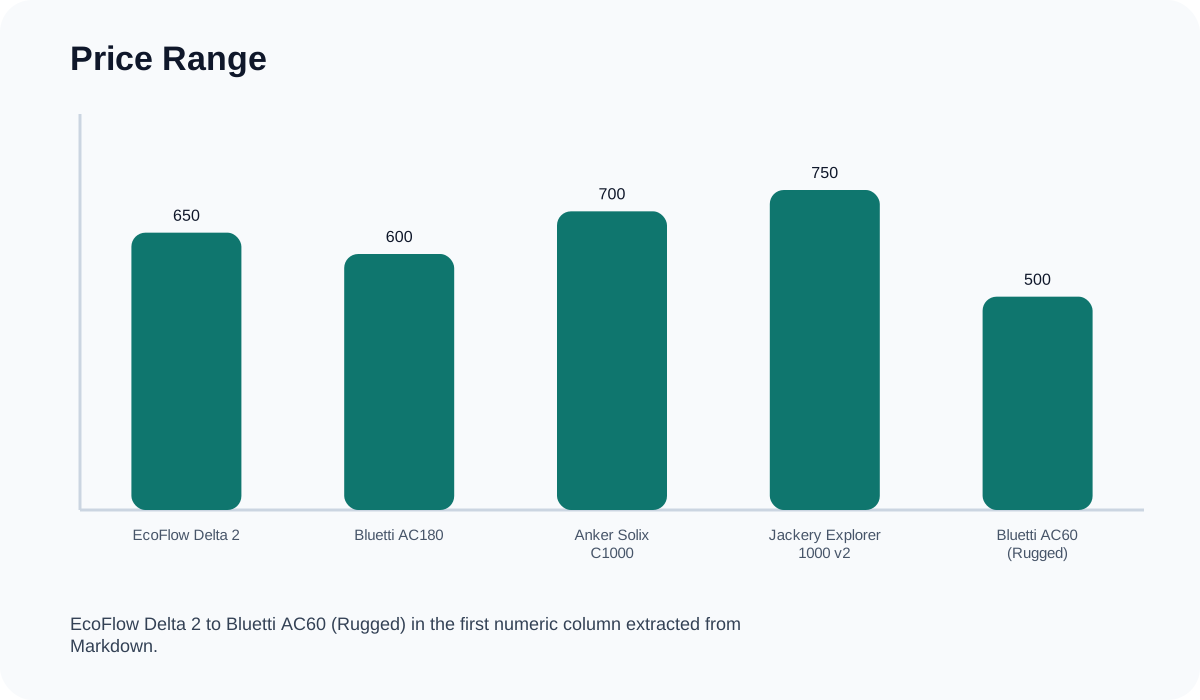
Top 1000Wh-Class Power Stations: Charging Workflow Comparison
| Product | Price Range | AC Charge (Wall) | Car Charge (12V) | Solar Input (Max) | Waterproof Rating |
|---|---|---|---|---|---|
| EcoFlow Delta 2 | 850 | 80 min (1200W) | 11-12 hours | 500W | IP20 (Not Waterproof) |
| Bluetti AC180 | 800 | 45 min (1440W) | 10-11 hours | 500W | IP20 (Not Waterproof) |
| Anker Solix C1000 | 950 | 58 min (1300W) | 10-12 hours | 600W | IP20 (Not Waterproof) |
| Jackery Explorer 1000 v2 | 900 | 1.7 hours (800W) | 12-14 hours | 400W | IP20 (Not Waterproof) |
| Bluetti AC60 (Rugged) | 700 | 1 hour (600W) | 5-6 hours | 200W | IP65 (Water Resistant) |
Battery Chemistry and Critical Pain Points
The shift from older NMC (Nickel Manganese Cobalt) batteries to LiFePO4 (Lithium Iron Phosphate) is a structural upgrade for outdoor safety. NMC batteries carry a thermal runaway threshold of 150°C, whereas modern LiFePO4 models offer exceptional thermal stability up to 270°C alongside a 3,000+ cycle lifespan.
Despite these advancements, users frequently encounter two major operational pain points:
- The Inverter Tax: Using standard AC outlets on your power station incurs an estimated 10% to 15% energy loss due to the DC-to-AC conversion process. Utilizing native DC outputs (like USB-C) whenever possible maximizes your runtime.
- Misleading Weatherproofing: Most 1kWh power stations are rated IP20, meaning they offer zero protection against moisture. Unless you invest in a ruggedized unit like the Bluetti AC60 (IP65), direct exposure to rain will result in catastrophic failure without external sheltering.
Final Verdict
The definitive charging workflow for outdoor electronics is highly modular: rely on the AC wall socket to do the heavy lifting before departure, use the car alternator to offset passive drain on the road, and deploy MPPT-backed solar arrays to extend off-grid limits. When selecting hardware for this workflow, prioritize LiFePO4 models capable of at least 500W solar input and rapid <1-hour wall charging to minimize downtime.
Off-Grid Workflow Checklist
- Pre-Trip: Plug into AC wall power 2 hours before departure to guarantee 100% capacity using high-speed 1000W+ inputs.
- Transit: Connect to a 12V/24V car adapter to maintain charge and run 12V coolers passively while driving.
- Deployment: Keep the main unit sheltered from rain due to standard IP20 limitations.
- Solar Setup: Deploy 200W-400W panels utilizing MPPT controllers; expect 70-80% of rated capacity depending on cloud cover and panel angle.
- Efficiency Practice: Charge outdoor devices natively via DC/USB ports to bypass the 10-15% DC-to-AC inverter tax.