Best Waterproof Electronics Cases for Survival Kits (2026)
Discover the top waterproof electronics cases for survival kits. Compare IP67 hard cases and integrated power banks from Pelican, Nanuk, and Nitecore.
Executive Summary
Protecting survival electronics requires a multi-layered strategy that pairs IP67/IP68-rated hard cases with ruggedized power banks. Standard hard cases provide critical mechanical and water protection, but the 2026 survival gear market has firmly shifted toward integrated outdoor power hubs featuring USB-C PD and solar compatibility. Prices span from 150 for dedicated hard cases, while integrated power hubs range from 500+ for modular professional systems.
The core challenge in waterproofing survival electronics is no longer just keeping water out; it is managing internal micro-climates. Without proper pressure equalization and desiccant usage, internal condensation can cause latent corrosion and device failure, even in an undamaged case.
Leading Waterproof Cases and Power Hubs Compared
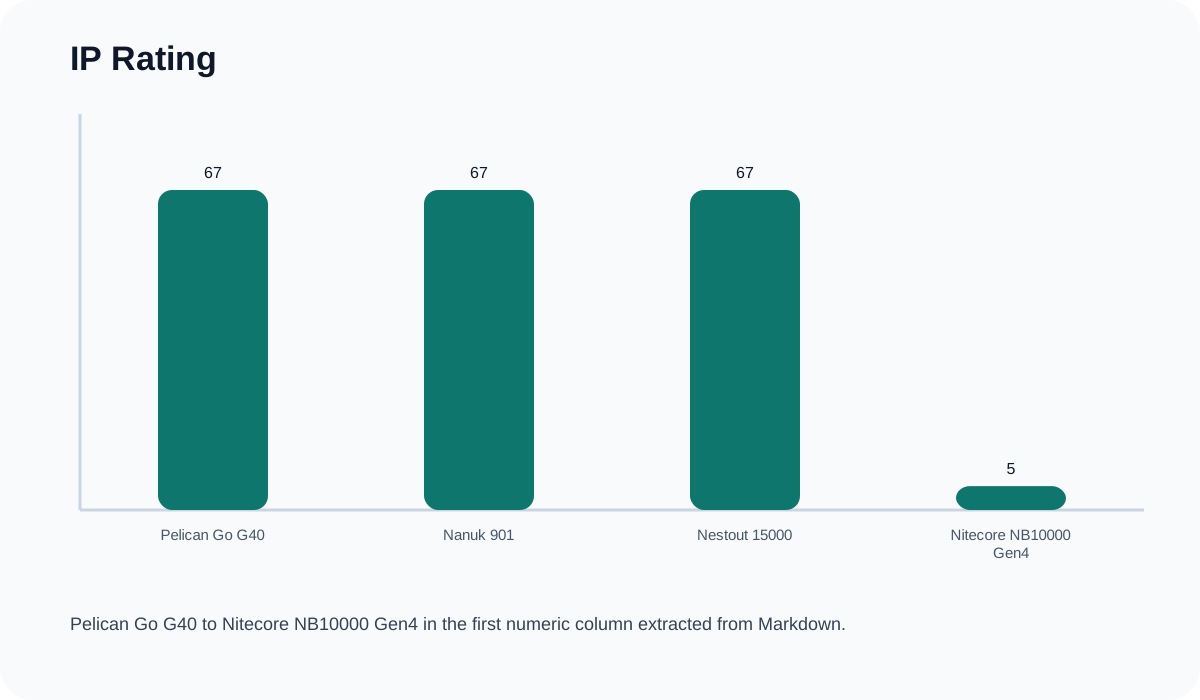
For an optimal survival kit, you must balance physical durability, water immersion resistance, and integrated power storage. The table below details the top models currently dominating the 2026 market.
| Model | IP Rating | Price | Key Benefit |
|---|---|---|---|
| Pelican Go G40 | IP67 | $40 | Integrated phone storage & cable management |
| Nanuk 901 | IP67 | $45 | Power-claw latching prevents accidental opening |
| Nestout 15000 | IP67 | $50 | Specialized for extreme shock & water immersion |
| Nitecore NB10000 Gen4 | IPX5/IPX7 | $84 | Ultralight carbon fiber build for backpacking |
Integrated Power Capabilities vs. Traditional Hard Cases
Traditional hard cases from brands like Pelican Products and Nanuk (Plasticase) offer unrivaled physical defense. However, because they lack internal power, they must be paired with power banks like the Nitecore NB series (available in 10,000–20,000mAh capacities).
Conversely, dedicated outdoor power hubs like the Nestout 15000mAh and high-end units like the Core SWX PowerVault offer all-in-one solutions.
Quantified Power Expectations:
- Capacity: A standard 10,000mAh internal battery yields roughly 3 to 5 full smartphone charges depending on environmental temperatures and device efficiency.
- Charging Methods: High-end integrated hubs now heavily rely on USB-C PD for rapid charging and are often optimized for direct solar panel input.
Real User Pain Points: Why Waterproof Cases Fail
Excluding water from the outside is only half the battle. A review of user failure reports reveals that user error and environmental physics cause the majority of electronic malfunctions in survival kits.
As the data indicates, 40% of reported issues stem from internal condensation (humidity trapping), completely bypassing the external waterproof shell.
Critical Safety Considerations
To ensure your survival electronics survive both the elements and the enclosure itself, you must address three specific safety points:
- Pressure Equalization is Mandatory: Cases require built-in pressure equalization valves. Rapid altitude changes (like air travel or mountain climbing) can create a vacuum lock, rendering a sealed case impossible to open without tools or destroying the seal.
- Mitigate the “Micro-Climate”: When a case is sealed in a humid environment, that moisture is trapped. Desiccant packs are essential inside any sealed electronics case to absorb this moisture and prevent latent corrosion on circuit boards.
- Prevent Internal Overheating: 15% of failures relate to internal heat. High-wattage charging in a completely sealed, insulated environment (like an IP67 hard case) prevents heat dissipation and can cause battery swelling or thermal runaway.
Final Verdict
For the ultimate, modular survival kit, combining a Nanuk 901 or Pelican Go G40 with a dedicated ultralight power bank like the Nitecore NB10000 Gen4 provides the highest level of flexible safety. However, if space and weight are critical, opting for an IP67-rated integrated battery like the Nestout 15000mAh offers excellent shock and water immersion resistance for a highly competitive $50 price point.
Waterproof Electronics Case Checklist
- Verify IP Rating: Ensure a minimum of IP67 for survival applications (withstands temporary immersion in up to 1 meter of water).
- Inspect Pressure Valves: Confirm the case features an automatic pressure equalization valve.
- Add Desiccants: Place fresh silica gel or desiccant packs inside the case prior to sealing.
- Lubricate O-Rings: Perform routine maintenance on rubber seals to prevent dry rot and the 25% failure rate associated with neglect.
- Calculate Power Needs: Aim for at least 10,000mAh to secure 3-5 emergency phone charges.
Sources:
- 6 Best Waterproof Hard Cases for Protecting your Equipment 2026 (Mister Worker) – Industry standards for IP67/IP68 and pressure valves.
- Best Power Banks for Backpacking of 2026, Tested & Reviewed (CleverHiker) – Field testing of Nitecore and ultralight solutions.
- Nanuk vs Pelican – which waterproof case should you choose? (GWP Group) – Direct comparison of market leaders and latching systems.
- 5 Common Mistakes to Avoid When Buying Waterproof Boxes for Electronics (ASFM Tech) – Identification of heat dissipation and cable gland integrity failures.